Editorial: Startups offer hope on critical rare-earth materials
Published in Op Eds
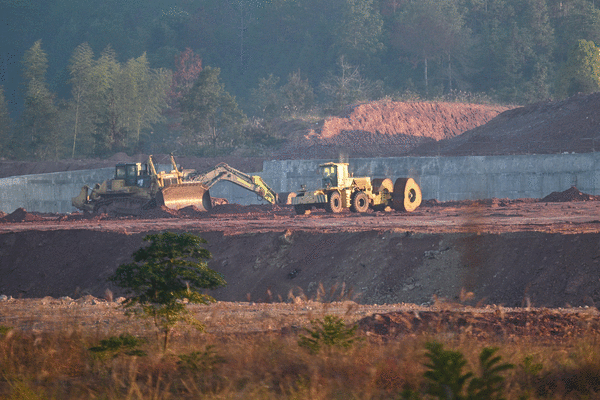
U.S. officials from across the political spectrum vow to ramp up efforts to wean the nation off rare-earth mineral imports from China. But the most promising path isn’t central planning or a federal industrial policy, but a reliance on the innovation and entrepreneurship that have made America’s private economy the envy of the world.
Rare-earth minerals are essential to vast sectors of the economy, including tech, defense and health care. The name derives from the fact that such materials are difficult to extract and refine. The United States was a leader in producing rare-earth minerals until the 1980s. Since then, however, various obstacles have deterred American producers and helped China become the dominant player. According to the U.S. Geological Survey, China now accounts for 70 percent of rare-earth mining and 90% of processing.
The dangers of China’s dominance has come into clear focus in recent years as the communist nation has limited exports of crucial materials as a means of punishing its enemies — and this year threatened a more severe response in an effort to move the Trump administration off punitive tariffs.
To address the problem, the White House has largely preferred government loans and even direct federal investments in startups and mining companies. But this approach comes with the risk of elevating political considerations above the efficient allocation of capital. The green technology landscape is littered with endeavors that failed on the taxpayer dime. Washington should instead be focused on permitting reform and tearing down the red tape that makes it prohibitively expensive and time-consuming for private companies to develop these crucial materials domestically.
In the meantime, a slew of innovators push the nation forward. Global Corporate Venturing in August highlighted six startups working toward creating a dependable U.S. supply chain of rare-earth minerals. They include Interlune, a Seattle outfit that “has developed novel machinery to detect and harvest natural resources from the moon and bring them back to Earth for use in sectors such as defense and health care.”
Interlune is not a novelty. “Startups from Silicon Valley to North Carolina to the U.K. are offering up new solutions to China’s crackdown on critical mineral exports,” The Wall Street Journal reported recently, “propelled by record levels of private investment and advances in artificial intelligence.”
One expert told the Journal that “if the U.S. is going to make any progress here, it is going to rely on the innovation of startups.”
The ingenuity of the U.S. private sector is without peer. If Washington can dismantle hurdles to both mining and refining, the nation will be in good hands.
_____
©2025 Las Vegas Review-Journal. Visit reviewjournal.com.. Distributed by Tribune Content Agency, LLC.





















































Comments