Commentary: When medical misinformation costs lives -- Balancing free speech and public health
Published in Op Eds
In my corner of the world, it feels like 2020 all over again, experiencing the push and pull between losing someone I love due to medical misinformation, all while holding respect for free speech.
The tension between combating medical misinformation and protecting free speech represents one of the most challenging dilemmas of our age. On one side lies the very real danger of false health claims that can literally cost lives. On the other side, there is a fundamental democratic principle that has historically protected unpopular truths from suppression.
The stakes of walking this tightrope are undeniably high. We have witnessed how vaccine misinformation can fuel disease outbreaks, how false cancer cure claims can lead desperate patients away from effective treatments, and how pandemic conspiracy theories can undermine public health responses. And yet, freedom of speech remains crucial to our democratic republic.
While upholding one of our country’s core rights can feel theoretical, the human cost of medical misinformation isn't that abstract. It is measured in concrete, preventable deaths and suffering.
One of those deaths was my friend. Out of respect for my friend’s grieving family, I will call him “John.”
John was diagnosed with prostate cancer just over a year ago. Instead of listening to his oncologist and following their treatment plan, John chose to take Ivermectin for his cancer and ended up succumbing to its side effects.
Ivermectin, a broad-spectrum anti-parasitic agent, was approved by the U.S. Food and Drug Administration for humans to treat certain parasitic worm infections and specific skin conditions.
In addition to the conditions mentioned above, Ivermectin is not approved, authorized, or recommended by the FDA or the Centers for Disease Control and Prevention (CDC) for the treatment or prevention of COVID-19 or other conditions, such as cancer.
John fell down the dangerous path of medical misinformation five years ago during the pandemic. Unfortunately, medical experts, as well as family and friends like me, could not pull him back to safety.
Sitting at John’s memorial, I felt the weight of grief press into something sharper. It was resentment at the leaders and public figures who, with their platforms and bully pulpit, chose to amplify falsehoods instead of truth, and anger that their words carried more influence than the quiet counsel of doctors who had dedicated their lives to healing.
It is one thing to mourn the natural course of illness; it is another to grieve a death hastened by deliberate misinformation. This is not an abstract editorial on medical care in America; it is personal, raw, and a reminder that the stakes of this debate are not theoretical. They are measured by the real loss of people like John.
Of course, John had agency, and as an adult, he had the right to seek alternative therapies and treatments as prescribed by an alternative medicine provider, within the law. But John was swayed by thought leaders and elected officials whom he trusted, and this is where the discussion of misinformation and free speech gets mired in a morass.
We should also acknowledge that “misinformation” itself can be contested. The line between settled science, emerging evidence, and genuine uncertainty isn't always clear.
History offers sobering lessons about the risks of empowering authorities to determine truth. Medical consensus has been wrong before. Doctors once promoted cigarettes, dismissed the link between handwashing and infection, and resisted germ theory itself. Breakthrough discoveries often began as heretical ideas that challenged establishment thinking.
The challenge of balancing the two intensifies in our current information ecosystem. Social media algorithms amplify engagement, and health misinformation often generates intense emotional reactions that boost its spread. A false claim can circle the globe before accurate information can put on its shoes. The traditional marketplace-of-ideas theory assumed roughly equal access to platforms and audiences. Unfortunately, those assumptions no longer hold.
So, where does this leave us? Heavy-handed censorship risks creating martyrs, driving misinformation underground where it becomes harder to counter, and eroding public trust in institutions. But a completely hands-off approach allows falsehoods to proliferate with devastating consequences.
Perhaps the answer lies not in choosing between these extremes but in pursuing a more nuanced approach. This might include: prominent placement of accurate information from credible sources without outright censorship of alternative views; transparency about content moderation decisions and clear, consistently applied standards; investment in digital literacy education that helps people evaluate health claims critically; and, perhaps most importantly, holding leaders to a higher standard when it comes to the dissemination of incorrect medical information.
Ultimately, this isn't a problem we can solve once and for all with the right policy. It requires ongoing calibration, humility about our own certainty, and recognition that both unchecked misinformation and aggressive censorship carry serious risks. We must find ways to protect public health without sacrificing the open discourse that allows science and democracy to function.
Until we can do that, there will continue to be unnecessary goodbyes, like the one I had with John.
____
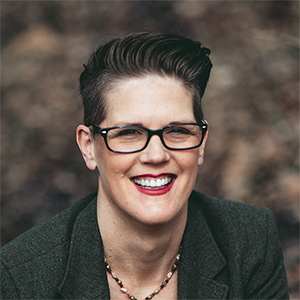
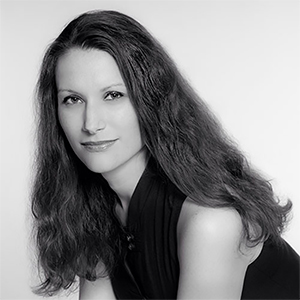
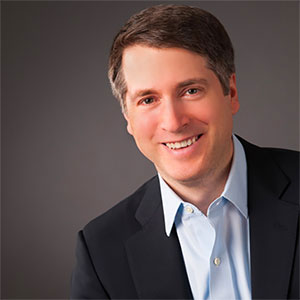
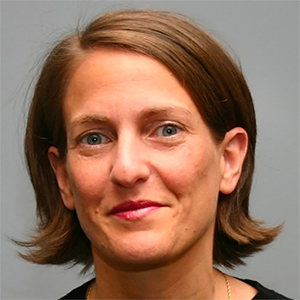
Lynn Schmidt is a columnist and Editorial Board member with the St. Louis Post-Dispatch. She holds a master's of science in political science as well as a bachelor's of science in nursing.
_____
©2025 The Fulcrum. Visit at thefulcrum.us. Distributed by Tribune Content Agency, LLC.

Comments