Commentary: These are the civic lessons that ICE is teaching our children
Published in Op Eds
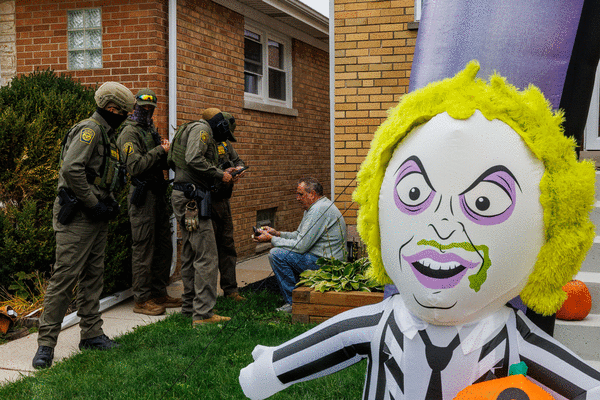
Although we have replaced our jack-o-lanterns and skeletons with evergreen wreaths and festive lights, the specter of masked Halloween figures continues to haunt our community. In my leafy suburb just outside of Chicago, on Oct. 31, our normally bustling evening of trick-or-treating was eerily quiet. Federal immigration agents’ aggressive and terrifying actions on Halloween meant hundreds of children stayed home, their families too petrified to escort their pint-size dinosaurs and superheroes door to door.
Federal agents’ operations are traumatizing a generation already scarred by COVID-19. Community raids have prompted school lockdowns and nervous texts from high schoolers as helicopters hover above, teaching students troubling lessons about government. Through more than a decade of research examining what teenagers learn from different kinds of civic education, I’ve seen just how deeply young people internalize lessons from moments such as these — often far more than adults expect.
As a former social studies teacher and now professor of education, I am deeply alarmed by the civic lessons our youth are learning. In a political landscape in which teachers are increasingly reluctant to offer even basic instruction about American government, the scenes on the ground are filling the void.
Students are learning that protesters exercising their First Amendment rights will be tear-gassed. They are learning that U.S. citizens will be detained. They are learning that federal agents will operate above the law and that government officials will make false claims about their activities.
When I teach my students — future social studies teachers — about different ways to approach their instruction, I introduce them to one method that scholars call “ Lived Civics,” which honors the political knowledge young people hold based on their experiences in communities. Such knowledge often contradicts the idealized lessons about democracy taught in schools. The current moment is offering a stunning set of contradictions for educators to address.
What are the civic lessons a 6-year-old girl will learn about due process after her father, an Uber driver with protected status and a pending asylum case, was whisked off the street in the middle of a shift? What are the civic lessons a 16-year old with Stage 4 cancer will learn about our social contract after her father was detained at a facility known for its inhumane conditions, interrupting her cancer treatments? What are the civic lessons students will learn about the use of force after federal agents pointed guns at unarmed community members, punched a bystander and dragged him across the pavement, and violently forced a woman into a federal vehicle?
As the mother of a teenager now studying civics, I tell my daughter that our democracy has never fully lived up to its promises. But I am terrified that what she is witnessing now — these widening contradictions and cruelties — is the version of government she will be left to accept as her future.
While this is an incredibly difficult moment to be a social studies teacher, we cannot abandon civic instruction. We must help our next generation process what is happening to them and around them, to lay the groundwork for a more hopeful — and democratic — future.
In my research with political scientist Molly Andolina, we’ve seen the kinds of lessons students can learn when they have guided opportunities to make sense of these experiences together. We worked with high school teachers across the Chicago region to lead their students through a range of civic issues.
One case study focused on a 2019 immigration raid in Mississippi and the wide ripple effects it had on the local community. Many students — immigrants themselves — told their classmates about the strong connections they felt to the issue. Other high schoolers said their discussion of this case helped them understand the complexity of the issue, humanize the people involved and deepen their empathy for all the groups affected.
When we talked with new groups of students this fall about the same case, just as Operation Midway Blitz had begun, students reported that these deliberate conversations enabled them to become more informed about what was happening around them and moved them to want to inform others.
To be sure, students should learn how nations create secure borders. They should learn about how Congress makes immigration policy. They should learn about the differing civic values that inform a balanced approach to border policy.
But as immigration enforcement spreads fear to new parts of the country, we all need to decide: What are the lessons about government we want our next generation to learn?
If we allow these actions to stand unchallenged, we will all be haunted by the cobwebs of democracy that remain.
_____
Hilary G. Conklin, Ph.D., is a former social studies teacher. She is now a professor of education at DePaul University in Chicago who studies civic education and teacher preparation.
___
©2025 Chicago Tribune. Visit at chicagotribune.com. Distributed by Tribune Content Agency, LLC.











































Comments