Commentary: Tulsa Remote helps the city -- but what about the people it brings in?
Published in Op Eds
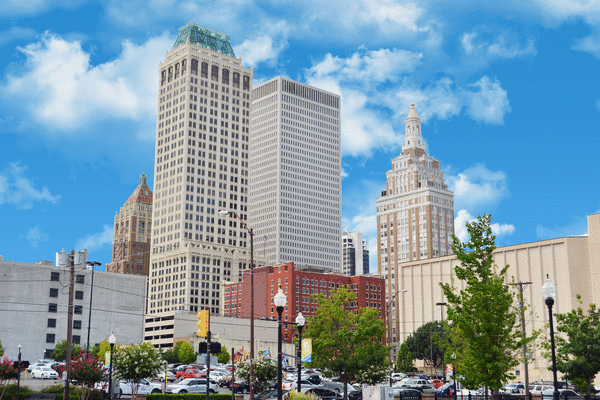
Tulsa Remote has become a national success story: the poster child for a new American experiment, luring remote workers from coastal hubs with cash and charm.
The program offers remote workers $10,000 to relocate, with the intention of bringing in new talent, new incomes and glowing headlines. This summer the Los Angeles Times glowingly reported that the program returned more than $4 to Tulsa’s economy for every $1 spent, citing retention, improved affordability and community building for movers from high-cost-of-living states like California.
It’s packaged and promoted to attract an influx of high-income remote workers and revitalize a city dismissed as a flyover. The pitch is compelling at first: so much space, so much culture, so much life.
Beneath the slogans lies a different reality that residents like me live with every day — one that anyone considering the move should know about before they sign. The idea that Tulsa Remote is a win for all parties is misleading. I came for the promise they sell, but I stayed long enough to realize the fine print.
On paper, I’m in an advantageous position. I bought a house in July 2021, during the nationwide price surge, but well before the peak. I’ve since built positive equity thanks in part to a comfortable mortgage rate at 3.75%. So, what’s my problem?
First is the mortgage lock. The low rate makes leaving Tulsa impractical and irrational. Giving up that rate likely means never owning again. The supposed advantage becomes a set of handcuffs. Then there’s trying to sell. Both commissions are the responsibility of the current owner, totaling up to 6%, meaning you’re likely out tens of thousands the moment you close on an average home.
Then there’s insurance: Tulsa Remote’s marketing boasts cheap houses and expansive lots. What they don’t tell you is that you’ll be required to over-insure. The risk of severe weather is high and Oklahoma’s rates are among the nation’s highest, rivaling California. My homeowner’s policy doubles the mortgage payment, even before property taxes. Factor in an average 1% to 5% wind and hail deductible, and the costs of keeping a “cheap house” standing will bleed you dry.
And that $10,000 grant? It’s actually taxable income. For me, it didn’t cover the cost of relocation, much less contribute to a down payment. The program self-promotes its glossy success stories about retention: People come, they fall in love with Tulsa, they stay. But the cracks are starting to show.
And it’s not just the house.
Professionally, Tulsa is an anchor. I brought real biotech credentials with me: quality assurance and regulatory and project management skills that should translate anywhere, into any field. Instead of opportunity, having Tulsa on my résumé now reads as a liability for remote work. My degrees and certifications (a masters in regulatory science, a certification in quality and compliance) didn’t vanish, but the perception of their value did. Companies outside of Oklahoma see a red flag of irrelevance. Local jobs? Not the right experience. Plus, I’m not from ’round here.
Everything comes with a catch. Fees on top of fees, taxes disguised as “assessments,” services that promise simplicity but deliver bureaucracy. Tulsa has mastered the art of selling basics at a premium. You pay for access, for convenience, for permission. Even a modest used car costs an additional $1,700 in excise tax before you can register it. After a while, you start to realize the model is only built to extract.
One thing not mentioned in the relocation packet is that the city’s violent crime rate puts your odds of becoming a victim at around 1-in-110— more than twice the state average. These aren’t abstract anxieties. They dictate insurance premiums, property values and the ways people move throughout the city.
The narrative suggests that newcomers will be embraced for bringing money, talent and opportunity. The reality: Tulsa is not necessarily welcoming. Outsiders are often seen as intruders, even when the income they bring helps sustain the growth the city claims. That’s the silent social tax.
That pitch carefully erases context. This is where the Trail of Tears ended. This ground was shaped by Native displacement. Tulsa Remote treats the city as a blank canvas waiting for outsiders to remake it. No acknowledgment of the unique reality in which sovereign nations govern alongside the state.
The program brings people and resources, but does not erase the city’s deeper structural obstacles.
Education systems and attainment gaps shape what kinds of industry the region can realistically attract. Public health burdens affect workforce productivity and quality of life. Industrial contamination and superfund site designations complicate development and pose continued risk.
Publicity from the relocation program helps the city. It brings money, attention and a narrative of revival. They rewrote Tulsa’s image and, in the process, wrote off people like me: quiet transplants who don’t bring headlines, high-visibility jobs or venture capital.
The city counts retention as success, but retention doesn’t separate those who love Tulsa from those who cannot afford to leave. From the outside, both look the same. From the ground, the difference is enormous. Some of us see no exit.
____
Preston Ray is a biotech professional and culture writer.
____
©2025 Los Angeles Times. Visit at latimes.com. Distributed by Tribune Content Agency, LLC.









































Comments