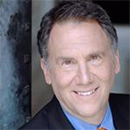
Bruce Dold, former Chicago Tribune editor and 'consummate newspaperman,' dies at 70
Published in Business News

Bruce Dold, who rose from suburban reporter to editor and publisher during his prodigious four-decade career at the Chicago Tribune, had only a handful of bylines after his name took its place on the masthead.
But the Pulitzer Prize-winning journalist left an indelible mark on the newspaper and the city, tackling the issues of the day, promoting civil discourse and influencing public policy.
From clearheaded editorials that found common ground to the groundbreaking endorsement of Chicago’s own Barack Obama for president, Dold led the Tribune into the new millennium with a reverence for the newspaper’s storied history, and an open mind for the future.
Dold even took on the ultimate challenge of balancing journalism and business interests in a dual editor-publisher role as the newspaper industry grappled with declining revenue and downsizing in the digital media age.
“He was really the consummate newspaperman,” said Tribune writer Rick Kogan, a colleague, friend and regular golfing buddy of Dold’s. “His passion for the Chicago Tribune was immense and unwavering.”
A longtime resident of west suburban La Grange Park, Dold, 70, died Wednesday after a four-year battle with esophageal cancer.
A New Jersey native, Dold came to the Midwest in 1973 to attend Northwestern University, where he decided to pursue a career in journalism. Inspired by the powerful reporting that broke the Watergate scandal and brought down President Richard Nixon’s administration, he earned his bachelor’s and master’s degrees at the Medill School of Journalism.
In 1978, he joined the Chicago Tribune, starting as a reporter for the Suburban Trib before moving on to the flagship newspaper, where he primarily covered politics. Among his reporting highlights, Dold cited the power struggle of the Council Wars, as they were dubbed, and the ensuing conflict that followed Chicago Mayor Harold Washington’s 1987 death.
“While the city was in grief, all the aldermen were scurrying around and trying to pick a puppet who was going to run the city for them,” Dold told the Tribune upon his elevation to editor in 2016. “It was the richest story I’ve ever seen in my life, and I got an opportunity to do that because I worked for the Chicago Tribune.”
Former Northwestern University spokesperson Alan Cubbage, who attended Medill’s Master of Science in Journalism program with Dold in 1978, competed against his former classmate in the suburbs while working for the Daily Herald.
He remembers the younger Dold as a friendly fellow graduate and a dogged reporter.
“One of the reasons I left journalism is I kept getting scooped by Bruce Dold,” Cubbage said. “He was just a really good reporter who had lots of sources and covered the beat really well, and it was always kind of tough to go up against him.”
Dold joined the Tribune’s Editorial Board in 1990, starting on a path that would lead him to the top of the Tribune’s masthead, and of his profession. In 1994, Dold earned the Pulitzer Prize for editorial writing for his series on the murder of a 3-year-old boy by his abusive mother and the failure of the Illinois child-welfare system to save him.
The editorials, which accompanied a yearlong newsroom exploration of the circumstances behind Joseph Wallace’s death — itself a Pulitzer finalist for public service journalism — catalyzed new legislation in Illinois to protect children from abuse and neglect.
At the time of his award, Dold praised the newsroom in a Tribune story celebrating the honor.
“Sometimes the best stuff we do on the editorial board is kind of piggybacking on the best reporting that goes on in the newsroom,” Dold said. “This was a case of it.”
Dold was named editorial page editor in 2000, guiding the Tribune’s opinion page. One of his first moves was replacing his vacant slot on the editorial board. He didn’t have to look far, hiring John McCormick, a friend, neighbor and carpooling buddy who previously served as Midwest bureau chief of Newsweek.
“Fortunately for me, his worldwide search only extended four blocks from his house,” said McCormick, who became deputy editor in 2001, and eventually succeeded Dold as editorial page editor.
In 2001, Dold wrote a piece explaining what he believed to be the editorial board’s mission.
“We should have a sense of civic commitment, but shouldn’t assume government has all the answers,” Dold wrote. “I believe the newspaper is one of the few places that has the independence and the influence to demand that government be accountable to the governed.”
Those guiding principles served the Tribune Editorial Board under Dold’s leadership, winning a Pulitzer in 2003 and earning finalist honors in 2009, 2010 and 2011.
In 2008, Dold steered the editorial board into uncharted political waters when it endorsed Chicago’s own Barack Obama for president, marking the first time in the Tribune’s history that the paper — a founding voice of the Republican party — backed a Democrat for the highest office in the land.
The editorial board also endorsed Obama for reelection in 2012, praising Obama’s “steadiness” in leading the country out of an inherited recession, among other accomplishments.
“It was a big deal for the paper,” McCormick said. “Bruce was the prime mover on those endorsements, both of them, that’s unarguable to anybody who was in the room.”
For years, that room was a stately, wood-paneled office on the fourth floor of the century-old neo-Gothic Tribune Tower, where politicians, titans of industry, celebrities and other leaders would gather around a large hexagonal table with rich leather inlays while seeking the support of the editorial board, under the watchful eye of an Abraham Lincoln portrait.
Everyone from Donald Trump and Bill Clinton to Obama sat in green leather chairs at that table with Dold during their respective presidential campaigns.
“Bruce made a lot of politicians squirm in that room, always in a quiet voice,” McCormick said.
Making your case before Dold for a favorable Tribune editorial inside Chicago’s erstwhile cathedral of journalism could, at times, be an intimidating endeavor, according to Guy Chipparoni, a politically connected public relations consultant.
“He would sit there with John McCormick to his left, their hands folded on the table, and he’d just say, ‘you may begin,’” Chipparoni said. “He was as warm as he could be, but it was like meeting with the College of Cardinals.”
Beyond the editorial boardroom, Dold faced a greater challenge after Tribune Co. emerged from Chapter 11 bankruptcy and spun off its publishing division in 2014, ushering in a series of ownership changes.
In February 2016, two weeks after technology entrepreneur Michael Ferro became the largest shareholder and chairman of Tribune Publishing, Dold was elevated to editor-in-chief at the Chicago Tribune.
Dold soon added the dual role of publisher, leading the Chicago Tribune through tumultuous times as it navigated the rapidly changing media landscape. That meant downsizing editorial operations amid declining revenues at the newspaper.
McCormick, who became editorial board editor when Dold was promoted, described his longtime friend and colleague as being caught in a “pincerlike assault” between the business and journalism sides of the industry.
These were not the best of times for the Tribune or Dold, but it was a responsibility he bore while nurturing young journalists, staying engaged and keeping a steady hand at the helm.
His 42-year career at the Chicago Tribune came to an abrupt end in February 2020 amid a local management shakeup at the newspaper after investment firm Alden Global Capital bought out Ferro’s stake and became the controlling shareholder of Tribune Publishing.
Emblematic of the changes, the Chicago Tribune exited Tribune Tower in 2018, and the Michigan Avenue landmark has since been converted into million-dollar condos. The editorial board subsequently moved with an itinerant newsroom to Prudential Plaza, the now-demolished Freedom Center printing plant and its current home on West Jackson Boulevard in the Loop.
Chris Jones, the Tribune’s longtime theater critic, who added the role of editorial page editor in 2021, oversees a downsized four-member editorial board, which holds court in more modest accommodations.
“Bruce had a commanding presence, and it’s not easy to live up to,” Jones said. “I think he also had a kind of a moral sensibility, and that is also something that we try to live up to on a daily basis.”
While in hospice care in recent weeks at his daughter Kristen Christman’s house in Winnetka, Dold received an outpouring of letters from former colleagues, friends and people he knew over his long career.
Among the letters was a handwritten note from former President Obama.
“It was the most beautiful letter I’ve ever read,” said Megan Dold, his daughter. “He said, ‘you were always a terrific journalist (even when you were after me), and that kind of integrity is sorely missed these days.’ It was amazing. He took a lot of comfort in that.”
Kogan said Dold never lost the “insatiable curiosity” that made him a good newspaperman. But more than anything, Kogan said, he was simply a good man.
Outside the newsroom, Dold, a former college DJ, loved music of all kinds, from Billie Holiday to the Grateful Dead, with an expansive record collection numbering in the thousands. But the New Jersey native had a special place in his heart for Bruce Springsteen, bringing his wife and daughters to see the Boss perform at Wrigley Field in August 2023.
“He loved Bruce Springsteen,” Megan Dold said. ”He was very proud to be from New Jersey. It was Bruce and Bruce. He knew every lyric.”
Dold was also an avid golfer and devoted family man, who took his wife, Eileen, and two young daughters to the White House when he won the Pulitzer Prize, and somehow managed to make it home for dinner most nights, despite the demands of his career, Megan Dold said.
In recent years, he reveled in being a grandfather, spending his last weeks surrounded by family.
“His grandkids were his pride and joy, and even while he was in bed, they’d come and play checkers with him,” said Kristen Christman.
In addition to his wife, two daughters and five grandchildren, Dold is survived by two sisters, Lisa Aramony and Catherine Dold.
“The thing about Bruce I will always remember is that he was a human being before he was an editor,” Kogan said. “His great gift, I think, was his humanity.”
A memorial service is scheduled for 10 a.m. Dec. 12 at St. Francis Xavier Catholic Church, 124 N. Spring Ave., in La Grange.
©2025 Chicago Tribune. Visit at chicagotribune.com. Distributed by Tribune Content Agency, LLC.



Comments