Commentary: Address affordability, give farmers a chance
Published in Op Eds
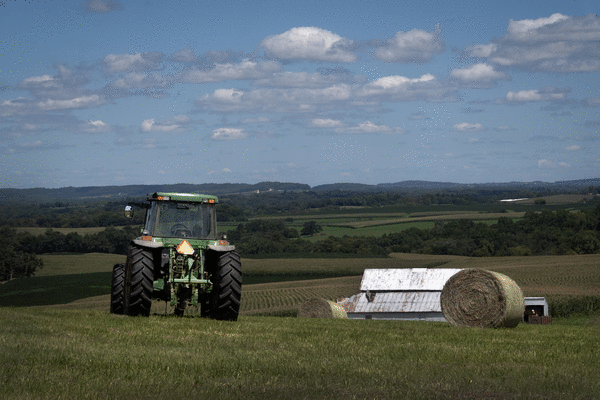
While my mom didn’t coin the phrase, “If you fail to plan, you are planning to fail,” she definitely liked expressing it while I was growing up. It was also a mantra of her parents on our family’s dairy farm. That’s where our future, as that of most farmers, depends on knowing what to do and how to do it.
For this reason, farmers and consumers alike are struggling to know what steps to take in an increasingly troubled economy. The Trump administration’s plan to investigate industry consolidation in the meatpacking industry would promote competition and potentially drive down prices. And New York Sen. Chuck Schumer’s Family Grocery and Farmer Relief Act goes deeper, creating and enforcing divestiture plans for corporations and ordering a study of foreign-controlled meat and food processors, such as Chinese-owned firms like Smithfield Foods.
While these are positive measures, more is required to give farmers a fighting chance to figure out how to move forward. Some additions to the farm bill that are moving through Congress could do just that.
One top affordability concern involves beef prices. The price per pound of ground beef has soared from about $1.50 per pound in 2000, to just under $7 per pound now. This leap is the result of decades of bipartisan neglect of our food system.
The basics of supply and demand reveal that our country doesn’t have the herds we used to. In fact, beef cattle stocks are currently at a 75-year low and trending downward.
While high prices at the grocery store might entice would-be farmers to start herds, rising input costs and farmland decimated by drought have made entering the profession nearly impossible.
Adding insult to injury, some of our government’s recent policies hurt farmers when it comes to earning a living amid our country’s ongoing affordability crisis. First, the war in Iran disrupts the flow of oil through the Strait of Hormuz, raising the already high input prices for gas and fertilizer.
And then there’s beef imports from Argentina and other countries, which have steadily ticked up since 2021. On Feb. 6 of this year, President Donald Trump signed an executive order that quadrupled beef imports from Argentina.
While it’s possible such actions may offer brief respite to consumers at the grocery store, they do nothing for our long-term farm economy. What’s needed is a long-term vision that could address both farmer and consumer concerns.
The National Family Farm Coalition’s Farm Bill Platform, updated in February, includes proposals that would bring down prices for farmers, improve markets and ensure consumers’ knowledge of what they are purchasing.
In terms of specific proposals in the platform, the Farmland for Farmers Act, introduced in 2023, would limit corporate purchases of farmland, helping to reign in rising prices that present a critical barrier for newcomers. And advancing the Livestock Owned by Communities to Advance Local (LOCAL) Foods Act would strengthen local markets by allowing for on-farm slaughter of livestock. This proposal, by freeing farmers from federal regulation, incentivizes the growth of local production and consumption.
Furthermore, reinstating mandatory country of origin labeling would restore market integrity and fair competition for U.S. producers, and allow consumers to make informed purchasing decisions.
Incorporating these bills in the farm bill would give farmers a chance to build their herds and stop corporations from taking critical resources from them. Consumers also benefit from knowing what they are getting and having the chance to buy from local markets.
Farmers know that planning is key to their future.
But a government that continually undercuts them, whether through making short-term deals that threaten their markets or engaging in wasteful foreign ventures that drive up input costs, makes an already uncertain future even more difficult to navigate.
Instead of working against farmers, our policymakers ought to change course and partner with them in making some critical additions to the farm bill to give producers a chance to make a decent living.
____
Anthony Pahnke (anthonypahnke.com) is vice president of Family Farm Defenders and an associate professor of international relations at San Francisco State University. This column was produced for Progressive Perspectives, a project of The Progressive magazine, and distributed by Tribune News Service.
___
©2026 Tribune Content Agency, LLC.



















































Comments