David M. Drucker: Your average Democratic voter isn't a left winger
Published in Op Eds
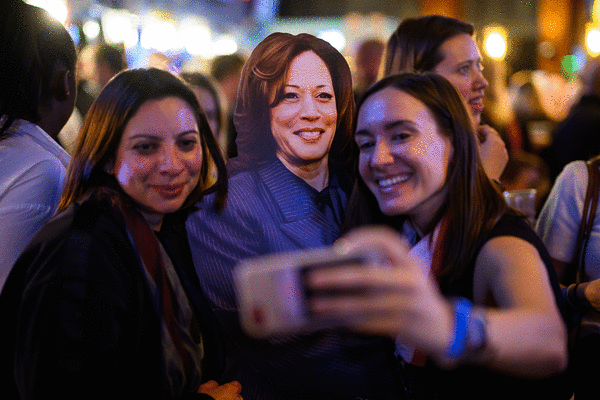
President Donald Trump has a habit of referring to Democrats as “radical-left lunatics.” The unfair pejorative aside, it turns out the typical Democratic voter isn’t even left wing. Let that sink in.
According to an expansive poll conducted recently for centrist Democratic think tank Third Way, a majority of Democratic voters who expect to vote in a presidential primary are White women over age 55 who lack a college degree and describe themselves as “liberal” and “moderate.” Only 11% identify as “progressive” and nearly as many say they are “conservative” (5%) as “socialist” (6%). On the critical issue of what to do about Immigration and Customs Enforcement in the wake of Trump’s polarizing mass deportation program, 66% want ICE held accountable and overhauled, compared to 34% who want the agency abolished.
That’s a lot of myth busting for one survey; it’s also ironic.
In the past, many Democratic presidential contenders have chased the approval of the party’s left wing on charged cultural and public policy issues. They especially did so in 2020. Among some of the policies Democratic presidential contenders backed in that primary: some form of nationalized health care — sometimes referred to as “Medicare for All” — decriminalizing illegal border crossings and having the government provide health care to immigrants in the U.S. illegally.
That strategy isn’t just bad general election politics; it’s bad primary politics, as Lanae Erickson, Third Way’s senior vice president for social policy, education and politics, explained at a briefing to announce the poll. “When you think of who these Democratic primary voters are, they’re much more like the rest of America,” she said, versus the dogmatic lefty of Trump’s (or progressive activists’) imagination.
None of this was terribly surprising to Erickson. Along with her colleagues at Third Way and other center-left Democratic groups, she is working to convince the party to nominate a mainstream Democrat with broad appeal for the general election in 2028. In other words, they want to avoid a repeat of 2024, when voters concluded that then-Vice President Kamala Harris was more ideologically extreme than Trump. For instance, 80% of swing voters concluded that the vice president supported policies she did not campaign on, such as “taxpayer funding for transgender surgeries for undocumented immigrants (83%), mandatory electric vehicles by 2035 (82%), decriminalizing border crossings (77%), and defunding the police (72%).” That’s per Blueprint, a polling outfit aligned with the Democratic Party.
But in an email exchange late last week, Erickson told me that one aspect of this poll did surprise her — and debunked yet another misconception political observers might harbor about Democratic primary voters.
“The fact that 58% of primary voters call themselves Christian, with three times as many Democratic primary voters self-identifying as ‘born again’ or Evangelical than the number who identify as atheist (9%), really burst my mental bubble,” Erickson said. “Even someone like me who studies these voters all the time forgets who they really are and what their lives are like.”
Betting websites Kalshi and Polymarket have lists of potential 2028 Democratic presidential contenders that are dozens long. Both are led by California Governor Gavin Newsom and followed by Representative Alexandria Ocasio-Cortez of New York. The next three are some combination of Harris, Senator Jon Ossoff of Georgia and Pennsylvania Governor Josh Shapiro. The names vary from there. In public opinion polls, Harris is in front, with Newsom, former Transportation Secretary Pete Buttigieg and Ocasio-Cortez trailing to round out the top five.
Who might the typical Democratic primary voter ultimately prefer? It’s too early to say.
But the Third Way poll reveals this much: Self-described Democratic socialists like Ocasio-Cortez, the 2028 contender with the most buzz, would have a steep hill to climb to win over the typical Democratic primary voter. The survey showed that “66% are worried that nominating someone who is too far left risks losing the general election because they could turn off swing voters.”
But what all of this means for a Democrat like Newsom, who’s also receiving early 2028 hype, is foggy.
The governor has a rather progressive track record. Meanwhile, his Democratic opponents are sure to pick apart his handling of issues like affordability, homelessness and management of taxpayer funds — to name just a few challenges that have plagued his administration. And Newsom can present as ideologically flexible. That’s possibly problematic when 72% of Democratic primary voters say they value candidates who are “authentic and true to what they believe in,” according to the poll.
But Newsom has one quality that might appeal to Democratic primary voters of all types.
He’s combative and relentlessly so vis-à-vis Trump, who won’t be on the ballot two years from now but is sure to remain enemy No. 1 among Democrats. This could matter because 88% of Democratic primary voters said in the Third Way poll that they are “willing to vote for someone [they] don’t agree with on every issue as long as [the candidate is] strong and will fight for the working people of this country.” Also, 86% crave a candidate with “the guts to stand up to Trump and the MAGA wing” of the GOP. (No candidate qualities tested higher.)
Some on the left might protest the premise this survey concludes regarding what it takes to win the Democratic primary, and therefore, the presidency. Look at Trump, they might say. He’s proof that elevating a so-called winger is a recipe for exciting and growing the base of your party. Except that suggests a profound misunderstanding of Trump’s popularity in 2016 and since.
When the future president first announced his run for the Republican nomination in 2015, his crass comments about immigration stole the public’s attention. But Trump also said, of his more conservative primary opponents, “They don’t talk jobs, and they don’t talk China. … People are saying: ‘I just want a job. Just get me a job.’” Republican voters heard this and concluded Trump was the most pragmatic candidate of the bunch, even though his agenda was (and is) often wrapped in provocative language and unseemly behavior.
Trump is just one example. There are others.
Sometimes, there are presidents, like Ronald Reagan and Barack Obama, who simultaneously excite the wings of their parties, rank-and-file primary voters and the broader electorate. The Democrats may yet field a candidate who can replicate that phenomenon. If not, the key question is whether the candidates who do run will be wise enough to ignore the loud left wing and court the quiet voters who dominate in primaries.
____
This column reflects the personal views of the author and does not necessarily reflect the opinion of the editorial board or Bloomberg LP and its owners.
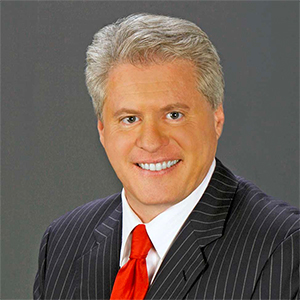
David M. Drucker is a columnist covering politics and policy. He is also a senior writer for The Dispatch and the author of "In Trump's Shadow: The Battle for 2024 and the Future of the GOP."
©2026 Bloomberg L.P. Visit bloomberg.com/opinion. Distributed by Tribune Content Agency, LLC.






















Comments