Editorial: The 2026 economy has promise, but here's why you should not relax
Published in Op Eds
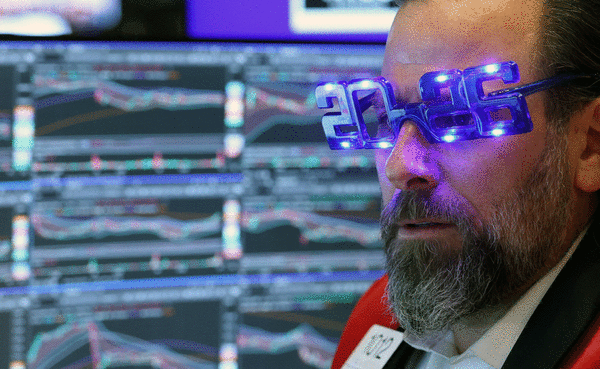
After a year of whiplash, Americans enter 2026 with cautious optimism as professional forecasters expect the economy to grow by about 2% or more — not a boom, or a bust — and they predict relatively modest changes for inflation, unemployment and interest rates. Most Wall Street analysts say stocks will continue to rally, and many consumers are likely to receive substantial tax refunds, bolstering spending and investment.
Forecasting is never foolproof, but since the pandemic, professional forecasters have been mostly on target, if a little pessimistic. A Federal Reserve review deemed late 2024’s forecasts “quite accurate” for 2025.
Two cautions: Downturns after long expansions are rarely predicted, and even a steady 2026 is likely to produce sharp winners and losers. This is no time to relax. For investors and policymakers, now’s the time to prepare for disappointments as well as thrills.
The biggest thrill ride will be artificial intelligence. Corporations are investing massively in AI products and services. The buildout of AI infrastructure like data centers has propelled economic growth. AI stocks such as Nvidia have led the market to three straight years of double-digit gains.
Is it a bubble? Plenty of experts consider the tech sector overvalued, but expectations for future earnings remain sky-high. While no boom lasts forever, optimism continues into 2026.
The same goes for financial innovations like cryptocurrencies and prediction markets. Favorable government policy has prompted heavyweights like Chicago’s CME Group and Cboe Global Markets to join the bandwagon. While the economic outlook for 2026 remains a gamble, there definitely will be new ways to bet on it.
On the flip side, pessimism is widespread in the media industry. Books, broadcast media, magazines and newspapers face continued headwinds, notwithstanding some pockets of unexpected growth. And the Hollywood power structure was roiled by new habits and technologies in 2025.
Traditional manufacturing for everything from engines to furniture is under pressure, too. This could be a rough year for mining coal, drilling for oil, making candy or selling fertilizer to a weakened farm sector, according to various forecasts. And the outlook for automakers is increasingly cautious as consumers push back against high prices and U.S. government policy turns against electric vehicles.
More broadly, watch for small businesses to struggle. While tax cuts in last year’s “One Big Beautiful Bill” will cushion the blow, many smaller operators enter 2026 badly bruised from the prior year.
As bigger companies worked overtime to obtain exemptions, revamp supply chains and otherwise sidestep the trade wars, many small companies that relied on imported goods lacked the clout and resources to avoid getting tariffed. Further, heightened immigration enforcement has created fear among immigrant workers and customers, disrupting small-scale construction, food and service operations, from landscaping to day care.
Traffic in restaurants faltered, as budget-conscious customers ate out less often and spent less. Soaring costs for health insurance hammered many small-business owners and their employees.
Among consumers, 2026 is shaping up to be a good year for wealthier U.S. households, who continue to spend and invest. The booming stock market has produced eye-popping gains, and the 2025 tax-and-spending bill will lead to fatter federal refunds.
As disposable income surges at the top, companies are offering “premium experiences.” Disney, for instance, has shifted theme-park pricing to segregate guests by spending level, offering paid line-skipping and exclusive perks to those who can afford them. The top 20% of households will account for an increasingly large share of consumer spending in the year ahead.
The other 80% are feeling disproportionate pressure from higher costs. Affordability has become a potent political issue, especially with the job market weakening. Reduced federal spending on health care and feeding programs for the needy stand to increase the pressure. Tax cuts will flow overwhelmingly to high earners, who also are expected to take advantage of reduced tax enforcement after staff cuts at the Internal Revenue Service last year.
With the Big Beautiful Bill, the federal government is on track to spend far more than it takes in, a problem that has plagued Washington for far too many years. Political leaders continue to ignore the threat posed by soaring federal debt. The dollar fell about 10% against a basket of major currencies last year, and its purchasing power is likely to decline again in 2026 as the U.S. borrows more trillions.
This will be a difficult year for the U.S. Federal Reserve, which is expected to cut interest rates further to support the job market. Policy choices like deficit spending and higher tariffs threaten to boost inflation, putting the Fed in a bind. With the midterm elections looming, the pressure is on for the Fed to temporarily goose the economy by slashing interest rates. That raises the risk of overshooting, which would amount to pouring gasoline on the fire of inflation.
As economic challenges grow, America needs the Fed to act in the country’s long-term interests, not in the interest of any single political party or politician. Here’s hoping for a 2026 that leaves the U.S. economy better off than it was last year.
___
©2026 Chicago Tribune. Visit at chicagotribune.com. Distributed by Tribune Content Agency, LLC.
















































Comments