Commentary: Panama's warning for a post-Maduro Venezuela
Published in Op Eds
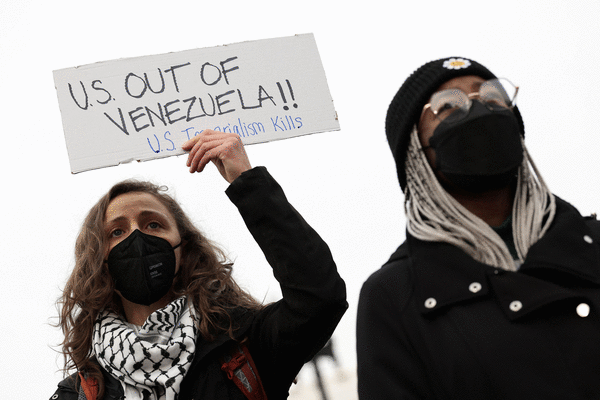
The facts, familiar though they may be, deserve repeating: On Saturday, Venezuelan President Nicolás Maduro and his wife, Cilia Flores, were captured and removed from the country following a large-scale U.S. military operation involving elite forces and months of planning.
They appeared Monday in a New York court, facing charges including narcoterrorism, drug trafficking and weapons offenses, and both pleaded not guilty. Maduro declared he was still the legitimate president of Venezuela and called himself a “prisoner of war.” The hearing ended amid tense exchanges in the courtroom and protests outside, with the next court date set for March 17.
Jan. 3 resonated beyond Venezuela. Thirty-six years earlier, on the same date, Manuel Noriega — Panama’s dictator — was taken into U.S. custody after surrendering at the Vatican’s diplomatic mission, formally ending the country’s military regime.
The coincidence has invited an avalanche of historical analogies. Two authoritarian leaders accused in U.S. courts of narcotics trafficking and organized crime. Two governments subjected to prolonged diplomatic isolation and sanctions. Two interventions framed by Washington as necessary acts in defense of democracy, human rights and the rule of law. Even U.S. lawmakers have leaned into the symbolism, circulating images that place Noriega and Maduro side by side, reinforcing the idea that history is repeating itself — down to the calendar date.
Yet this focus on the moment of capture risks obscuring the more consequential lesson. The meaningful parallel between Panama in 1990 and Venezuela in 2026 is not the removal of an authoritarian leader. It is the governance vacuum that follows externally forced political rupture — and the profound difficulty of filling it.
To be clear, Venezuela is better off without Maduro in power. The removal of an authoritarian leader accused of grave crimes is a necessary condition for democratic recovery — but it is not a sufficient one. The issue is not whether his removal was justified; the issue is what follows.
Noriega’s capture came at the end of Operation Just Cause, launched by the United States on Dec. 20, 1989. Nearly 27,000 U.S. troops crossed into Panama in one of the largest military operations since Vietnam. Fighter jets bombed strategic targets in Panama City and Colón, while ground forces dismantled the Panamanian Defense Forces.
The invasion was justified by the George H. W. Bush administration on multiple grounds: protecting U.S. citizens, combating drug trafficking, defending democracy and human rights, and safeguarding the neutrality of the Panama Canal. Noriega himself embodied the contradictions of U.S. policy in the region. A longtime CIA collaborator during the Cold War, he simultaneously cultivated deep ties with narcotrafficking networks, including Colombia’s Medellín cartel. Testimony during his later trial in Miami revealed that he received payments for facilitating cocaine shipments and laundering drug money through Panama’s financial system.
When Noriega surrendered Jan. 3, 1990, his capture was widely interpreted as the definitive end of Panama’s authoritarian era. Symbolically, it was. Politically, it was not.
Democratic reconstruction was slow, and even today, Panama faces clientelism, corruption, low trust in institutions and fragile rule of law. The episode illustrates that externally imposed regime collapse cannot resolve the governance deficits left by authoritarianism.
Maduro’s capture follows a different operational script but raises similar structural questions. Operation Absolute Resolve was the result of months of intelligence gathering and interagency coordination. It involved the Drug Enforcement Administration, elite military units and more than 150 aircraft operating in precise synchronization. U.S. officials emphasized the operation’s “discreet” and “surgical” nature, contrasting it with large-scale invasions of the past.
It also followed years of legal escalation. Since 2020, the U.S. has accused Maduro and senior figures in his regime of narcotrafficking, money laundering and narcoterrorism, alleging collaboration with a Colombian guerilla group to traffic cocaine into the United States. The U.S. government placed multimillion-dollar bounties on Maduro and other officials, framing the Venezuelan state as a criminal enterprise. His arrest, U.S. authorities argue, represents the culmination of a long-standing law enforcement effort rather than a conventional act of war.
But here, too, the emphasis on operational success risks overshadowing the political aftermath. Venezuela’s crisis is not reducible to one man, however central his role may have been. Years of authoritarian consolidation have hollowed out state institutions, politicized the military, weakened the judiciary and fragmented political opposition. The boundaries between political authority, armed actors and criminal networks have become increasingly blurred. State capacity has eroded alongside economic collapse, mass migration and social disintegration.
In this context, the removal of Maduro creates not resolution but uncertainty. Who governs in the immediate aftermath? With what legitimacy? Under what institutional framework? And to what extent will Venezuelans themselves shape the transition, rather than external actors acting in their name?
The key parallel between Panama in 1990 and Venezuela in 2026 is not just the removal of an authoritarian leader, but the governance vacuum that follows externally imposed regime change. When power is taken from the outside, domestic institutions struggle to assert authority, legitimacy is contested and responsibility diffuses just when clarity is needed. Panama’s post-Noriega experience shows that while intervention toppled the military, democratic reconstruction was slow and uneven; external forces cannot create institutional coherence or political trust. Early signs in Venezuela suggest similar risks, with U.S. statements hinting at temporary stewardship.
The removal of Maduro was a necessary and long awaited break with authoritarian rule, but democratic recovery depends on what follows: the reconstruction of institutions, legitimacy and political inclusion. Whether this moment becomes a turning point or a prolonged limbo will be decided by how the governance vacuum is filled.
____
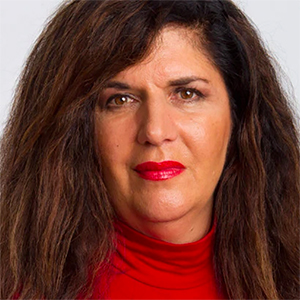
Cristina Guevara is a Latin America policy analyst and writer. She previously served as a policy and legislative adviser in Panama’s National Assembly.
___
©2026 Chicago Tribune. Visit at chicagotribune.com. Distributed by Tribune Content Agency, LLC.










































Comments