Editorial: Trump administration has not made a case for Venezuela; Congress should act
Published in Op Eds
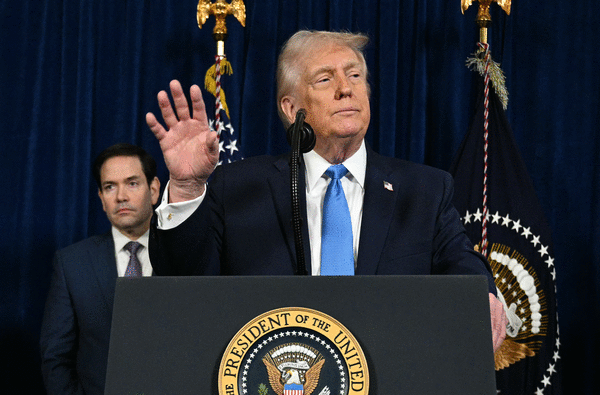
In September, when the U.S. military began blowing up boats the administration said was carrying drugs in the Caribbean Sea with no investigation or convictions, public discomfort was immediate, and criticism sharp. Many military and political leaders alleged a war crime after an especially disturbing, deadly attack on survivors of a first strike.
Yet, the Trump administration was unmoved: This was about keeping drugs from U.S. shores. Meanwhile, other elected leaders surmised the military pressure was brought to gain access to Venezuela’s vast oil reserves. Interestingly, in his news conference on Saturday after the U.S. strike on Venezuela, President Donald Trump spoke clearly about oil and how the industry would be rebuilt.
From the start of this slow-rolling U.S. interference in another sovereign nation’s governance, the administration has shamelessly exercised deflection and obfuscation and told outright lies. Now, Trump said the U.S. will “run” Venezuela for an unspecified amount of time.
Just last month, Secretary of State Marco Rubio insisted to the media that regime change was not the goal of U.S. military operations, echoing a statement he had made to key members of Congress. Yet, that seems exactly what has happened.
In an escalation as breathtaking as the rising death toll — at least 115 as of Wednesday — and as ships massed, U.S. Delta Force soldiers arrested President Nicolás Maduro and his wife in their Caracas bedroom early Saturday morning and brought them to the U.S., where they faced federal charges of narco-terrorism conspiracy, cocaine importation conspiracy and illegal weapons counts.
Is the world — and Venezuela — a better place without Maduro in power? There is a strong case for that. Yet the president has not made that case to lawmakers. Trump’s impulsive decision-making disappointingly demonstrates that he desires the kind of authoritarian power of the leaders he endeavors to overthrow. This is the candidate, remember, who wanted to end wars, not start them.
The key variable now is Congress. Both houses are under a Republican leadership that more often falls in line than stands up to the president.
“Republican leaders should not just shrug their shoulders and let the president bomb whoever he wants on hardly more than a whim — they must join Democrats in pressing for serious accountability and insisting that the use of military force be authorized by Congress,” U.S. Sen. Patty Murray, D-Wash., said in a statement.
It’s what could happen after this display of power that especially troubles U.S. Rep. Adam Smith, D-Wash., the ranking member on the House Armed Services Committee. The implications are immediate and far-reaching.
“What is the U.S. interest here?” Smith asked in an interview. “The U.S. might get the oil, but should the U.S. dictate to other countries how to use their resources?”
Trump administration officials are expected to brief key members of Congress midweek, Smith said.
If they don’t make a strong case to Congress members and the public, lawmakers should act to limit the administration’s actions in Venezuela.
____
The Seattle Times editorial board: members are editorial page editor Kate Riley, Ryan Blethen, Melissa Davis, Josh Farley, Alex Fryer, Claudia Rowe, Carlton Winfrey, Frank A. Blethen (emeritus) and William K. Blethen (emeritus).
____
©2026 The Seattle Times. Visit seattletimes.com. Distributed by Tribune Content Agency, LLC.













































Comments