The Outfit Ends at the Ankles: Why Modern Fashion Quietly Gives Up at the Floor
Published in Fashion Daily News
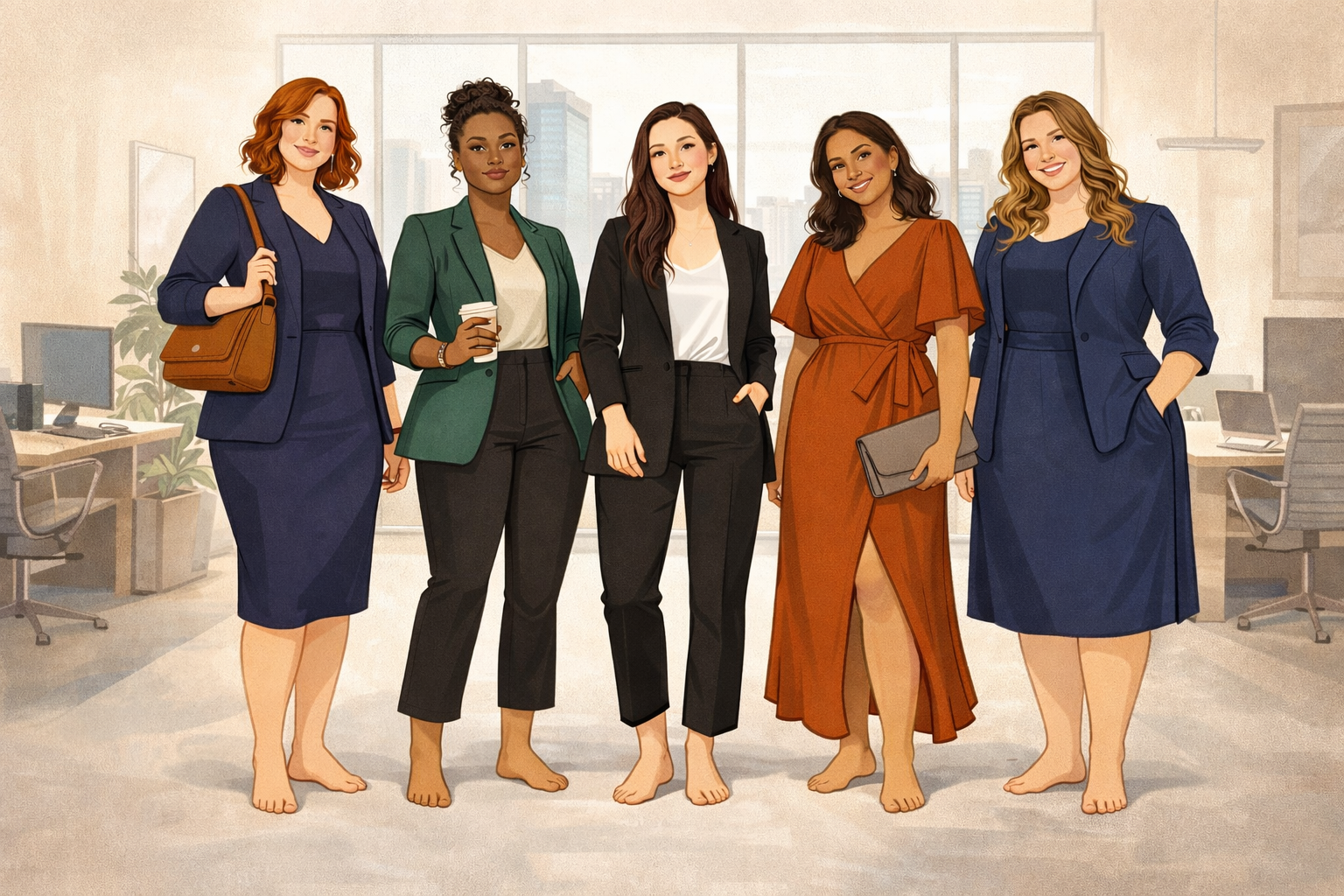
The modern outfit is often described from the top down: silhouette, structure, layering, palette. Jackets are analyzed, trousers assessed, accessories noted with care. Yet somewhere just above the floor, the conversation tends to fade. What happens at the ankles—what meets the ground, how the body resolves into space—is treated as an afterthought, if it’s acknowledged at all.
This quiet omission reveals something deeper about contemporary fashion. In a culture that increasingly prioritizes appearance in controlled, upright, camera-ready moments, the lower edge of the body has become a kind of blind spot. It is the part of the outfit most likely to be cropped, obscured, or simplified. The result is a visual language that often feels complete in theory but unfinished in practice—an outfit that, quite literally, gives up at the floor.
The Cropped Reality
One reason for this shift is technological. Much of modern style is consumed through screens, where framing dictates emphasis. Social media images frequently cut off at mid-calf or just above the ankle, whether intentionally or as a byproduct of composition. Even full-length photos tend to prioritize the face and torso, where expression and identity are most easily communicated.
Over time, this has trained both creators and viewers to think of the outfit as something that lives primarily above the knees. The lower portion becomes secondary, a supporting element rather than an integral part of the whole. Shoes, once central to fashion narratives, are reduced to glimpses—if they appear at all.
This isn’t merely a matter of visibility. It’s a shift in attention. What is not consistently seen becomes less consistently considered.
Standing Versus Living
Modern fashion also tends to assume a standing body. Lookbooks, runway shows, and promotional imagery present clothing in its most controlled state: upright, balanced, and composed. In this context, the lower leg and foot serve a functional purpose—completing the line, grounding the silhouette—but rarely demand focus.
Real life tells a different story. People sit, lounge, walk across uneven surfaces, curl their legs beneath them, or stretch out on a couch. In these moments, the lower half of the body becomes far more prominent. The way fabric falls, gathers, or shifts at the ankles is no longer incidental; it is central to how the outfit is experienced.
Yet these “living” positions are largely absent from fashion imagery. The industry designs and presents clothing for a body that is poised rather than inhabited, leaving the lower edge of the outfit underexplored.
The Disappearing Shoe
Footwear, historically one of the most expressive elements of dress, has undergone a subtle transformation. While high-end and streetwear cultures still celebrate statement shoes, everyday fashion has moved toward simplification. Neutral sneakers, understated flats, and minimal designs dominate, chosen for versatility rather than distinction.
This is not a failure of creativity but a reflection of priorities. Comfort, practicality, and adaptability have become central concerns, especially in a world where people move fluidly between settings—home, work, errands—often within the same day. The shoe is expected to accommodate all of these roles without drawing undue attention.
As a result, it recedes. It does its job quietly, supporting the outfit without defining it. The visual emphasis remains above, where variation and individuality are more readily displayed.
The Floor as Boundary
There is also a conceptual boundary at play. The floor represents the point where the body meets the environment—a place of contact, friction, and unpredictability. It is less controlled than the space above, more subject to context and change.
Fashion, particularly in its aspirational forms, tends to avoid this boundary. It elevates the body, isolates it from its surroundings, and presents it as an object of aesthetic consideration. The closer one gets to the ground, the more that illusion is challenged. Dirt, texture, movement—all of the realities of physical space—enter the frame.
By minimizing attention to the ankles and below, modern fashion maintains a cleaner, more abstract image. The outfit remains an idea rather than a fully grounded experience.
What We Miss
When the outfit “ends” at the ankles, something is lost. The lower portion of the body carries its own expressive potential: the rhythm of a walk, the way fabric interacts with motion, the subtle choices that reveal how a person inhabits their clothing.
Ignoring this space narrows the definition of style. It reduces the outfit to a static composition rather than a dynamic one, something to be seen rather than lived in. It also overlooks the ways in which comfort and practicality shape appearance—not as compromises, but as integral aspects of design.
There is a growing awareness of this gap, particularly in conversations about authenticity and everyday dressing. As people seek clothing that reflects their actual lives, not just curated moments, the lower half of the body is beginning to re-enter the discussion.
Reclaiming the Ground
A more complete approach to fashion would treat the outfit as continuous from head to floor, acknowledging that the final inches matter as much as the first. This does not mean returning to elaborate or impractical footwear, but rather paying attention to how the entire ensemble functions in real conditions.
It might involve reconsidering proportions—how hems fall, how fabrics move, how the body interacts with surfaces. It might mean embracing the visibility of wear and use, allowing the outfit to reflect the environments it inhabits. Or it might simply mean looking down, recognizing that the story of what we wear does not stop where the camera often does.
In the end, the ankles are not a boundary but a transition. They mark the point where fashion meets life, where intention meets reality. To ignore them is to leave the narrative unfinished.
Modern fashion may quietly give up at the floor, but it doesn’t have to. The most compelling style often begins precisely where the image ends.
========
Elinor Vance writes about fashion as lived experience, focusing on the intersection of design, habit, and everyday movement. Her work explores how clothing functions beyond the frame.
This article was written, in part, utilizing AI tools.






Comments