Barefoot, Sandals, Slippers: Rethinking Footwear at Home and on the Road
Published in Fashion Daily News
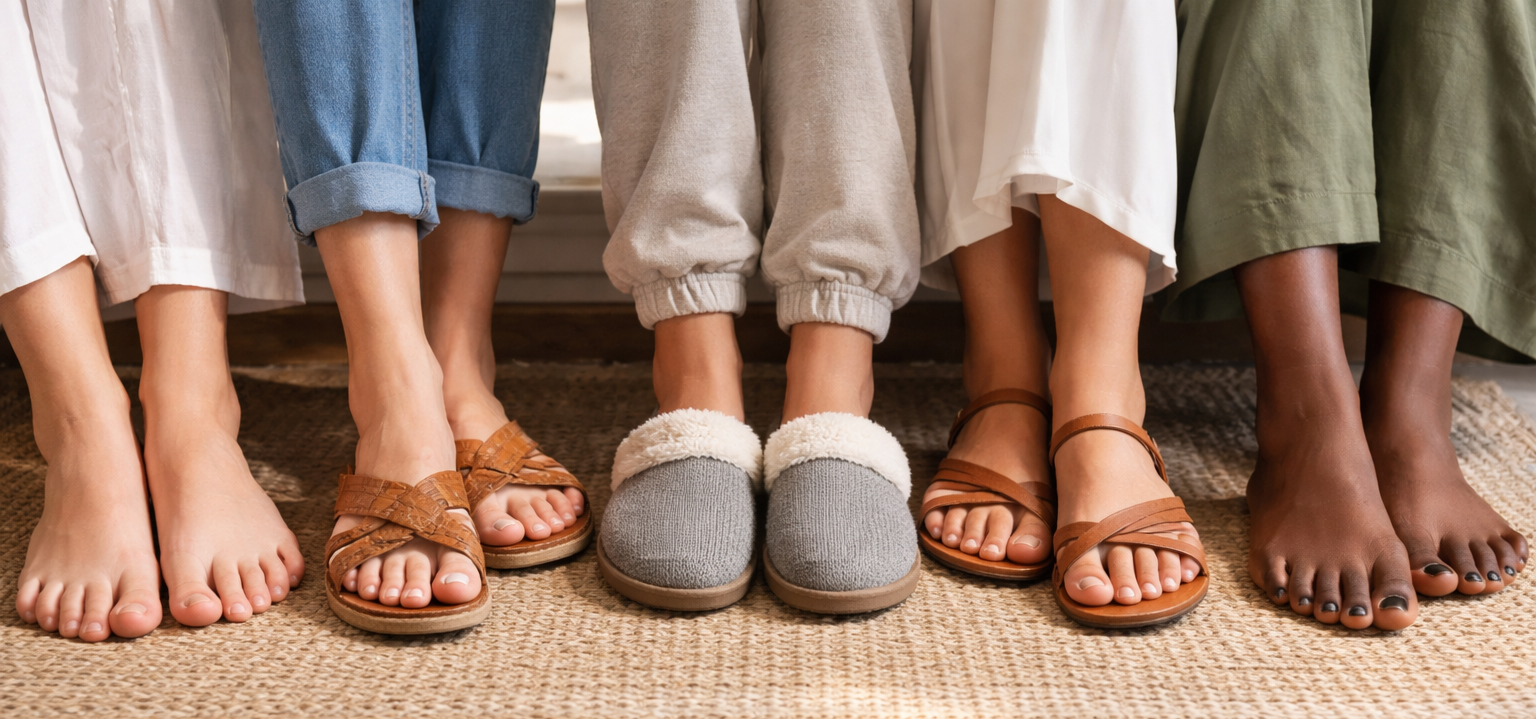
By almost any measure, the modern relationship between people and their shoes is changing.
For much of the 20th century, footwear followed a rigid hierarchy. Work shoes were worn for work. Casual shoes were worn for leisure. House shoes, if they existed at all, were rarely discussed. Bare feet were something reserved for beaches, bedrooms, and childhood summers.
Today, that hierarchy is quietly collapsing.
Remote work, flexible schedules, casualized offices, and changing ideas about comfort have all reshaped how people think about what goes on their feet. From living rooms to airport terminals, from hotel hallways to neighborhood sidewalks, footwear has become more personal, more situational, and more reflective of lifestyle than ever before.
The result is a growing interest in three once-overlooked categories: barefoot living, everyday sandals, and indoor slippers.
Together, they tell a larger story about how people are renegotiating comfort, health, and identity in daily life.
Home Is No Longer Just “Home”
For millions of people, home is now also an office, a classroom, a meeting space, and a social hub.
That shift has changed dress codes from the ground up.
Where once people changed into “real clothes” and “real shoes” to leave the house, many now spend entire days moving between Zoom meetings, household tasks, and neighborhood errands without fully switching modes. Footwear has followed suit.
Slippers, once associated with retirement or cold mornings, have become everyday essentials. Soft clogs, fleece-lined slides, and padded house shoes now function as indoor uniforms. They signal that a person is “on,” but not formally so.
At the same time, many households have adopted stricter no-shoes policies indoors, influenced by health concerns and international customs. The living room is increasingly treated as a clean, semi-private space rather than an extension of the sidewalk.
In this environment, footwear has become modular. People move easily between barefoot, slippers, and outdoor shoes depending on task and mood.
Comfort, not convention, is driving the choice.
The Quiet Rise of Barefoot Living
Alongside the slipper boom has come renewed interest in going barefoot—at home and, in some cases, beyond it.
Supporters point to several benefits.
Bare feet provide direct sensory feedback from the ground, improving balance and body awareness. They encourage natural foot movement and can strengthen small stabilizing muscles. For some people, they simply feel better.
Culturally, barefoot living has long been normal in many parts of Asia, Oceania, and Southern Europe. In those regions, removing shoes indoors is a sign of respect and cleanliness, not eccentricity.
In North America, however, barefoot habits were long treated as informal or even improper. That perception is slowly shifting, especially among younger adults who prioritize wellness and authenticity over formality.
Still, barefoot living is not universal. Some people dislike cold floors, uneven surfaces, or the feeling of dust and grit. Others require supportive footwear for medical reasons.
The emerging trend is not toward universal barefootism, but toward intentionality. People are asking whether they actually need shoes at certain times—or whether habit has simply been guiding their choices.
Sandals as Everyday Tools
Sandals have undergone their own transformation.
Once categorized as beachwear or vacation accessories, many sandals are now designed for daily, multi-purpose use. Brands emphasize arch support, durability, and ergonomic design as much as style.
Travelers, in particular, have embraced high-quality sandals as “do-everything” footwear. A good pair can handle airports, sightseeing, casual dining, and long walks while remaining lightweight and easy to pack.
This shift reflects a broader minimalist impulse in travel culture. Instead of packing four or five specialized shoes, many people now aim for one or two versatile options.
Sandals also align with growing environmental awareness. Fewer shoes mean less consumption and waste. Well-made sandals that last several seasons fit into a more sustainable wardrobe philosophy.
Social attitudes have changed as well. Wearing sandals to casual restaurants, offices with relaxed dress codes, or even informal meetings no longer carries the stigma it once did. Practicality has gained cultural legitimacy.
Slippers as the New “Inside Shoes”
Slippers occupy a unique position between barefoot and fully shod.
They provide warmth, cushioning, and light protection without feeling restrictive. In many homes, they function as transitional footwear—something to slip on when moving between rooms, stepping onto a porch, or working at a standing desk.
During the pandemic era, slipper sales surged worldwide. As people spent more time indoors, they invested in products that made that time more comfortable.
Design followed demand.
Modern slippers now feature memory foam soles, moisture-wicking linings, antimicrobial treatments, and even outdoor-ready rubber bottoms. Some resemble loafers or sneakers more than traditional bedroom footwear.
They reflect a blending of private and public spaces. A person can answer the door, take out the trash, or walk to the mailbox without changing shoes. Slippers have become tools of convenience.
Foot Health and the Comfort Debate
Behind these trends lies a growing conversation about foot health.
Traditional shoes often prioritize appearance over biomechanics. Narrow toe boxes, elevated heels, and rigid soles can alter natural walking patterns and contribute to long-term discomfort.
In response, some consumers have turned to barefoot-style shoes, minimalist sandals, or flexible slippers that allow more natural movement. Others seek cushioned, supportive designs that reduce joint stress.
There is no single solution.
Podiatrists generally agree that individual needs vary. Age, weight, activity level, and medical history all matter. What works well for one person may cause pain for another.
What has changed is awareness.
People are paying closer attention to how footwear affects posture, fatigue, and mobility. Comfort is no longer dismissed as laziness. It is increasingly understood as a component of health.
Footwear and Identity
Shoes have always carried social meaning.
Dress shoes signal professionalism. Sneakers suggest youthfulness. Boots imply ruggedness. Sandals and bare feet communicate ease.
Today, those signals are becoming more fluid.
A person who wears slippers while working from home may still be serious about their job. A traveler in sandals may be practical, not careless. Someone who prefers bare feet at home may be health-conscious rather than eccentric.
Footwear choices now reflect lifestyle more than status.
They indicate how someone structures their day, balances work and rest, and relates to their environment. In that sense, shoes have become autobiographical objects—small but revealing expressions of personal values.
On the Road: Airports, Hotels, and Public Space
Travel highlights the evolution of footwear more clearly than almost any other context.
Airports are now filled with people in sandals, slip-on shoes, and soft trainers designed for security lines and long walks. Comfort has overtaken formality as the dominant priority.
Hotels, too, have adapted. Many now provide slippers as standard amenities, recognizing that guests expect a seamless transition between public and private space.
Even urban walking culture has shifted. Travelers seek footwear that can handle cobblestones, transit systems, museums, and cafes without sacrificing comfort.
The ideal travel shoe today is light, flexible, versatile, and unobtrusive.
It supports movement rather than announcing itself.
Finding a Personal System
For most people, the future of footwear is not about choosing one approach exclusively.
It is about developing a system.
At home: barefoot or slippers. On errands: sandals or slip-ons. At work: comfortable, supportive shoes. On trips: versatile, lightweight options.
Instead of defaulting to one “proper” way of dressing, people are building flexible wardrobes that adapt to context.
This system-based approach reduces friction in daily life. It saves time, lowers physical strain, and aligns clothing with actual behavior rather than outdated expectations.
A Subtle Cultural Shift
Taken together, these trends point to a subtle but meaningful cultural change.
Modern life is less compartmentalized. Work, leisure, travel, and home overlap more than ever. Footwear has adjusted accordingly.
Bare feet represent ease and connection. Sandals represent mobility and efficiency. Slippers represent comfort and continuity.
None is superior. Each serves a purpose.
The larger shift is toward permission—the permission to choose what works without apology.
In a world that often demands constant performance, something as small as taking off one’s shoes can become an act of quiet autonomy.
And for many people, that is reason enough to rethink what they wear on their feet.
========
Thomas Calder Ridgeway is a Virginia-based lifestyle and culture writer who focuses on everyday design, comfort, and changing social habits. His work explores how small choices reflect larger shifts in modern life. This article was written, in part, utilizing AI tools.






Comments