It's foxes versus coyotes in a backyard battle for survival
Published in Lifestyles
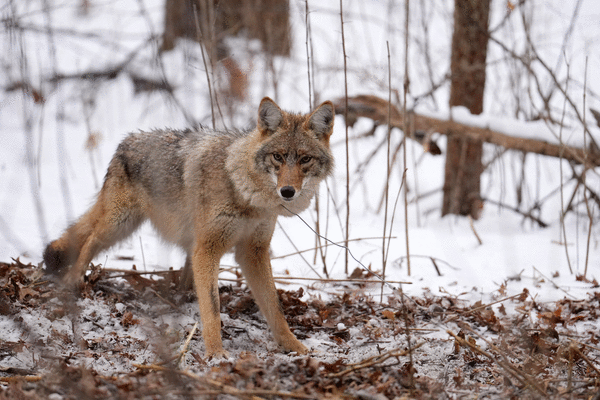
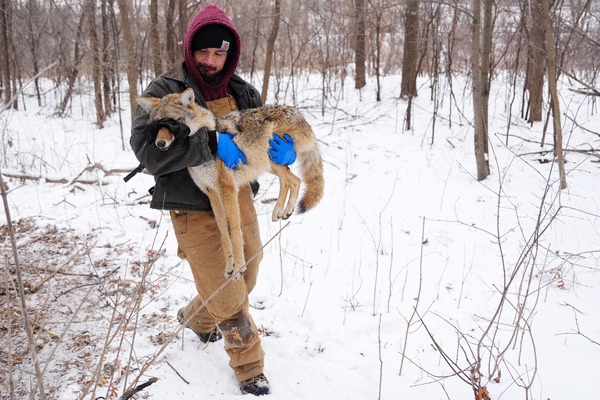
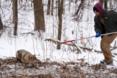

MINNEAPOLIS — She was a young coyote, healthy and stout, with thick auburn fur so vibrant it reflected off the snow.
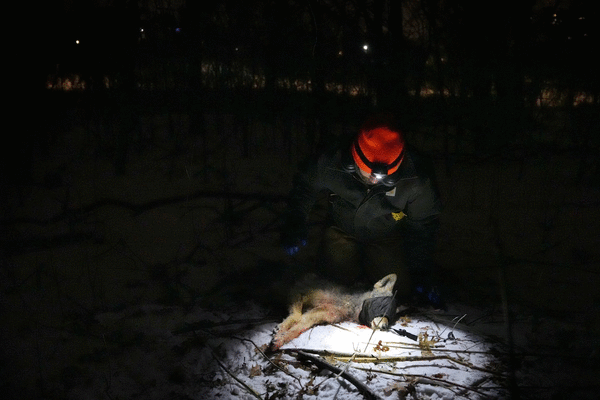
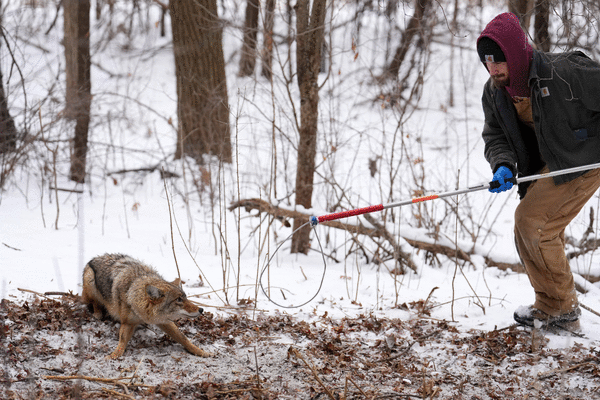
He was a biologist, holding a tranquilizer, who had been trying for a few years to trap and collar a carnivore near this particular St. Paul backyard, just a few blocks from Selby Avenue, amid all the homes and traffic, the bakeries and coffee shops. Only Geoff Miller, a wildlife researcher for the University of Minnesota, thought he would be trapping a fox, not a coyote.
With a clean swoop, Miller had the animal subdued and sedated. He put a GPS collar around her neck.
By tracking the coyote, now named C31F, Miller and his colleagues hope to open a window into an ancient competition between two predators that has played out right in the hearts of St. Paul and Minneapolis for generations.
Minnesota is in the midst of an extinction crisis, with entire species being wiped out before they can even be identified. But at the same time, there are animals that have adapted to some of the most unlikely and altered landscapes in the region. In city corridors and alleys, along the slivers of woods surrounding abandoned mills and parking lots, foxes and coyotes have been surviving despite all that is stacked against them.
But there is often only room for one.
And so, under the cover of night, the two carnivores have been constantly at odds, racing for the right to hunt rabbits and squirrels, and for the space to dig a den to rear their young.
The safety of people
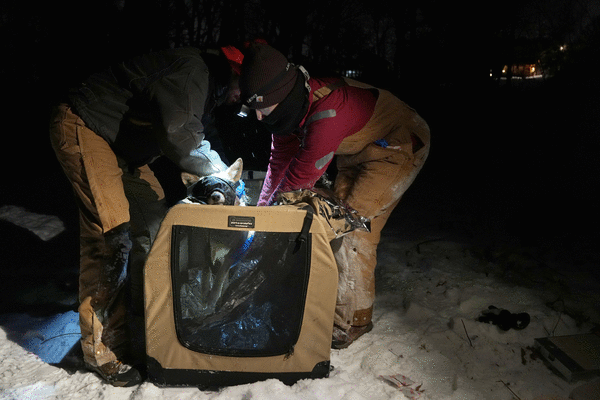
Miller cradled the young coyote, wrapped her in a blanket and put her inside a portable dog crate while he waited for her to wake up. It was late February, and the animals can struggle to keep their body temperatures up when they’re sedated. He keeps packs of handwarmers around, just in case. If that doesn’t work, he will bring the animal inside the cab of his heated truck.
He’s handled dozens of coyotes, and just as many foxes, since the research project began in 2019, setting traps each year from November to the end of February.
Miller won’t release the coyote from the crate until he’s sure the sedative has fully worn off. This can be difficult because coyotes are so submissive when caught that it’s hard to tell if they’re still asleep or if they’re just staying still, as though trying to disappear.
Over the course of the seven-year study, the populations of both foxes and coyotes have stayed relatively stable. But coyotes have been steadily gaining territory, booting foxes out of any space wild enough for coyotes to live.
Coyotes are bigger and more aggressive and will kill any smaller competitors they come across.
But maybe because of their size, which is far too small to be threatening, or their bright red coats or dog-like faces, foxes have one ultimate advantage over their tormentors: humans. Humans keep the coyotes away.
Coyotes have come to populate the abandoned places of the metro — the shuttered factories, overgrown railroads and wild riverfronts — while foxes have retreated into neighborhoods, building their dens under sheds and decks, keeping themselves and their kits as close as they possibly can to people.
“Especially in the spring, when they’re finding a den to have their kits,” Miller said. “That’s when they really need to avoid coyotes.”
The backyard where C31F roamed sits perfectly at the edge of both habitats. There are plenty of sheds, decks and people. But at the bottom of a nearby hill, there is also a patch of woods that runs along an old railroad, just large enough, apparently, for a coyote to eke out a living.
Miller opened the dog crate, and with some coaxing, C31F stepped out and bounded down the hill out of the yard and to the safety of the railroad. Her collar would emit a signal transmitting her location every few hours for as long as the battery lasts, which could be more than a year, allowing researchers to track her travels almost in real time.
Judging from the coyote’s size and the condition of her teeth, Miller estimated that C31F was a 1-year-old. That is a particularly important time in a coyote’s life, he said.
That’s when they leave their parents and litter mates and set out to find a territory and mate of their own. It’s a vulnerable time, when they can step into the wrong neighborhood and find themselves in a fight with other predators, or when they’re crossing strange roads with unfamiliar traffic patterns. One-year old coyotes in the city are the most likely to get killed by cars.
“I almost never see a collared coyote get hit by a car in their own territory,” Miller said. “It’s always when they’re dispersing.”
Over the next four weeks, Miller followed C31F’s movements from a computer. It was immediately clear that she was dispersing. She worked her way southwest across St. Paul, making it to Highland Park and the old Ford dam. Then she shot north along the Mississippi River, nearly 30 miles into Anoka. Then, she turned back, returning all the way to the U campus and East River Flats. One night, she crossed the Washington Avenue Bridge into Minneapolis’ Bohemian Flats.
Then her signal disappeared.
The hard life of an urban carnivore
Miller grew up in a small town in Michigan and was always attracted to the outdoors. For a while he thought he would be an entomologist, then he thought about studying fish.
When he started school, he was drawn to the idea of working on restoration projects. But as an undergrad, he had a chance to work on a research project studying elephant browsing patterns in Kenya. There he came face to face with the complicated and interwoven dynamics between predator communities.
“Hyenas, lions, wild dogs, I was seeing the interactions of all these carnivores and I just read everything about them that I could,” he said.
Around that time, Miller’s dad reminded him of something he had said in middle school. After reading a National Geographic article about coyotes in Chicago, a young Miller told his dad that if he ever got to do something as cool as study coyotes in a place like Chicago, he would have peaked in life.
After seven years of trapping, swaddling, collaring and monitoring them in the Twin Cities, Miller doesn’t think his middle-school self was far off.
He came to the U in 2019 to get his doctorate, the same year the project began. Researchers Nick McMann and James Forester started the study for the U with a grant from the Minnesota Environment and Natural Resources Trust Fund, which is supported by a share of state lottery profits.
Miller worked on the project over the six years he spent getting his doctorate, and stayed on after he finished.
The research has made it clear that in the cities, both foxes and coyotes have tough, harrowing, often short lives.
Many of the foxes that have been collared by the project don’t survive a full year.
Some are killed by coyotes. Others by mange, a mite-born affliction that causes them to lose fur, exposing bare skin to the elements. A bird flu wave three years ago was particularly deadly to foxes. Miller would see young kits playing and wrestling around their den one day, only to find them all dead from bird flu the next. He has found them drowned in backyard pools.
Coyotes, too, often die during the course of the study. They’ve been shot by homeowners and run over. They starve. They get mange.
Just a few weeks before Miller caught C31F, he trapped an old coyote in the same area near Selby Avenue. It was 10 degrees and close to midnight; the coyote was at least 5 years old, judging by her teeth, and underweight. She had a bad case of mange, and a cold spell was approaching.
That coyote survived the first night, the coldest night of the year. But she died on the second, huddled up against a rock wall on the grounds of the Cathedral of St. Paul, on the hill overlooking the city.
“It’s impossible to not get emotionally attached,” Miller said. “You can do whatever, you can name them numbers, but once you go and see them with pups at their den, you’re always rooting for them.”
When you spend enough time with them, you’ll end up rooting for both, he said.
“You want your foxes to make it, but you also love coyotes, knowing that sometimes those coyotes are going to be killing your foxes,” he said.
He hopes that the project helps people understand the animals, and what they’re up against, a little more.
“I don’t think most people know that foxes are in their yard because they’re getting run down [by coyotes]‚” he said. “And you’re actually really helping that animal by letting it den in your yard. You’re doing it a huge favor if you can put up with it being under your shed for a couple weeks in the springtime.”
Four days after her signal disappeared, C31F came back online. She was still in downtown Minneapolis. It turned out she had hunkered down inside a culvert or sewer drain where GPS signals couldn’t penetrate, Miller said.
She’s remained in that spot ever since, roaming the small patch of woods and banks along the river. Her dangerous travels are over. She seems to have found a territory of her own.
©2026 The Minnesota Star Tribune. Visit at startribune.com. Distributed by Tribune Content Agency, LLC.























Comments