What to know about Twin Metals, the Minnesota company at the center of the overturned mining ban
Published in News & Features
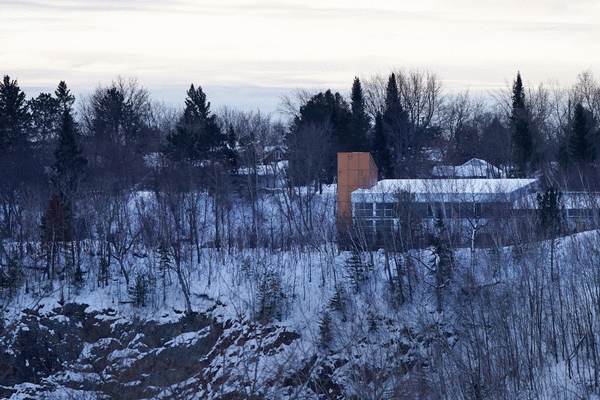
MINNEAPOLIS — Twin Metals Minnesota got a major boost on Thursday with the Senate vote to roll back a Biden administration ban on mineral leasing near the Boundary Waters Canoe Area Wilderness.
The 50-49 vote on April 16, paves the way for Twin Metals to move forward on its multibillion-dollar proposal for a copper-nickel mine near the BWCAW.
Here’s some more information on the company:
Twin Metals Minnesota is a subsidiary of the Chilean mining giant Antofagasta first formed over a decade ago. It has proposed spending roughly $2 billion to mine copper, nickel, cobalt and other minerals along Birch Lake, which sits just south of Ely, Minn., and is within the watershed of the state’s pristine BWCAW.
If allowed, a future underground copper-nickel mine could produce about 20,000 tons of ore a day for 25 years and create more than 700 jobs.
The plan is to mine copper, nickel, cobalt and platinum. Such minerals are considered “critical” to U.S. growth industries, including artificial intelligence, electric vehicles, batteries, power grids, defense products and data centers. The Electric Power Research Institute estimates that the growth in U.S. data centers, especially to support AI, will account for 9% to 17% of national electricity use by 2030.
Proponents plan to invest $1.7 billion to $2.77 billion if the underground mineral exploration, engineering, development and construction project is allowed to proceed. Twin Metals has already spent $600 million on the project for lobbying and other preliminary costs.
Mining proponents such as U.S. House Rep. Pete Stauber argue the Twin Metals project is needed for job growth and investment into the region and to fully economize many of Minnesota’s untapped natural resources. Northeast Minnesota has always relied on its iron mines, not copper.
Environmentalists and many tribal leaders, however, note the copper industry’s poor track record for leaks and worry about a mine in the same watershed as Minnesota’s pristine Boundary Waters. Possible water contamination could destroy the environment for decades, they say, and kill the regional tranquility that attracts 150,000 campers, canoers and fishing enthusiasts each year.
Another copper-nickel project called Talon Metals is proposed further south near Tamarack. The NewRange Copper Nickel is a joint venture by PolyMet Mining Corp. and Teck Resources that proposes mining in Hoyt Lakes.
Mesabi Metallics is opening its iron ore mine and taconite plant this summer in Nashwauk. Mesabi Metallics, however, will focus on the steel precursor iron — not nickel, copper or platinum. It will be the first to open in Minnesota in 50 years and represents a $2.4 billion investment with 350 promised jobs in and around Nashwauk.
Antofagasta saw earnings rise more than 50% last year to a record $5.2 billion as copper and gold prices increased. Copper forms the majority of the company’s output, and growing demand and supply shocks at other major mines helped Antofagasta, according to Wall Street Journal reporting.
The company is mostly owned by the Chilean Luksic family. Jean-Paul Luksic is chair of the company.
Antofagasta, whose assets are mostly in Chile, has a mixed record on environmental issues.
Chilean regulators have fined it twice in the past three years for water compliance violations, the most recent a $775,000 fine in January, saying the company failed to adequately track and monitor water resources.
_____
Chloe Johnson and Christopher Vondracek of the Minnesota Star Tribune contributed to this story.
_____
©2026 The Minnesota Star Tribune. Visit startribune.com. Distributed by Tribune Content Agency, LLC






Comments