Presidential words can turn the unthinkable into the thinkable − for better or for worse
Published in News & Features
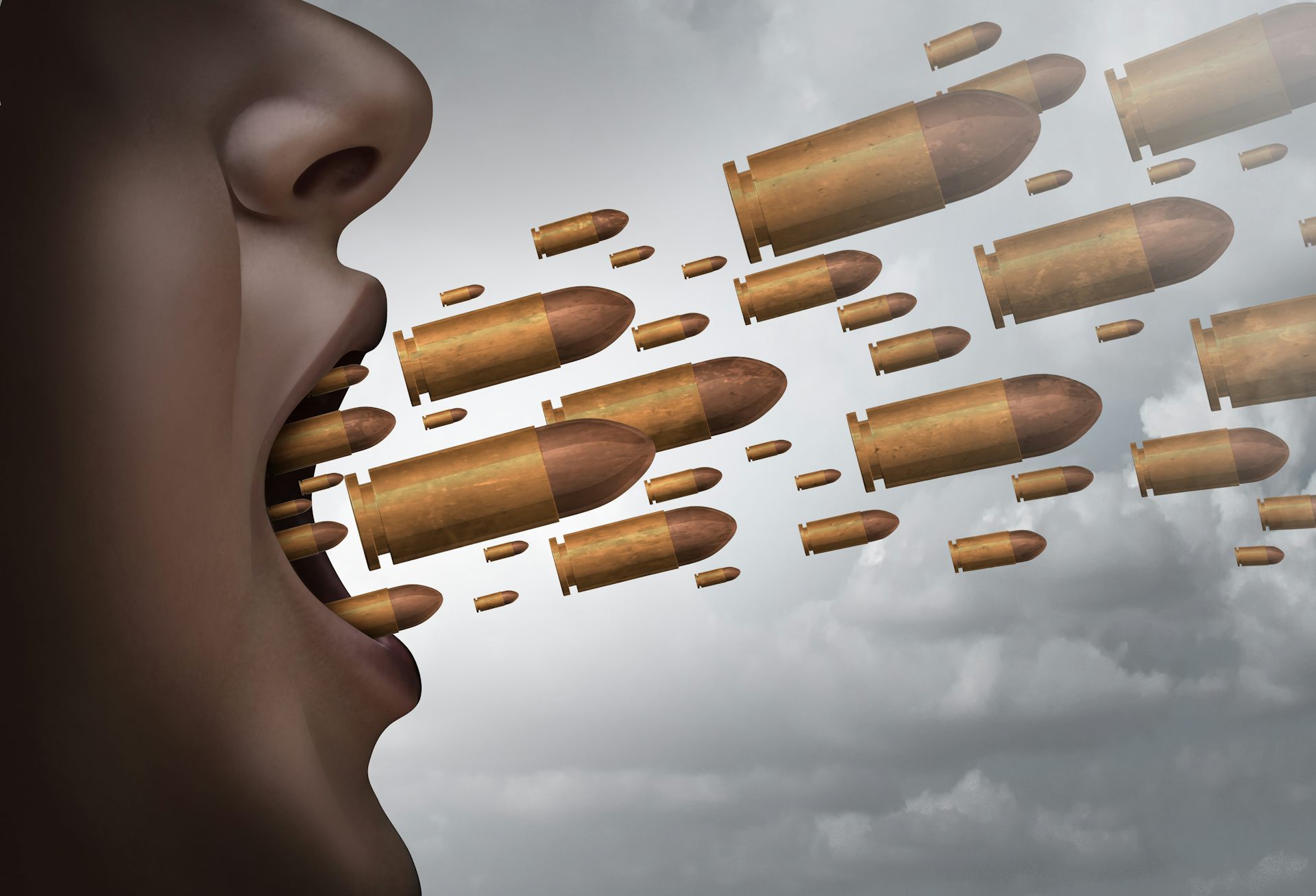

Among the most disorienting things about President Donald Trump’s public language is how easily it can feel numbing and shocking in the same moment. He says something outrageous, the country recoils, and then the recoil itself begins to feel familiar.
As a scholar who studies presidential rhetoric, I know that over time that rhythm does its own kind of damage. It teaches the public to absorb the breach. What once might have sounded like a genuine political emergency or a violation of constitutional decorum begins to register as just another day in American political life.
But the past few days merit notice. The president’s demagoguery has taken a darker turn.
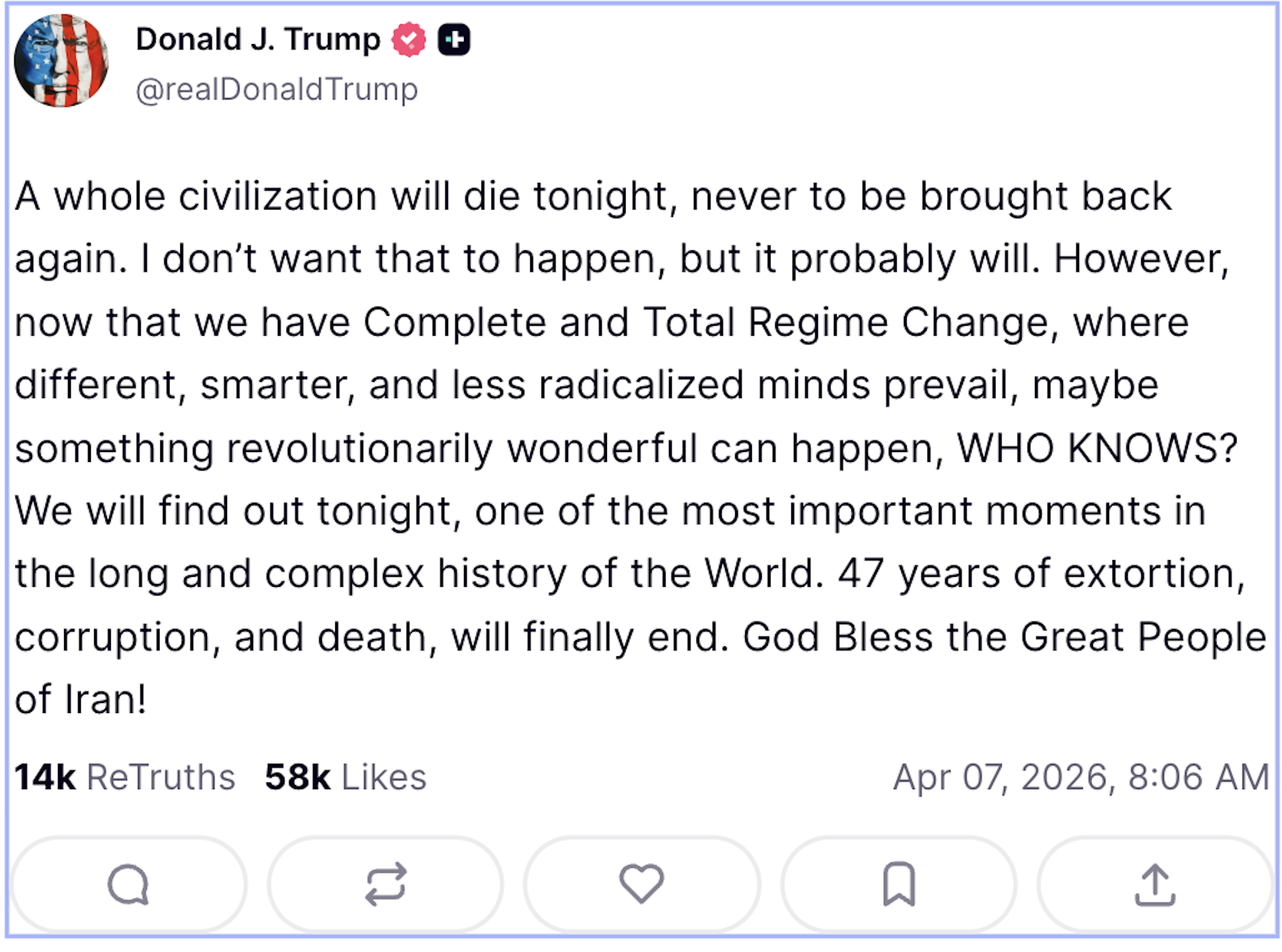
Trump’s rhetoric about Iran has become more than inflammatory. Beginning with posts to Truth Social in early April, he has used profanity-laden language – “Open the Fuckin’ Strait, you crazy bastards, or you’ll be living in Hell” – to threaten attacks on the country’s infrastructure. He urged Iranians to rise up against their government. He warned that “a whole civilization will die tonight” if Iran does not comply with U.S. demands.
The Associated Press treated those remarks as a significant escalation in the context of a live conflict, not merely as familiar Trumpian excess: “As the conflict has entered its second month, Trump has escalated his warnings to bomb Iran’s infrastructure.”
The International Committee of the Red Cross also issued the unusual reminder that the rules of war must be respected “in words and action,” suggesting that the rhetoric itself had become part of the danger.
But were Trump’s recent remarks really different from his many earlier outbursts?
I think they were. For years, Trump’s rhetoric has relied on insult, ridicule, threat and contempt. He has degraded opponents and helped coarsen the terms of public life.
What seems different about his words during the first week of April 2026 is the scale of violence his language primed people to imagine. His remarks about Iran moved beyond personal attacks or chest-thumping nationalism to take on a tone of collective punishment and civilizational destruction. The style was familiar. The horizon of harm was not.
Presidential rhetoric is more about permission than persuasion. Presidents do not only argue. They signal.
Through those signals, they tell the public what kind of situation this is, what kind of danger is at hand, and what kinds of response are reasonable. In that sense, the president can function like a human starting gun. His words cue journalists, legislators, party allies and ordinary supporters about how to classify events before anyone has fully processed them.
Political theorist Corey Robin’s work on the politics of fear is a useful lens for understanding what is happening with Trump’s violent rhetoric.
Fear, in Robin’s view, is not simply a feeling that arises naturally in response to danger. It is politically manufactured. Power teaches people what to fear, how to name danger, and where to direct their apprehension. Presidential rhetoric is an essential tool for performing that work.
Thus, a president does not only describe a threat. He also gives it shape and scale. He tells the public how large it is, how close it is, and what kinds of response should feel reasonable in its presence.
A good example of a president doing this happened after the Sept. 11, 2001, terrorist attacks when, while visiting ground zero in New York City, George W. Bush said, “I can hear you. The rest of the world hears you. And the people who knocked these buildings down will hear all of us soon.” With that sentence, Bush acknowledged the gravity of what had happened, but also promised to fight back and bring justice to the terrorists.
When it comes to statements like those Trump has recently made about Iran, the worry is not that the president has said something extreme. Instead, the larger concern lies in what repeatedly using extreme language does to the atmosphere in which judgment takes place.
Political hyperbole lowers the threshold of what the public can imagine as legitimate, as allowable. When presidents make threats like the ones Trump issued, mass suffering becomes more imaginable. The president’s words and social media posts test whether the public will continue to hear such language as over the line, or whether it will be absorbed as one more hard-edged negotiating tactic.
Presidential rhetoric matters for reasons that go beyond persuasion or style.
It helps arrange reality. It tells the public what is serious, who is dangerous, whose suffering counts, and what forms of violence can be described as necessary. President Barack Obama did this in 2012, when he was speaking at a vigil to honor the shooting victims at Sandy Hook Elementary School.
“We bear a responsibility for every child because we’re counting on everybody else to help look after ours,” he said. “That we’re all parents; that they’re all our children.” With these words, Obama called everyone to feel, up close, the horrific loss of 20 children shot dead, and to work for a solution to gun violence.
Trump has benefited from a public worn down by repetition. Every new breach arrives trailing the memory of earlier ones.
People begin to doubt their own reactions. Surely this is appalling, they may think, but also, somehow, this is what he always does. That dual feeling is part of the harm. A damaged baseline makes serious escalation harder to recognize and judge.
The disorientation and disgust that so many people experienced in response to Trump’s thundering, violent proclamations is important. Even after years of erosion of what was deemed normal, some lines remain visible.
Paying attention now is not about pretending Trump has suddenly become someone new. It is about recognizing more clearly what his presidency has been teaching the public to hear as thinkable. The most serious harm may lie not only in what follows such rhetoric, but in the world it helps prepare people to accept.
This article is republished from The Conversation, a nonprofit, independent news organization bringing you facts and trustworthy analysis to help you make sense of our complex world. It was written by: Stephanie A. (Sam) Martin, Boise State University
Read more:
Repeated government lying, warned Hannah Arendt, makes it impossible for citizens to think and to judge
Congress still has ways to throttle back Trump’s war with Iran – and to ask questions
Trump’s war against Iran is uniquely unpopular among US military actions of the past century
Stephanie A. (Sam) Martin does not work for, consult, own shares in or receive funding from any company or organization that would benefit from this article, and has disclosed no relevant affiliations beyond their academic appointment.






Comments