UK ex-ambassador Mandelson quits Labour Party in Epstein fallout
Published in News & Features
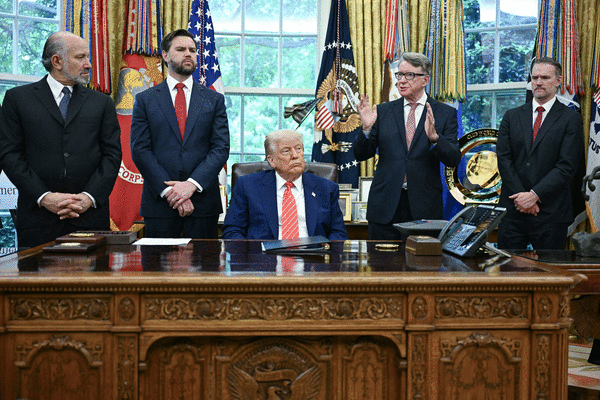
Peter Mandelson, Britain’s former ambassador to the U.S., resigned from the U.K.’s ruling Labour Party to avoid causing it “further embarrassment” after the latest revelations about his links to the disgraced financier Jeffrey Epstein.
Mandelson is facing questions about payments totaling $103,000 made to him and his partner by Epstein in 2003 and attempts to stop the U.K. from introducing a tax on bankers’ bonuses in 2009 after a request from Epstein.
The disclosures, which include more compromising pictures of Mandelson, came in the latest release of the Epstein files by the U.S. Department of Justice last week.
Mandelson, 72, was sacked by Prime Minister Keir Starmer as ambassador to Washington in September after Bloomberg News revealed the depth of his friendship with Epstein. Starmer concluded that Mandelson hadn’t been upfront about the relationship in the vetting process for the post.
Mandelson, who is still a Lord in the U.K. parliament’s upper house, told Press Association he wrote on Sunday evening to Hollie Ridley, general secretary of the Labour Party, to say he was resigning his party membership.
His departure draws the curtain down one of the party’s most influential political figures of the past 30 years. First appointed as director of communications in 1985, he became one of the key figures behind New Labour, the business-friendly incarnation of the party under Tony Blair that was in power from 1997 to 2010.
“I have been further linked this weekend to the understandable furore surrounding Jeffrey Epstein and I feel regretful and sorry about this,” Mandelson wrote. “Allegations which I believe to be false that he made financial payments to me 20 years ago, and of which I have no record or recollection, need investigating by me.”
“While doing this I do not wish to cause further embarrassment to the Labour Party and I am therefore stepping down from membership of the party.”
In government, Mandelson was never far from trouble. He resigned twice from the cabinet within four years over financial scandals. When the alleged payments from Epstein were made in 2003, he was still a member of Parliament.
Gordon Brown, Blair’s successor as prime minister, reappointed him to the cabinet as business secretary in 2008 and Starmer chose him over established diplomats to be U.S. ambassador — a move that demonstrated Mandelson’s effectiveness and influence.
Emails from Epstein reveal that Mandelson was “trying hard” to change policy on banker bonuses as business secretary in 2009, a year after the financial crisis and Epstein’s conviction for procuring a child for prostitution. Alistair Darling, the chancellor of the exchequer at the time, resisted Mandelson’s approaches and went ahead with the tax.
During the process, Epstein asked whether JPMorgan Chase & Co. Chief Executive Officer Jamie Dimon should call Darling directly to make the case for the 50% tax to be applied on just a portion of bankers’ bonuses. Mandelson replied: “Yes and mildly threaten.”
Asked by PA about his attempt to coerce the chancellor into helping the banks, Mandelson said: “Every U.K. and international bank was making the same argument about the impact on U.K. financial services. My conversations in government at the time reflected the views of the sector as a whole not a single individual.”
Mandelson is still facing calls to be stripped of his peerage in the House of Lords. On Sky News on Sunday, Housing and Communities Secretary Steve Reed said: “I think before taking any action like that, we need to understand exactly what’s happened.”
____
(With assistance from María Paula Mijares Torres.)
©2026 Bloomberg L.P. Visit bloomberg.com. Distributed by Tribune Content Agency, LLC.





Comments