Editorial: Republicans in Congress fail public by dodging war responsibility
Published in Political News
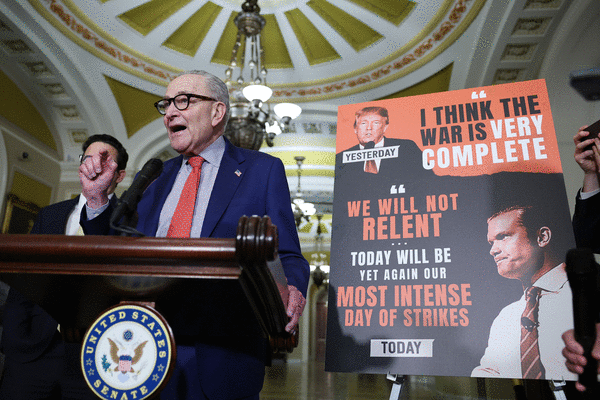
Headlines from the war in Iran are changing by the hour as the operation intensifies. That’s why it’s disturbing that Congress decided to sit on the sidelines and watch things unfold instead of exercising its power.
Among the developments since the Republican-led Congress decided against resolutions that would have asserted their power to end President Donald Trump’s war of choice:
“Iran names a new supreme leader.”
“U.S. orders embassy workers in Saudi Arabia to leave.”
“Israeli troops push into Lebanon."
“A seventh service member dies from injuries.”
Under the Constitution, Congress has the power to declare war. What’s happening in the Middle East isn’t a military strike, as some lawmakers want to call it. It’s an all-out war.
Under the War Powers Act of 1973, the president’s authority to use military force without congressional approval has limits.
Republicans in the Senate last week voted 53-47 against a resolution that would institute those limits and reassert Congress’ authority to weigh in on if and how the war would be waged. House Republicans did the same with a 219-212 vote. Washington’s delegation voted along party lines as well.
The war, which is reportedly costing the U.S. $1 billion a day, has greatly escalated since the United States and Israel attacked Iran on Feb. 28. Yet, Republicans in Congress voted to not get involved, although U.S. military men and women are involved; Americans living abroad in affected countries are involved; and the U.S. consumer is greatly involved, specifically through the price of gasoline and soon, other goods.
Besides, it’s the job of Congress to be involved in any war waged by the United States.
There yet still may be hope for Congress to act. At least six Democratic senators plan to use a procedural measure to halt any chamber business until the Defense Secretary Pete Hegseth and Secretary of State Marco Rubio take questions publicly from the Senate Armed Services Committee. Among the many questions that deserve an answer are what is the plan for Iran after the war, and what will be the U.S. reaction to the investigation into the bombing of an Iranian school that left more than 170 people dead, mostly children.
The war in Iran is the largest war in the Middle East in more than 50 years. At least eight countries have been directly involved and one of the United States’ most dangerous adversaries, Russia, is providing intelligence related to the location of U.S. military forces and ships.
Come this fall voters should remember those in Congress who surrendered their responsibilities to the president. Until then, the public and Congress deserve to hear from those who are responsible for America’s part in the war.
_____
©2026 The Seattle Times. Visit seattletimes.com. Distributed by Tribune Content Agency, LLC.



















































Comments