Afghan migrants stranded in Pakistan after the US suspends refugee resettlement
Published in Political News
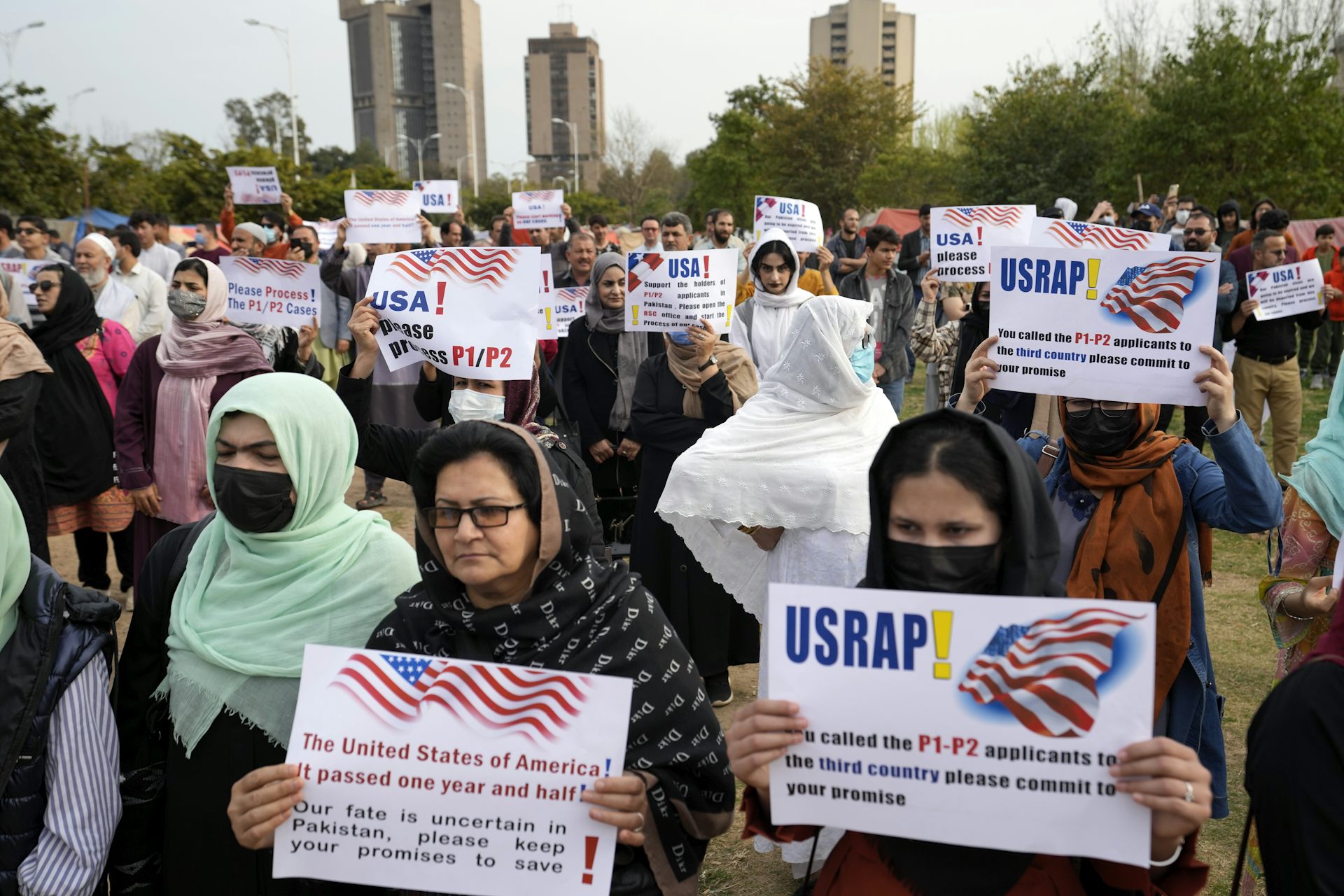
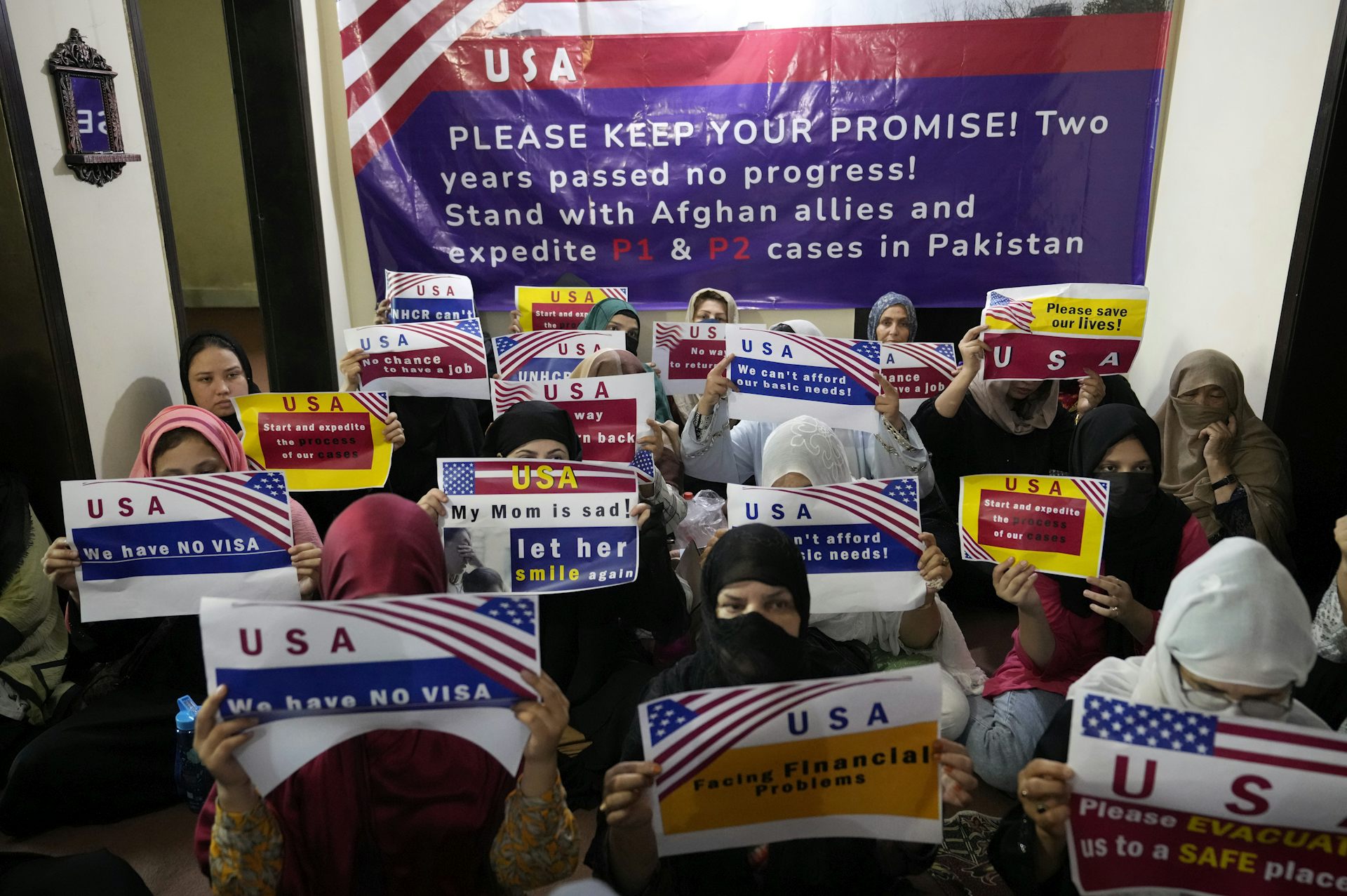
In January 2025, Seema received an email from the International Organization for Migration saying that her flight from Pakistan to the United States, which she and her family were booked on after months of extensive interviewing and background checks by U.S. Citizenship and Immigration Services, had been canceled.
“We had sold our TV and refrigerator,” her husband, Samir, told me during an interview for my dissertation project on Afghan migration to America after the 2021 U.S. military withdrawal from Afghanistan. “We had told our landlord that we were vacating our apartment. Then it was all canceled.”
The U.S. withdrawal in August 2021 triggered a rapid political collapse that left millions of Afghan civilians in limbo. As the Taliban swept across the country and reclaimed power, Afghans who had worked alongside U.S. forces and international NGOs faced immediate danger.
Women, minorities and human rights advocates feared the loss of basic freedoms and possible Taliban reprisals. With evacuation pathways unclear and protections unevenly applied, panic spread as families tried to escape before they were cut off entirely.
Seema, Samir – pseudonyms to protect their identity – and their children are among tens of thousands of Afghan refugee families who immediately fled to neighboring Pakistan in late 2021 on the U.S. government’s recommendation for Afghans to process their immigration cases in third countries. However, many Afghans soon encountered Pakistan’s mass deportation campaign, underway since 2023, as they awaited U.S. resettlement.
Following the fall of Kabul in 2021, President Joe Biden directed the federal government to launch Operation Allies Welcome and other immigration pathways in an effort to resettle Afghans who had worked for U.S. forces and were at risk of being targeted by the Taliban. Beginning in early 2025, however, the U.S. refugee system retreated from the commitments U.S. leaders once made to protect Afghan civilians.
Until recently, some Afghans waiting in Pakistan hoped they would eventually be resettled in the United States through the few humanitarian pathways still open to them. However, that hope has dimmed.
The suspension of U.S. refugee resettlement during the first days of Donald Trump’s second presidency, along with additional immigration restrictions issued after the November 2025 shooting of National Guard personnel in Washington, D.C., have frozen the processing of all Afghan cases – including those already approved.
The Trump administration has justified these measures as necessary to protect U.S. safety and national interests.
For families like Seema’s, U.S. policy decisions have left them insecure and abandoned. As a scholar focused on international migration, I believe Seema’s story highlights a common thread among many Afghans stranded in Pakistan: Many of those who supported the U.S. are questioning the worth of the U.S.’s decades-long mission for promoting security, democracy and human rights in Afghanistan.
Exposed to the Taliban’s retaliation, regional deportation regimes and a collapsing refugee protection system, Afghans are holding the U.S. and other international governments responsible for abandoning them.
Trained as a gynecologist, Seema worked at a private clinic in Afghanistan. And alongside her husband Samir, she served as managing director of an organization that led U.S.-funded projects for women and children.
“We took two projects from the U.S. Embassy,” she told me. “We established a resource center, bought computers, gave girls internet access and trained them in digital literacy.”
That work, funded and promoted by the U.S. government, made Seema and Samir targets. Even before 2021, they received threats from the Taliban. After the Taliban takeover in 2021, the threats escalated.
Fearing for their lives, they fled their home and attempted but failed to enter the Kabul airport multiple times during the chaotic U.S. evacuation in 2021. They ultimately escaped to Pakistan.
In Pakistan, a former colleague at the U.S. embassy recommended Seema for a Priority 2 visa – an immigration pathway created specifically for Afghans who supported U.S.-funded programs.
But when she and Samir tried to follow up with the U.S. Embassy in Pakistan in 2022, they received no response. A few months later they learned that changes to the U.S. Refugee Admissions Program in early 2022 likely caused their referral to be lost.
As U.S. processing stalled, Pakistan’s stance toward Afghan refugees hardened. Since late 2023, the Pakistani government has accelerated deportations under its “Illegal Foreigners’ Repatriation Plan” that targets both undocumented Afghans and those who once held legal refugee status. More than 1 million Afghans have already been deported.
Human rights groups warn that these removals violate the principle of nonrefoulement, which prohibits returning people to countries where they face serious harm. Under Taliban rule, women’s rights, employment opportunities and personal safety in Afghanistan have been systematically diminished.
Yet while Pakistan deports, the U.S. and other countries where Afghan refugees had once been able to resettle, including Germany, continue to close their doors.
In 2024, the U.S government accepted Seema’s refugee resettlement case, which she submitted in late 2022 with the assistance of SHARP, a local organization in Pakistan that works to protect Afghan refugees amid the country’s intensifying immigration crackdown. After several rounds of interviews, background checks, biometrics and medical exams, she and her family were told they would soon leave for the U.S.
Then the cancellation email arrived.
Seema and her family fear for their safety and their children’s future. Their children can no longer go to a school in Pakistan, as many Pakistani schools refuse to enroll Afghan students.
Police raids across major cities have also forced Afghan families to stay indoors, afraid to work or move freely. With no stable income, Seema and Samir struggle to meet basic needs.
“When I came to Pakistan, I was 40 years old,” Samir said. “Now I’m 44. Four years of my life have gone waiting for the U.S. case.” His voice hardened with anger. “We worked with the U.S. for 20 years. We fought terrorism. We supported democracy. What was the benefit?”
For decades, the U.S. government relied on the critical leadership of Afghan civilians like Seema and Samir to promote peace, security and women’s empowerment.
These partnerships were not symbolic. They were deeply embedded in everyday Afghan life.
With a smile on her face, Seema said that before 2021 “it never crossed my mind to leave Afghanistan because we were helping people in our country.”
Seema now fears being forced to return to Afghanistan, where her work and identity place her at grave risk of being targeted by the Taliban. Her request is modest. “At least let those whose cases were approved, whose flights were booked, resettle in the U.S.,” she said.
Her plea echoes across Pakistan, where thousands of Afghan families remain stranded.
Their lives now hinge on policy choices that will determine whether the United States honors the obligations it made during two decades of intervention that reshaped Afghan lives and livelihoods.
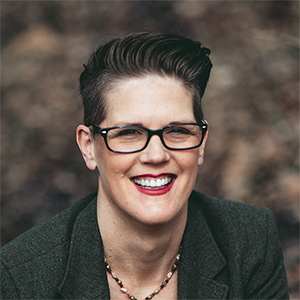
This article is republished from The Conversation, a nonprofit, independent news organization bringing you facts and trustworthy analysis to help you make sense of our complex world. It was written by: Mehr Mumtaz, The Ohio State University
Read more:
I study refugees, and here are the facts on the history and impact of refugee resettlement in the US
Who are immigrants to the US, where do they come from and where do they live?
Minnesota raises unprecedented constitutional issues in its lawsuit against Trump administration anti-immigrant deployment
Mehr Mumtaz receives funding from the Russell Sage Foundation Dissertation Grant, and the Mershon Center for International Security's Graduate Research Grant.













































Comments