Commentary: César Chávez and the pain of the silence born from assault
Published in Op Eds


In the rush to cancel long-held celebrations and remove statues and murals to achieve distance from César Chávez because of his alleged sexual abuse, it is important not to shy away from the meaning of a lifetime of painfully guarded silence. Let’s consider the terrible contradiction that was the daily reality of Ana Murguía, Debra Rojas and Chávez’s co-founder, Dolores Huerta, in the wake of Chávez’s alleged actions.
More important than erasing the stain of association with Chávez, the revered founder of the National Farm Workers Association (later the United Farm Workers union), is the significance of that silence, captured so well by the Black poet and essayist Audre Lorde. The last sentence of her influential 1977 essay “The Transformation of Silence into Language and Action” speaks to the prevalence: “And there are so many silences to be broken.”
In our desperate haste, we seek any means of escape from a necessary confrontation with the truth. The unbelievability of the stark and shocking reality that has emerged from Chávez’s case makes it hard for us to accept and assimilate. We try not to imagine it. It is far easier to erase, to look away, to pretend or even to lie. We create a narrative — a curtain that we draw for ourselves and for others. Despite all, the silence remains.
That the Chávez allegations were revealed during Women’s History Month makes them all the more difficult to face, accompanied by the seemingly never-ending weight of the Jeffrey Epstein files and the resurfacing of the Bill Cosby case with the news that he has lost a lawsuit over a 1972 assault.
The list goes on. There are so many silences — which must all be broken, or we cannot hope ever to heal.
It is not the silence itself but the reasons behind it that must be made visible. So many silences, their origins multiple and complex: fear of retribution, retaliation and irreparable damage to career, reputation or both; the effect on one’s family and friends; and the possible violence to come, as well as shame and blame. Then there is that silence motivated by the desire to protect one’s self through trying to erase the thing never discussed. There is the silence of caution, uncertainty and doubt, of refusal and denial — or the silence of inexperience, ignorance or innocence.
And then there is the silence rooted in a disciplined decision that cuts across all these different layers.
Willed silence is perhaps the hardest. One could speak yet doesn’t — the harsh reality blaring soundlessly in a hidden layer of truth, from whose self-enforced muteness one is never free. I know well this silence, having too often had to exercise it as a woman of color.
Reeling from the shock of revelation, we give little attention to the fact that Murguía, Rojas and Huerta, who told The New York Times that Chávez raped them decades ago, are also women of color — and how this reality complicates the silence around sexual misconduct, with different silences buried deep within. It’s this kind of deeper silence that I performed long ago as a graduate student, when I was asked out several times by my white professor while I was still in his class. Afraid of how refusal might affect my grade, I went out with him, though I also was afraid of the potential vulnerability this invited. That fear muzzled me until one day, through terrified tears, I finally found the courage to break that silence to one of his female colleagues.
Later, there was willed silence: As a young assistant professor, I was told by a then-colleague that South Bend, Indiana, wasn’t the best place for a single Black woman. Although I was engaged to be married the following year, I responded with willed silence. I was only a graduate student, having completed just one chapter of my dissertation, and my faculty position was already precarious.
And there is also a silence that I have only now, 30 years later, even realized was an assault, in a gynecologist’s office during an appointment that was absent a nurse.
Too many silences.
Quiet and still at the center of the cacophony around the dream that was Chávez are Murguía, Rojas and Huerta. We must take great care not to return them to the silenced margins from which their stories have now, loudly, broken free.
____
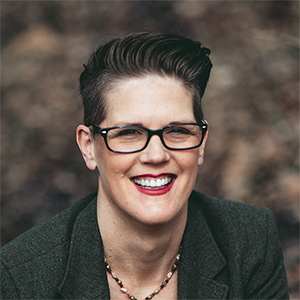
Cyraina Johnson-Roullier is an associate professor of modern literature and literature of the Americas at the University of Notre Dame, as well as an author and essayist.
___
©2026 Chicago Tribune. Visit at chicagotribune.com. Distributed by Tribune Content Agency, LLC.







Comments