Commentary: At Passover, I think of families like mine, forced to wander
Published in Op Eds

The Soviets labeled my grandparents “ bezhenets.” It’s the only Russian word my grandmother Peshke uttered in the hours of testimony she gave about the six years she and my grandfather Mottel spent as refugees in the Soviet Union during World War II.
Bezh e nets literally translates to the “ones who run.” But as I researched my grandparents’ story, I discovered an important fact that comes to mind at Passover: that Polish Jews like them who fled east, eventually landing in Central Asia, adopted a different name, calling themselves “wanderers.”
Bezhenet is often translated as “refugee” or “asylee.” But the Yiddish word vanderers is something different. It puts the focus not on fleeing danger, but on the circuitous journey to find a safer harbor.
As I prepare for Passover this year, I am thinking about this intermediary between suffering and the promised land that millions are still traversing today. At the Seder meal, Jews around the world will symbolically taste bitterness and sweetness — the slavery, then the freedom. Too often, I realized, many of us skip past those 40 long years in the desert as we rush for the meal. But wandering is an integral part of the biblical story. It reminds us what people are capable of enduring in that space, what they are forced to do to survive it.
My grandparents’ refugee story, like so many across the globe and generations, was one of impossible decisions and unplanned, unfathomable outcomes. Their families had lived for more than a century in Poland when they fled to the Soviet Union in fall 1939, ahead of the Nazi arrival. It was the one place open to hundreds of thousands of Polish Jews like them. But it was no simple refuge. Russian leader Joseph Stalin had little tolerance for people who ran unless ordered to do so, no matter the terror that propelled them.
Soon, the dreaded secret police came for the Polish bezhenets. My grandparents were deported from Lviv to Siberia and faced a brutal year of slave labor, slashing down trees and going hungry. Their captors told them this exile would last forever, but soon the whims of politicians in far-off capitals changed the trajectory of my grandparents’ lives again.
The Soviets freed Polish Jews from the Gulag in order to join the Allied forces in 1941. But for the most part, the bezhenets still could not leave the Soviet Union. This is when many took on the name “wanderers.” At their lowest moments, not knowing where they would land next, Polish Jewish refugees often found strength from their traditions and the knowledge that others had survived similar struggles before them.
Most landed in the Uzbek and Kazakh Soviet Socialist Republics. “It was a migration on a gigantic scale,” observed the Polish diplomat Xavier Pruszynski at the time. “Polish Jews who took part in it were probably reminded of the sojourn of their ancestors in Babylon.”
My grandparents followed this trajectory, moving south toward Muslim Central Asia. Later, Mottel and Peshke gave us various reasons for the direction: a desire for a safer place, a warmer climate and to get closer to Palestine. They traveled by train as far as the Iranian border when Soviet officials blocked their departure and returned them to Uzbekistan.
After failed stops in Uzbek cities authorities deemed too full for more bezhenets, Mottel and Peshke found a place to unpack for a stretch in a dusty railroad town outside the glorious Silk Road city of Samarkand. They fought off typhus, nearly starved, and a brother, arrested for black market activity, died in jail. Yet my grandparents endured and found ways to commune. Later, Peshke would describe how, even in this desperate situation, the women would put on slightly nicer dresses and stroll by the railroad tracks at night. It was in that precarious space that my father was born in summer 1945.
By then the war in Europe had ended, but for Mottel and Peshke and so many, the wandering was not over. A new stage of displacement followed that took them to German refugee camps for five years. With this came new labels from new governments, now in English: displaced persons, infiltrees, transients and eventually, refugees.
Not until 1950, when my grandparents made it to the U.S., did their wandering finally come to an end. Resettled in New York, my father raced to catch up with his classmates and learn English. He would go on to become the first in his family to graduate from high school.
Decades later, in Washington, D.C., my father would ask a survivor relative seated at our Passover table to talk about liberation, about lessons from surviving the Holocaust.
At any mention of how God led his “chosen people” out of suffering with an outstretched arm, my grandmother responded with a shake of her fist and a “feh.” I realize now that she was commenting on how we focused too much on a neat salvation, overcoming unspeakable horrors to arrive at a promised, safer land of opportunity. We asked too little about how she and Mottel endured the wandering — a saga they didn’t know would ever end. And even then, Peshke could never dwell on its challenges because an even bigger tragedy overshadowed her wandering: the massacre of her family who had stayed behind in Poland.
Peshke and Mottel both died in the 1990s. My father followed in 2019. It is too late to ask any of them more about how they endured the in-between space, the years of limbo between Poland and the U.S., and what they wish others knew about their existence during that time.
Instead, before we taste the bitter herb or sweet haroset at our family’s Seder this year, we will pause to reflect on what it takes to survive in limbo. And as the United States closes its doors to refugees, and President Trump degrades those forced to flee as “criminals,” “invaders,” and “animals,” I return to the word, wanderers, that my grandparents and so many others claimed for themselves.
____
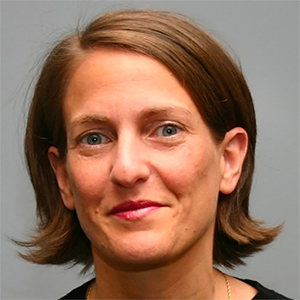
Daniela Gerson, an immigration reporter and an assistant professor of journalism at Cal State Northridge, is the author of “ The Wanderers: A Story of Exile, Survival, and Unexpected Love in the Shadow of World War II.” This article was produced in partnership with Zócalo Public Square.
©2026 Los Angeles Times. Visit at latimes.com. Distributed by Tribune Content Agency, LLC.














Comments