Commentary: The Gulf states are between Iran and a hard place
Published in Op Eds
On Saturday, President Donald Trump tossed a big, loud threat Iran’s way: If Iran doesn’t reopen the Strait of Hormuz in 48 hours, the United States will start bombing its nuclear power plants. But on Monday morning, as the deadline neared, Trump reversed course. The U.S. strikes, he wrote, are now off for a five-day period because U.S. and Iranian officials were engaged in “very good and productive conversations” toward ending the weekslong war.
Of course, with Trump, we can’t be sure what he’s saying is actually the truth. Even as he asserted that there were multiple points of agreement with Tehran, including some form of joint management over the Strait of Hormuz (whatever that means), Iranian officials released their own statements dismissing the notion that talks with Washington were occurring. Meanwhile, Israel was continuing to strike targets across Iran, which suggests that even if the Trump administration could hash out an agreement with Tehran, Trump will have to drag Israeli Prime Minister Benjamin Netanyahu kicking and screaming along the way.
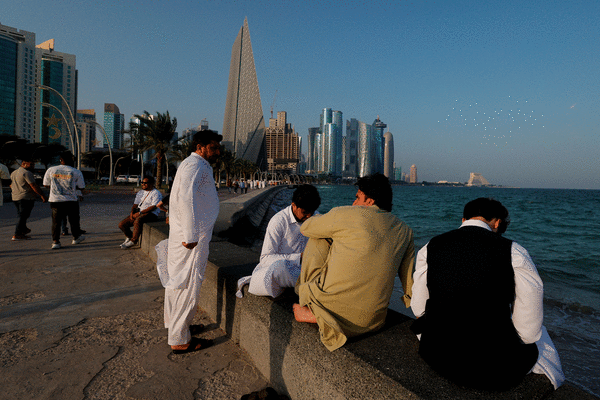
The United States, Israel and Iran aren’t the only parties to this conflict, however. The Gulf Arab states have been on the receiving end of Iranian missile and drone attacks from the moment the war started Feb. 28. Iran’s entire war strategy is prefaced on causing so much turbulence in the energy markets that Trump has no rational choice but to end the war in order to save Americans the indignity of having to shell out $150 every time they fill up their tanks. Iran has targeted the United Arab Emirates alone with 356 missiles and 1,748 attack drones; some have crashed into high-rises. In Qatar, the world’s largest liquefied natural gas facility at Ras Laffan has been shut down, with Qatari officials saying repairs will be in the billions of dollars. In Saudi Arabia, oil fields have been targeted, forcing the kingdom to reroute its oil to ports on the Red Sea.
For the Gulf Arab states, no good has come of this war. With the Strait of Hormuz bottled up, oil producers in the region have been forced to cut production. The net losses are in the tens of billions of dollars. In addition, the conflict is a reputational hazard for the Saudi, Emirati and Qatari governments, all of which have been promoting their countries as safe, secure and lucrative places to live, work and invest.
The war is troubling for another reason as well: The security relationships the Gulf Arab states have established with Washington for decades aren’t exactly serving them well right now. The purpose of permitting the U.S. military to operate there was to deter Iranian attacks. Presumably, defense ties with the world’s foremost superpower would buy the Gulf states safety from external threats.
Yet that assumption only held if the security provider, in this case the United States, refrained from conducting a preventive war in the region. Once this decision was taken, the U.S. Navy facilities, airfields and Army bases that dot the Persian Gulf became liabilities as Iran, confronting what it views as an existential conflict, retaliated with its own strikes. Far from granting Saudi Arabia, the UAE, Qatar and the rest of the Persian Gulf tranquility, the U.S. deployments there have invited insecurity.
This is particularly difficult for leaders such as Saudi Crown Prince Mohammed bin Salman and UAE President Mohamed bin Zayed Al Nahyan to stomach because neither man wanted the war to happen. In fact, the only leader in the Middle East who hoped Trump would order a comprehensive military campaign against Iran was Netanyahu, who has spent the last 40 years in public life dreaming about throwing the mullahs out of Tehran.
Other leaders were attempting to prevent the conflict by pushing Iran toward the negotiating table and appealing to the Trump administration to keep nuclear diplomacy with Tehran alive. Trump, after three rounds of talks and despite claims by Oman that progress was being made, decided to opt for a military solution. The Gulf Arab states have dealt with the fallout ever since.
The question now is how the Gulf states will respond if the war persists. Thus far, they’ve stuck to defensive measures. But this defense-only stance becomes tougher to maintain when the Iranians keep targeting their soil and defense interceptors run low. Some Gulf leaders are musing about taking offensive actions, either by joining the U.S. and Israeli air campaign or by authorizing their own. Last week, the Saudi foreign minister spoke for many of his colleagues when he stated that whatever trust with Iran that was built up over the last several years is now gone. The Gulf, he said, possesses “very significant capacities and capabilities that they could bring to bear should they choose to do so.” Other Gulf officials, while publicly calling for de-escalation, wouldn’t shed any tears if the United States and Israel continued pounding the Iranian regime until its military power was broken.
Regardless, the fundamental reality is that the Gulf states don’t have great options, and it’s unlikely further escalation would do much to accelerate the war’s demise. Joining the war would quench an emotional need to show Iran and the world at large that there are costs to aggression. But instead of suing for peace, the Iranians could very well expand their list of targets to Gulf infrastructure unrelated to energy.
The best scenario is to hope and pray that Trump’s supposed negotiations with Tehran are real.
____
Daniel DePetris is a fellow at Defense Priorities and a foreign affairs columnist for the Chicago Tribune.
___
©2026 Chicago Tribune. Visit at chicagotribune.com. Distributed by Tribune Content Agency, LLC.


















































Comments