Commentary: If social platforms are harmful, don't just ban kids. Regulate the harms
Published in Op Eds

As major social media companies head to court this year to defend themselves against claims that their products have harmed young people’s mental health, policymakers are searching for decisive responses.
The lawsuits, which focus on whether platforms knowingly designed addictive, psychologically harmful systems for youth, are bringing long-avoided questions into public view: Who bears responsibility for online harm? And what, exactly, should be done about it?
Across the globe, one policy response has already gained momentum. Facing tremendous public pressure, legislators are increasingly turning to bans: prohibiting or sharply restricting adolescents’ access to social media altogether.
These proposals are politically attractive. They are simple, signal action and promise protection without requiring the nuanced, slow and logistically complex work of regulating trillion-dollar companies.
But blunt-force bans are the wrong response to this moment. As an adolescent psychologist and researcher who studies scalable digital mental health interventions for youth, I believe bans without systemic oversight are worse than ineffective; they are a form of policy abdication. They kick the can down the road, shift responsibility away from technology companies and give up on the far harder task of making online spaces genuinely safer for the millions of young people who already use them every day and will likely continue to do so — with an attempted ban or without (given known challenges in ban enforcement).
The ongoing trials are not contesting whether social media exists. They are investigating how the platforms have been allowed to operate. Plaintiffs are arguing that companies knowingly engineered design features that maximize engagement by exploiting young people’s psychological vulnerabilities, while downplaying or obscuring the risks. That distinction is important: If the platforms’ safety risks lie in their design, then banning youth access does nothing to fix the underlying problem.
Decades of research complicate the popular narrative that social media, in and of itself, is the primary driver of the youth mental health crisis. Across large studies, the association between overall time spent on social media and mental health outcomes is often small or inconsistent. What matters far more than screen time alone is what young people encounter online, how content is delivered, and whether platforms are structured to support or undermine users’ well-being.
For many adolescents, especially those who are marginalized, isolated or lack supportive environments offline, online spaces often serve as lifelines. LGBTQ+ youth, youth with mental health challenges and those in communities with limited access to care often turn to the internet first when they are struggling.
In our lab’s work, we have shown that digital tools enabling identity exploration and skill-building— and offered to youth freely, anonymously and via social media platforms— can buffer stress and reduce symptoms among vulnerable teens, with benefits lasting weeks to months later.
When brief, self-guided mental health interventions are offered directly within social media platforms, where youth already seek out support, they can reduce near-term hopelessness and self-hatred, increase motivation to stop self-harming and boost outreach to crisis resources among teens flagged as being at risk. These are not theoretical benefits; they are outcomes observed in large-scale trials involving thousands of young people.
Blanket bans threaten to sever these support pathways without replacing them with anything safer or more effective. Adolescents consistently report that major barriers to mental health care include not wanting to involve parents, not knowing where to go and fearing loss of autonomy.
Policies that rely on age-gating or parental permission exacerbate those barriers, particularly for youth whose families are unsupportive or unsafe. And for digitally savvy teens, bans do not end online engagement; they simply redirect it. Young people will lie about their age, migrate to less regulated platforms or retreat into private, harder-to-monitor spaces where safety risks may be even greater.
None of this is to deny that social media poses real dangers. However, those dangers are not accidental; we (adults) designed them. They stem from algorithmic recommender systems, infinite scroll designs, opaque personalization and engagement-maximizing feedback loops that prioritize profit over user well-being. These features are deliberately engineered, extensively tested and fiercely defended because they are lucrative.
Responding to that reality with bans aimed at youth access rather than regulation of platform design is a profound misalignment of responsibility. It places the burden of safety on adolescents and families while leaving the systems that generate harm intact.
If we are serious about protecting and promoting youth mental health, we need systemic oversight — not quick-fix restrictions.
First, policymakers must address algorithmic accountability head-on. The most significant risks to young users arise from engagement-maximizing recommender systems designed to capture attention at all costs. Regulation should require transparency around how these systems operate, restrict or prohibit predatory algorithmic feeds for minors, and mandate safer defaults that restore user agency. This is not about censoring content; it is about regulating architecture.
Second, we need meaningful enforcement mechanisms. Voluntary corporate promises and internal safety teams are insufficient when incentives are misaligned. Independent oversight bodies with real authority — able to audit, penalize and enforce compliance — are essential. Without them, safety will always be subordinate to growth.
Third, we should invest in evidence-based digital mental health supports that meet youth where they are. The same technologies that can amplify harm can also deliver help — quickly, inexpensively and at scale. Rather than cutting off access to platforms wholesale, we should require and incentivize the integration of proven mental health supports into the digital ecosystems young people already use.
The ongoing litigation against social media companies represents a rare opportunity. Courts and the public are scrutinizing not just what young people do online but also what technology companies have built and why. In response, we have the chance to choose between policies that outsource responsibility to families and youth (bans) and policies that confront the structural drivers of harm head-on (regulation and reform).
Adolescents are online, and they will stay there. The question is whether we will insist on making online spaces safer or settle for bans that let the real problems persist unchecked.
____
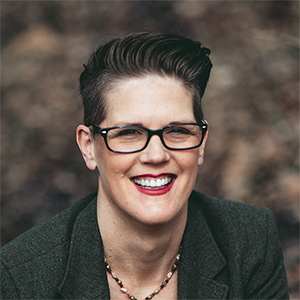
Jessica L. Schleider is an associate professor of medical social sciences, pediatrics and psychology at Northwestern University Feinberg School of Medicine, where she directs the Lab for Scalable Mental Health.
_____
©2026 Los Angeles Times. Visit at latimes.com. Distributed by Tribune Content Agency, LLC.

















































Comments