Commentary: The danger of being inured to the status quo
Published in Op Eds
We have all had the experience of staying a few days in a hotel — say on holiday — which becomes home. Quickly, it becomes familiar. Individuals adjust to change. People who come into money get used to being well-off, and people who lose everything get used to that.
So, too, with nations. They adjust with this attitude: That is just the way it is.
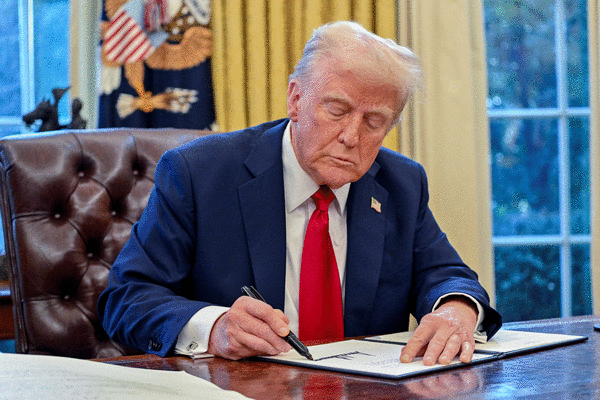
The danger to America is that we will adjust, take the aberrations of today as the norm, and that after this period of presidential excess, we will be inured to presidential excess.
We will expect future presidents to skirt the Constitution or ignore it, and to consolidate the dangerous concept of a unitary executive — where the president is all-powerful and Congress is a functionary, often subservient.
The danger is acceptance. When something is accepted, it becomes the new normal, ensconced and hard to remove. The status quo ante isn’t a guaranteed consequence of the next election.
Over 25 years, I went to Ireland once a year to attend an Irish summer school, akin to a Renaissance Weekend here or a mini-Davos. When I started traveling to Ireland, it was one of the poorest nations in Europe.
What was most disturbing wasn’t that Ireland, the mother-nation to so many Americans, was poor, but rather the terrible acceptance that poverty was inevitable, and that to be a poor nation was the destiny of Ireland.
Then came the Celtic Tiger period, 1995 to 2007. The computer industry set Ireland on the road to global success, and the Emerald Isle became the Golden Isle, basking in prosperity. Ireland gained swagger and became a self-confident place that could show the world. This adjustment came quickly.
At the end of World War II, Argentina had the fifth-largest economy in the world. It had a high per-capita income, and its currency was as stable as the U.S. dollar. Now, it ranks 24th in the world by nominal GDP, and 70th by per-capita income, although it is the second-largest economy in South America, after Brazil.
Worse, I have found on visits to Argentina that it has come to accept its status as a permanent economic basket case with inept political leadership.
Since the end of World War II, the United States has been on an upward economic path. It also assumed a world leadership role that made it the envy of the world, the place to emulate.
And for an individual, it was the place to migrate to. Talent and skill poured in, and the United States led the world in medicine, other sciences and technology. Also, in movies and popular music.
A second upward path began in the early 1960s with the civil rights movement, which opened a segregated society to all and became a beacon for the world.
Recently, on the PBS television program “White House Chronicle,” Freeman Hrabowski, spoke with me and my co-host, Adam Clayton Powell, about his astonishing ascent from a child who was imprisoned in Birmingham, Alabama, in May 1963 for marching for access to a better school to his being sworn in as president of the University of Maryland, Baltimore County.
“In 30 years, I went from being denied access to a White university, the University of Alabama, to becoming president of a mostly White university,” he said.
Civil rights and human rights were a second trajectory that took the United States to a special place in global esteem. A place of decency, values and hope. We exported those values and promoted them universally, until last year when they were abandoned.
We had accepted that we were a generous nation, concerned with the condition of the world outside our borders and anxious to share our bounty and to help.
The very concept of who we were was tied up with the sense of America’s mission: a force for good at home and abroad; first to seek peace, to further self-determination and healing. America was beautiful in that mission.
Now, we are America the transactional. However, transactions by their nature aren’t generous; they aren’t uplifting. They don’t boost the spirit or inspire the future; they don’t soar. Instead, they say over and over again: “What is in it for me?”
That isn’t America, which is a great country, and a greater state of mind.
_____
ABOUT THE WRITER
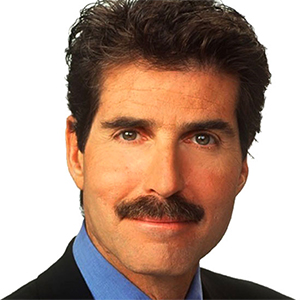
Llewellyn King is the executive producer and host of “White House Chronicle” on PBS. He wrote this for InsideSources.com.
_____
©2026 Tribune Content Agency, LLC.
















































Comments