Commentary: Alex Pretti's death shows why militarized immigration raids portend lethal force
Published in Op Eds
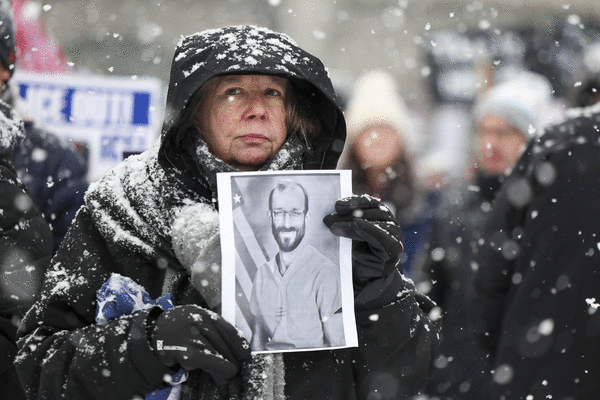
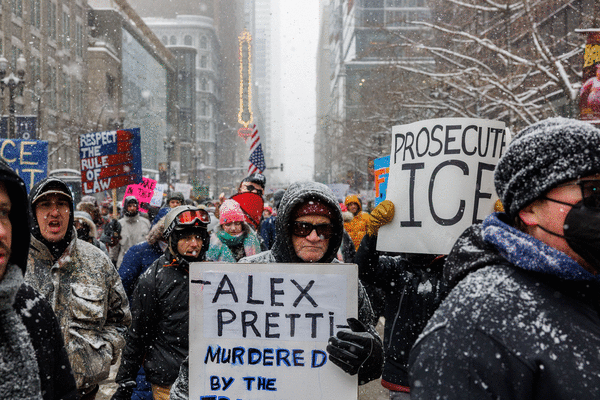

A man stands to the side in Minneapolis, recording what is happening in front of him with his phone. Nearby, federal immigration agents deploy pepper spray on a female protester. The man steps forward. What began as observation becomes intervention.
Within moments, several agents move toward him and pin him to the ground. They shoot at him multiple times. Shouting follows, then chaos.
He is taken to Hennepin County Medical Center, where he is pronounced dead.
This man, Alex Pretti, was a U.S. citizen, an intensive care nurse at the local Veterans Affairs hospital and a licensed gun owner. Multiple videos show the agents restraining him and removing a handgun found on him before they fire.
When 3,000 heavily weaponized federal agents — armed with assault rifles and flash-bang grenades — are deployed onto city streets, death is not an accident. It is an anticipated consequence. Minneapolis’s entire police force numbers roughly 600 officers. Flooding a civilian city with five times that number of armed agents all but ensures violent confrontation. This is not restraint. It is escalation, and civilians are the ones who pay the price.
Pretti did not die because he was reckless. He did not die because he threatened anyone. He followed the law. Pretti was restrained on the ground and disarmed — his body curled inward — when immigration agents killed him. That distinction matters.
Pretti’s death reflects what happens when firearms and law enforcement intersect in volatile public settings.
In the hours that followed, a debate began almost immediately.
He had a gun.
That single fact became a dominant frame the administration used to interpret the event — crowding out what happened, the complexity of why it happened and what could no longer be undone.
We are physicians with different expertise. One of us, an emergency room physician, works in the trauma bay, where bodies arrive after violence has occurred. The other of us worked in quality improvement, studying how systems fail long before an ambulance is called. From those different vantage points, we see the same pattern.
In medicine, when a system predictably produces preventable deaths, we call it a sentinel event, a signal that something is structurally broken. We do not blame the last clinician involved. We investigate the system that made the outcome likely including training and protocols.
Militarized immigration enforcement should be treated the same way.
As an emergency physician, I, Halleh, experience moments like this differently. While others argue about what should or should not have happened, my mind moves downstream. I think about what happens to a body when bullets enter it. I think about anatomy, physiology and the narrow margin medicine has once gunfire is involved.
I am also trained, as a gun violence prevention advocate, to think in terms of risk. In medicine, I assess situations by probability and what reliably follows once certain conditions are in place.
Before a single shot is fired, the presence or perception of a gun reshapes how systems respond. Movements are interpreted through fear rather than fact. That shift does not depend on legality, intent or behavior — and once it occurs, individual compliance often no longer alters the trajectory.
From a clinical standpoint, this matters enormously.
People can survive being tackled. They can survive blunt force trauma. What the human body rarely survives is gunfire. Multiple gunshot wounds leave almost no opportunity for medicine to intervene. Often, even one bullet is enough.
This is not a moral judgment. It is anatomy and physiology.
As physicians, we are trained to look beyond individual tragedies and recognize patterns. Pretti’s death was not isolated. In another recent case, immigration agents fatally shot Renee Good, also a U.S. citizen, after perceiving her vehicle as a lethal threat, they stated. The circumstances differ, but the structure is the same: perceived danger, ready access to firearms and irreversible loss.
We are a country with more guns than people, where firearms are often framed as tools of protection and self-defense. For many Americans, that belief is sincere. But when immigration agents introduce guns into chaotic, emotionally charged situations, the likelihood of irreversible harm rises.
Fear does not create clarity. It narrows perception. It shortens the distance between misunderstanding and catastrophe.
I, Halleh, see the consequences of this repeatedly in the emergency department. Patients who carried a gun believing it would protect them. Patients whose fate was shaped long before force was ever used. By the time they reach us, the conditions that determined what happened are already in place.
Today’s immigration agents are uniquely positioned for escalation. Their mission prioritizes enforcement and detention, not crowd de-escalation in volatile public settings. They operate in politically charged environments where peaceful protests can be misread as threats. In situations like these, the combination of fear, authority and excess weaponry makes lethal results more likely.
From a public health perspective, this is not a question of individual intent. It is a question of institutional design.
What worries me now is the fatigue I see among my colleagues. It is not indifference, but exhaustion. I worry, too, that the nation is overwhelmed by the images coming out of Minnesota, choosing to turn away from the brutality flooding our screens.
Emergency medicine already demands enormous emotional investment. There is only so much preventable harm a person can witness before their self-preservation necessitates turning away. But the consequences do not end. They arrive by ambulance. They arrive with families who were not prepared to say goodbye that morning.
We do not expect every physician to become an advocate. We do not expect universal agreement on firearm policy. But we worry about what happens when those of us who see the aftermath most clearly feel pressure to stay silent. Silence widens the distance between decision and consequence.
In the emergency department, cause and effect are not abstract. There is no rewind. Just a body, a resuscitation room and the knowledge that Pretti did not survive.
We cannot look away. And neither should a country that accepts lethal force as routine once civilians are rendered powerless.
____
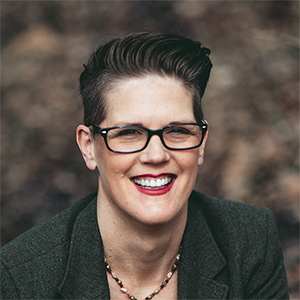
Dr. Halleh Akbarnia, an emergency medicine physician and national gun safety advocate, and Dr. Jennifer Obel are Chicago-area leaders of Doctors for America.
___
©2026 Chicago Tribune. Visit at chicagotribune.com. Distributed by Tribune Content Agency, LLC.



















Comments