Lisa Jarvis: The Dry January experiment is working
Published in Op Eds
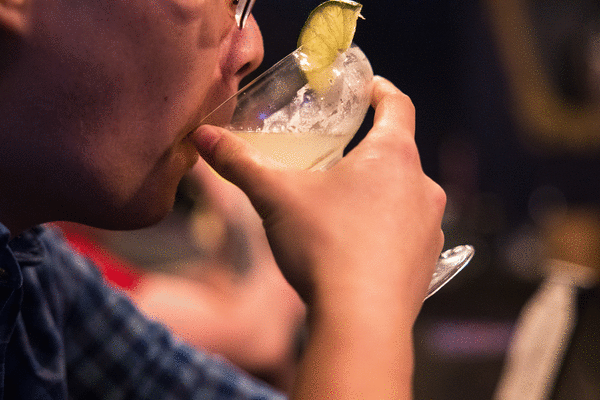
As New Year’s Eve approached, I found myself mulling over something that in all my previous adult years would have been unthinkable: What if I didn’t drink? Sure, I had a lovely bottle of champagne chilling in the fridge. But I’d already planned on having Dry(ish) January. Wouldn’t it be great to wake up in 2026 fully rested and with a clear head?
My internal dialogue mirrors the growing number of Americans leaning into moderation. After everyone went a little overboard during the pandemic, more people in the US are reassessing their drinking habits — or, especially among younger generations, eschewing alcohol altogether.
That reassessment has manifested in a sustained decline in alcohol consumption, as was underscored in a recent Gallup poll showing that just 54% of adults said they consume alcohol — the lowest level in nearly 90 years.
So how much of the credit does Dry January — the annual monthlong break from drinking that started in the UK in 2013 and has since gained popularity in the US — deserve for a more sober country?
At least a little. Substance abuse experts caution against attributing too much to any single trend, particularly when there’s limited data on the long-term effects. But one thing seems clear: Dry January (along with Sober October) has helped accelerate a shift in Americans’ attitudes about what it means to abstain. The annual event has given people “cultural permission to pause,” says Marisa M. Silveri, director of the Neurodevelopmental Laboratory on Addictions and Mental Health at McLean Hospital, in Massachusetts.
That’s a big deal.
“Both the sober curious movement and Dry January have really helped normalize not only pausing but also being able to evaluate your own drinking without labeling, without stigma — without feeling bad about it,” Silveri says. That fits into a broader harm reduction approach that allows people to get the health benefits of cutting back without necessarily cutting out altogether, she adds.
As I’ve written before, the event gives people the space to evaluate their habits and take a hard look not just at how much and how often we drink, but at how it affects our sleep, mood, and even weight — not to mention how we manage stress. My own experience with a more sober month has resulted in a slow shift away from alcohol. Three years into my “damp” January approach, I still drink, but far less often and more thoughtfully.
This societal experiment with moderation or sobriety seems fueled by a growing recognition that alcohol isn’t particularly good for us. That may sound obvious — it’s no secret that heavy drinking wreaks havoc on the liver. But last year’s health advisory from then-Surgeon General Vivek Murthy, which highlighted the link between moderate drinking and cancer was a wake-up call for many. After the report’s release, my phone lit up with messages from friends who hadn’t been aware of the increased risk of breast cancer associated with heavier drinking.
And as evidence continues to mount linking alcohol to other long-term harms, such as dementia, the public health narrative is shifting — from one that suggests moderation is safe or even healthy to one that suggests no amount of drinking is safe.
Gen Z appears to be particularly internalizing that message, leading to a “generational redefinition of what is normal drinking, or what is acceptable drinking,” Silveri says. The Gallup poll found that some 66% of young adults view moderate drinking as bad for their health — more than double the number that felt that way a decade ago. Perhaps it’s no surprise, then, that they are drinking less: In that same poll, just half of adults under 35 said they drank, down from 59% in 2023.
Silveri also suspects that some consumer trends may be helping more people cut back. The widespread use of wearables, for example, can offer hard evidence of just how much that second (or third) glass of wine disrupts sleep. Meanwhile, the booming market for alcohol-free beverages is making it easier for Gen Z’s sober party girls to go alcohol-free and Millennials to zebra stripe (1) their way through a night out.
So how much further will this trend go? Henry Kranzler, director of the Center for Studies of Addiction at the University of Pennsylvania’s Perelman School of Medicine, points to the decades-long decline in cigarette smoking in the US as a model. After a landmark 1964 report from the US surgeon general linking cigarettes to lung cancer, smoking rates steadily fell from 42% to below 12%.
While Kranzler can’t predict whether alcohol will follow the same trajectory, Gen Z’s disinterest in drinking is a good sign the downward trend will continue. Problematic drinking has historically peaked in young adulthood, so the hope is that fewer young adults engaging in heavy drinking today will translate into a lower lifetime risk for heavy drinking for that generation.
Ultimately, I did pop open that special bottle of champagne. My best health bet might be to abstain altogether, but I also find joy in celebrating with my loved ones. Still, the next day, I returned to my “damp” January project — and have felt all the better for it.
____
(1) A "mindful drinking" trend where you alternate alcoholic drinks with non-alcoholic ones.
____
This column reflects the personal views of the author and does not necessarily reflect the opinion of the editorial board or Bloomberg LP and its owners.
Lisa Jarvis is a Bloomberg Opinion columnist covering biotech, health care and the pharmaceutical industry. Previously, she was executive editor of Chemical & Engineering News.
©2026 Bloomberg L.P. Visit bloomberg.com/opinion. Distributed by Tribune Content Agency, LLC.







































Comments