Commentary: The United States is better off as a global power than a global bully
Published in Op Eds
The United States has abandoned respect for state sovereignty — the bedrock principle of international politics. The events of this week and brazen statements of President Donald Trump’s administration have made clear that the attack on Venezuela was not an isolated event justified on a specific set of facts, but rather an abrupt introduction to a world in which Venezuela, Mexico, Denmark and others can’t assume the United States will abide by even the most basic international rules or expectations.
This sea change to U.S. foreign policy is dangerous because respect for state sovereignty was the foundation for the world order created after World War II explicitly to bring greater peace and stability to a world that had, until then, seen almost constant cycles of war and violence. The United States isn’t immune from the hazards of a world in which sovereignty is based on strength alone. We are safer, more prosperous and more powerful as a leader of this world order than we are as a global bully demolishing it.
Why should we care whether the Trump administration spurns state sovereignty? After all, the past 80 years offer plenty of examples of violations of this principle, particularly by those with the power to avoid accountability (such as the United States). But the systems in place to protect state sovereignty, such as NATO and the United Nations Security Council, have successfully deterred and reined in wider conflict, to the benefit of U.S. interests around the world.
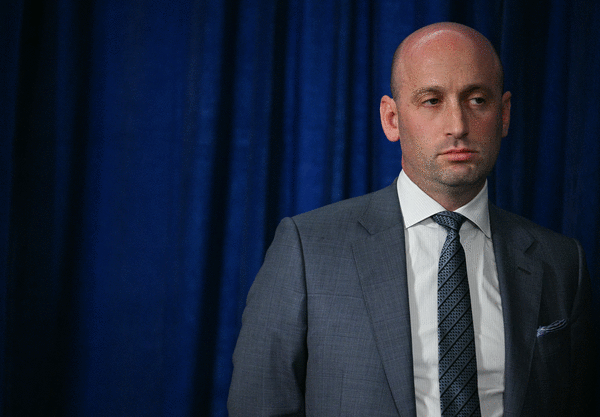
The Trump administration wants us to return to a more dangerous era. As Stephen Miller put it in an interview with CNN’s Jake Tapper: “We live in a world … that is governed by strength, that is governed by force, that is governed by power.”
That statement does describe the world as it was until the end of World War II. Since then, the United States has led an international effort to build a world of shared interests so that more people and nations could live in greater prosperity and peace instead of just accepting a “Lord of the Flies” existence, and the U.S. has benefited from leading it.
The Trump administration has consistently denounced this international order and undermined the institutions that shaped it. Miller complained about the West “groveling” and “begging” during the post-World War II period, but this was the world in which the United States became a superpower, thanks to global trade, trusted allies and other cooperative aspects of that system.
We are not going to like what replaces it. The politics of pure power that he describes will function as international relations did throughout most of human history. It will profit a few who wield that power, until they don’t, and it will cost the rest of us dearly. If you think that the citizens of the United States will benefit by virtue of being subjects of a superpower, ask yourself why the logic Miller applies to the world won’t also apply here at home. A foreign policy of bullying and taking what you can will translate to a domestic policy of the same.
No one is mourning the loss of Nicolás Maduro, the cruel Venezuelan dictator who ran his country into the ground, but U.S. foreign policy shouldn’t be driven by questionable short-term cost-benefit calculations. This aggressive subjugation of a country that was not, in fact, a threat to the United States doesn’t make America safer or more prosperous and likely makes the whole region less stable. The apparent goal is to turn Venezuela into a de facto colony for the financial benefit of a few.
As Miller explained, after a “raging gunfire battle” in which Venezuela “has been so thoroughly defeated,” the United States is “in charge” of the country “because we have the United States military stationed outside the country. We set the terms and conditions. … For them to be able to run an economy, they need our permission.” The administration seems to think that an extortionate foreign policy won’t be met with meaningful resistance since the United States is such a great power, but we’ve lost many wars to smaller foes over less.
The Trump administration has no intention of stopping at Venezuela either. It has already suggested future operations in Cuba, Colombia and Mexico, and we can’t forget earlier threats to Panama and Canada. The threats against Greenland, a territory of our close NATO ally Denmark, are very real too. Most of those countries are close U.S. allies and trading partners, and our allies and trading partners are how we secure our prosperity and strength.
“By what right does Denmark assert control over Greenland?” Miller asked during that same interview. Well, it comes from state sovereignty. If the United States asserts that that no longer has meaning, we return to a world where might makes right. If we want to live in a more thuggish global community, this is the way to invite it.
_____
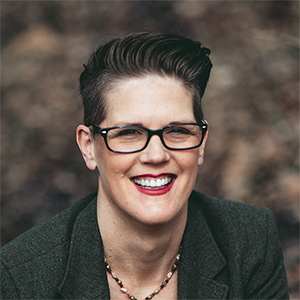
Elizabeth Shackelford is a senior adviser with the Institute for Global Affairs at Eurasia Group and a foreign affairs columnist for the Chicago Tribune. She is also a distinguished lecturer with the Dickey Center at Dartmouth College. She was previously a U.S. diplomat and is the author of“The Dissent Channel: American Diplomacy in a Dishonest Age.” Jason Brozek, Stephen E. Scarff professor of international affairs at Lawrence University, contributed to this column.
___
©2026 Chicago Tribune. Visit at chicagotribune.com. Distributed by Tribune Content Agency, LLC.




































Comments