Lisa Jarvis: Vaccine changes will make American children suffer again
Published in Op Eds

By making sweeping changes to the nation’s childhood vaccine schedule, America’s top health leaders are recklessly maximizing the threat from previously common diseases and dismissing our collective role in preventing them.
The new policy, which cuts the number of recommended vaccinations by more than a third, sends a not-so-subtle message that something was broken in the previous approach to keeping American kids healthy — despite decades of evidence to the contrary. It marks a striking escalation of Health Secretary Robert F. Kennedy Jr.’s decades-long project to amplify doubt and confusion about the safety, necessity, and availability of vaccines — one that will ultimately put everyone at risk from preventable diseases as more parents turn away from routine shots.
Rather than a broad recommendation for all children, vaccines against meningitis, hepatitis A and B, dengue, and RSV will now be recommended only for high-risk groups. Meanwhile, parents can consider several other shots, including the flu and COVID vaccines, through a “shared decision-making” process that involves consulting with a health care provider. It’s an extraordinary departure from the days when Americans received clear public health guidance from the Centers for Disease Control and Prevention.
This decision, with profound implications for Americans’ health, was also made without input from experts within the Department of Health and Human Services, and without the CDC’s typically deliberate, evidence-based process for evaluating vaccine policy.
The overhaul had been telegraphed for weeks. Last month, President Donald Trump directed HHS to amend the U.S. childhood vaccination schedule to better align with those of peer nations. And by peer nations, he really meant Denmark, which bizarrely has become the North Star for these health officials on vaccines. Why, they asked, was the U.S. doing things so differently from the Scandinavian nation?
For starters, the U.S. has roughly 56 times Denmark's population. And, unlike the Nordic country, we don’t have universal health care. That lack of access to free, quality care has a range of consequences for the overall health of our population that change the financial calculus for vaccination. Pregnant women and children are more likely to miss out on routine care, for example, or delay a visit to the doctor when they are sick, increasing their risk of complications from — and of spreading — vaccine-preventable illnesses.
And the idea that Denmark has it right on vaccines — even for its own population — is debatable. For example, each year, an estimated 1,300 Danish children become so dehydrated from rotavirus that they require hospitalization. Meanwhile, in 2006, the U.S. introduced a vaccine against the virus, which the CDC credits with preventing more than 50,000 hospitalizations among babies and toddlers each year. The vaccine campaign has been so effective that today, many pediatric medical residents have never encountered an infant hospitalized because of the infection, which can cause days of diarrhea, vomiting, cramps and fever.
One could tell similar stories for all the other childhood vaccines Denmark has opted out of. “You can’t just copy and paste public health,” Sean O’Leary, head of the American Academy of Pediatrics’ Committee on Infectious Diseases, said at a press briefing.
“A lot of the decisions they make about vaccine schedules are not based on the burden of disease, but rather on cost,” the pediatrician said. “These differences matter because vaccine schedules are designed not in isolation, but they’re part of the broader system of care.”
Health officials argue that they aren’t taking away vaccines but rather resetting the U.S. approach to give parents more power in making medical decisions for their children. HHS was careful to note that government programs will continue to provide the immunizations at no cost. Indeed, Kennedy posted on X that the decision “protects children, respects families, and rebuilds trust in public health.”
Sowing doubt and confusion is an odd way to rebuild trust. That shift to shared decision-making, for example, might sound like a good way to empower parents, but it is fraught with problems. Pediatricians already have these kinds of detailed conversations with parents “all day, every day,” O’Leary said, but now those discussions will become far more confusing.“When the evidence is clear that the benefits outweigh the risks, the guidance should be clear,” he added.
Eventually, preventable diseases will become more common, just as we’re already seeing with measles, pertussis, and even tetanus. What makes this especially infuriating is that the worst damage is likely to occur long after Trump and Kennedy have left office. At first, it might be a handful of additional cases here and there. But over time, as more and more people become susceptible to disease, “they can fuel future epidemics of these diseases like kindling leading to a forest fire,” said Jesse Goodman, who leads a Georgetown University program that focuses on vaccine access.
To be clear, that puts everyone at risk. Routine immunizations not only protect children, but they also help shield other vulnerable people around them. When babies in the U.S. began receiving a vaccine against pneumonia in 2000, overall hospitalizations for the infection fell. One study found that a decade in, vaccination was keeping nearly 170,000 people out of the hospital.
Similarly, evidence suggests that when children receive their flu shot, fewer people overall — and particularly the elderly — become gravely ill.
The shift away from recommending that all children six months or older receive an annual flu shot is particularly indefensible on the heels of last year’s flu season, which was the deadliest for kids in two decades, and amid a severe flu season this year that is straining hospitals nationwide.
Health leaders are unilaterally making far-reaching decisions that will erode hard-won public health gains. The consequences might not be immediately visible and could take years to surface fully — but there’s no doubt that this latest move has broken something monumental, and its effects will eventually reach us all.
____
This column reflects the personal views of the author and does not necessarily reflect the opinion of the editorial board or Bloomberg LP and its owners.
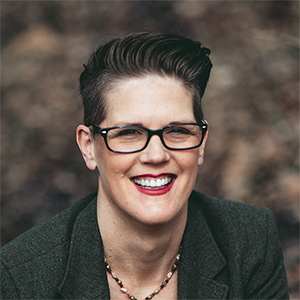
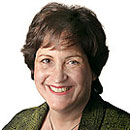
Lisa Jarvis is a Bloomberg Opinion columnist covering biotech, health care and the pharmaceutical industry. Previously, she was executive editor of Chemical & Engineering News.
©2026 Bloomberg L.P. Visit bloomberg.com/opinion. Distributed by Tribune Content Agency, LLC.




























Comments