Commentary: States should reject federal school voucher scheme
Published in Op Eds
Government officials and education experts are right to express concerns about recent evidence of declining academic achievement among the students who struggle most. Researchers are exploring potential reasons behind this decline, including pandemic-era learning loss and the negative effects of excessive screen time.
As the head of a public interest law firm that advocates for students, I wholeheartedly agree that helping our most disadvantaged students must be at the center of any effort to improve equity and excellence in education. But those concerns shouldn’t be used as a rationale to embrace false solutions that not only fail to address the root causes of declining achievement but also lead to potential harms to students and schools.
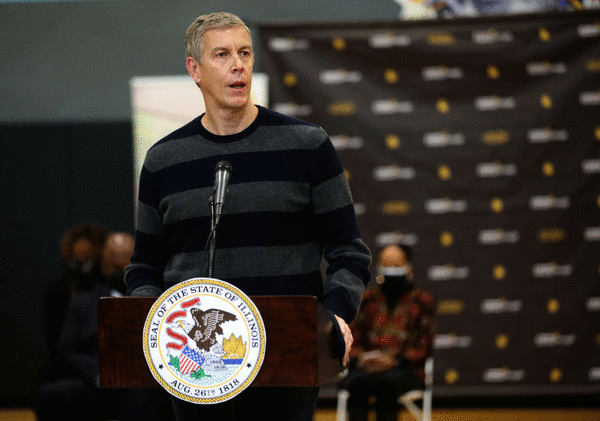
One such false solution surfaced in a recent op-ed in the Washington Post by Arne Duncan, the nation’s former secretary of education under Barack Obama (and my former boss at the U.S. Department of Education), and Jorge Elorza, the current CEO of Democrats for Education Reform, an advocacy group that backs alternatives to traditional public schools. Duncan and Elorza call on state governors to address declining scores by adopting a provision in the so-called One Big Beautiful Bill Act signed by President Donald Trump.
That provision creates a new federal tax credit scholarship program that provides one-to-one individual tax credits up to $1,700 for cash contributions to “scholarship granting organizations” that pass out school vouchers. Currently, the law says those vouchers may be used for expenses for private education and for public school students, but we won’t know exactly what that means until the treasury department releases regulations governing the program. It’s up to each state’s governor to decide whether or not to opt in to the program.
My colleagues and I at the Education Law Center strongly caution states against opting in to this scheme. Through our work directing the Public Funds Public Schools campaign, we conduct and compile research about the various types of private education vouchers, bring and join lawsuits about these programs in states around the country and advocate for public funding to support public education.
Our public schools are already underfunded, some severely. Taking public resources and diverting them to private education is harmful for the nearly 90% of American students in public schools.
The true intent of the federal tax credit voucher scheme is to incentivize public funding for private education. Adding in public school students is really a sweetener to push vouchers into non-voucher states. That means adopting this federal program isn’t the “no brainer” Duncan and Elorza claim it is in their op-ed.
The slope is exceedingly slippery. The size of the program and the amount of public money diverted to private education have all grown exponentially in states with vouchers, leaving fewer resources for public schools.
Any claim that allowing public tax dollars to be redirected to school vouchers is “about putting students first,” as Duncan and Elzora say, is counterfactual. Students taking vouchers have worse educational outcomes. Private schools receiving public money are free to discriminate against students on the basis of race, ability and/or LGBTQ+ identity. And waste, fraud and abuse have always gone hand-in-hand with private school vouchers.
The services these vouchers are used for should be provided to all students who need them, not just a lucky few. Student supports, such as tutoring and mental health services, should be available and paid for in the same way math and language arts classes are paid for — through a state’s school funding law.
We hope public school supporters across the nation convince governors to steer clear of this voucher scheme and instead focus on ensuring that public resources support public schools.
____
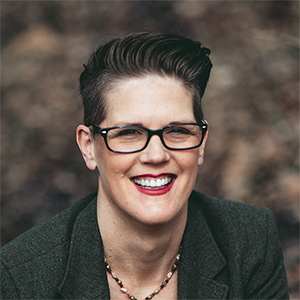
Robert Kim is the executive director of the Education Law Center, a not-for-profit public interest law firm that advocates for the rights of public school students in New Jersey and across the nation. This column was produced for Progressive Perspectives, a project of The Progressive magazine, and distributed by Tribune News Service.
_____
©2025 Tribune Content Agency, LLC.


































Comments