Commentary: As a teacher, I'm seeing the death of American education
Published in Op Eds
A student I like turns in an essay. (She won me over because she brings “Crime and Punishment” to class, and her last name is Russian, which makes me think of the great-grandparents I never met who left Russia for the reasons many Jews left.) A few sentences into her essay, I know she didn’t write it.
Teachers all over the country are getting these papers. The essays seem only distantly related to the question you posed to students — and the AI machine drags in a few quotations and combines words in a way a high school student never would. As a teacher in this day and age, you’re tired, so you don’t even keep reading. The student comes in to meet with you. The website you use states that it is 89% certain that the paper you’re reading was written by AI. Your student squirms.
Your student asks how you know for sure. She says she used AI to check on her sentences. She wrote them, she insists. She says she loves to vary sentences to get the reader’s attention. OK, you say. She says she didn’t use it for the next paragraph and you should add that in the site you used and see.
So I copy and paste the first two paragraphs into the website, and the machine says it’s 100% certain that the content was generated by AI. But I still trust my student. What is teaching if you can’t trust your students?
I say: You know what? Let’s meet next week, and I’ll read the essay and see if I can generate commentary to make it better because we know there are false positives when it comes to this game of seeing if AI has been used.
I’ve always been a bit of a fool for my students. I have a gift of seeing their potential no matter their behavior. Even the one student who threatened my life, who was murdered by rival gang members. I grieve the loss of what must have been the potential of a teenage nihilist. My fingertips sweat as I write of him. In 1995, he told me, in his Sphinx-like way, American education is dead. He was a student in a public high school in the sixth-poorest city in the United States, a school with a dropout rate in the neighborhood of 50%.
There were kids in that school who were wiser, faster and sharper of intellect than 100% of the people I met as an undergraduate at Princeton University. They also knew American education was dead. But they weren’t nihilists, and those who survived the streets of Bridgeport, Connecticut, carry on with their lives and care for their children. Some of my students were grateful back then that at least banana trees weren’t exploding over their heads, such as when their family escaped the war in their home country, or that their family was able to make a new start after President Richard Nixon bombed Cambodia.
I went back into the essay generated by AI. While crafting helpful commentary for my student of Russian heritage, I felt pretty gross and oily, machine-oil yuck, at having to think about the pastiche of weird sentences that came from other writers and were dropped in from Skynet (of “The Terminator” fame). I mean the AI thing that sorts words into grammatically correct sentences that say somewhat coherent things and make a persuasive argument 6.2 degrees off the carefully crafted question an American high school English teacher wrote.
The death of American education began at inception. Teach a few years in a city school with students who are immigrants who can’t return to their home countries. Real immigrants. Not those Europeans who show up with cultural capital, who go back and forth with their parents who have Ph.D.s. If you do teach in a city school like the one I taught in in the 1990s, you’ll get a front-row seat to what isn’t working. While across the street, the suburbs increase their stranglehold on resources, generational wealth and luxury, unchallenged and unchanged. At least until the recent minute I copy this head-exploding sentence: “When rules sort people by property and pedigree, care and labor makes no difference in one’s outcome.”
I went to English-teacher war on the phrase “rules sort people by property and pedigree,” even though I sensed the shadow of an idea in there. And the care and labor of teachers in our American education system should make a difference to a student’s life.
As a teacher in an American school who is inundated by AI-generated work masquerading as human thought, in a system that maintains power and privilege for some who own property that is kept in place by a violence no less destructive than atomic bombs dropped on civilian populations or the protection of American “greatness” through the funding of a genocide in Palestine, I’ll go to work on Monday. And I’ll think that maybe a few teachers will make a difference despite the death of American education.
____
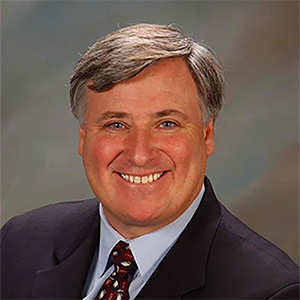
Adam Patric Miller has taught high school for 25 years in three states and currently teaches in St. Louis. He is the author of the book “A Greater Monster.”
___
©2025 Chicago Tribune. Visit at chicagotribune.com. Distributed by Tribune Content Agency, LLC.














































Comments