The 'Law Enforcement' Rationale for Invading Venezuela Is an Open-Ended License for War: If an Indictment Is Enough to Justify Military Action, Why Bother Seeking Congressional Approval?
Venezuela is well rid of Nicolas Maduro, a corrupt, oppressive and illegitimate leader who presided over that country's continuing decline after succeeding Hugo Chavez in 2013. And judging from what happened after the 1989 invasion of Panama, when U.S. forces nabbed a similarly odious strongman who likewise faced a federal drug indictment, the courts will not stand in the way of Maduro's prosecution.
The "law enforcement" rationale for Saturday's attack on Venezuela is nevertheless both implausible and troubling. It offers an open-ended license for any president who wants to excise Congress from decisions about the use of military force, accelerating a trend that threatens to nullify its constitutional war powers.
The early-morning operation that captured Maduro, which involved 150 aircraft and Delta Force soldiers accompanied by FBI personnel, reportedly killed 80 people. President Donald Trump called it "an extraordinary military operation," "a spectacular assault" of a kind "people have not seen since World War II," and "one of the most stunning, effective and powerful displays of American military might and competence in American history."
According to Secretary of State Marco Rubio, that awesome assemblage of military force was performing "basically a law enforcement function." Attorney General Pam Bondi concurred, saying "the mission was conducted to support an ongoing criminal prosecution."
A superseding indictment that the Justice Department recently unsealed, which updates an indictment that the first Trump administration obtained in 2020, charges Maduro and several other Venezuelan officials with conspiracies involving narcoterrorism, cocaine importation and machine gun possession. But Trump's commitment to holding foreign leaders accountable for drug trafficking is open to question.
Just a month before invading Venezuela to serve justice on Maduro, Trump granted a "full and complete pardon" to former Honduran President Juan Orlando Hernandez, who was convicted of similar charges in March 2024. Thanks to that act of clemency, Hernandez served just 18 months of his 45-year sentence.
When Trump was asked about the apparent inconsistency on Saturday, he likened Hernandez to himself. "He was treated like the Biden administration treated a man named Trump," the president said. "He was persecuted very unfairly."
That explanation was puzzling, especially since the investigation that led to Hernandez's imprisonment began during Trump's first term. And by Rubio's logic, Hernandez's crimes would have justified an invasion of Honduras if that country's officials had refused to extradite him.
According to the Trump administration, the president has unbridled authority to decide when such extreme measures are appropriate. Since "this was a law enforcement operation" rather than "military strikes for military purposes," Rubio told The Washington Post, the administration did not need to notify Congress, let alone consult with legislators or seek permission.
A president who wants to attack another country, in other words, does not need an imminent threat, a declaration of war, or even an authorization for the use of military force. All he needs is an indictment, which is convenient because grand juries almost always approve charges recommended by federal prosecutors.
"If indictments can justify unilateral military action abroad, then Congress's war powers become contingent on executive discretion and prosecutorial labeling," notes Clark Neily, senior vice president for legal studies at the Cato Institute. "That is not a system of separated powers, but rather one of executive supremacy tempered only by politics."
We cannot blame Trump for coming up with this excuse, which former President George H.W. Bush deployed against Panamanian dictator Manuel Noriega without legal trouble or any serious political repercussions. Nor can we blame Trump for the legislative branch's abdication of its responsibilities.
Still, the claim that presidents can deploy the military at will is hard to reconcile with Trump's avowed opposition to unnecessary foreign conflicts, although it may help explain why he brags about keeping the United States out of them. Without structural checks on the president's powers, anyone who worries about wars of choice has to put his faith in the self-restraint of whoever happens to occupy the White House.
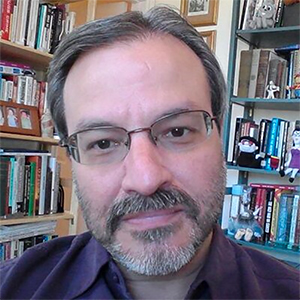
Jacob Sullum, a senior editor at Reason magazine, is the author of Beyond Control: Drug Prohibition, Gun Regulation, and the Search for Sensible Alternatives (Prometheus Books). Follow him on X: @jacobsullum. To find out more about Jacob Sullum and read features by other Creators Syndicate writers and cartoonists, visit the Creators Syndicate webpage at www.creators.com.
----
Copyright 2026 Creators Syndicate, Inc.





Comments