SpaceX national security mission marks last use of Cape Canaveral's landing zones
Published in Science & Technology News

SpaceX sent up its second launch in less than 24 hours on the Space Coast on Tuesday afternoon, while also bringing home its booster for the last time on a landing zone it has been leasing for the last 10 years.
A Falcon 9 rocket lifted off on the NROL-77 mission with a classified satellite for the National Reconnaissance Office from Cape Canaveral Space Force Station’s Space Launch Complex 40 at 2:16 p.m.
This was the fourth launch of the first-stage booster, which made a recovery at Canaveral’s Landing Zone 2.
SpaceX had warned the land recovery could bring one or more sonic booms to parts of Central Florida.
The warning was part of the same standard plans SpaceX plans to use for future Starship and Super Heavy launches, which promise to bring more powerful versions of the loud and rattling pressure change as the massive spacecraft’s booster, as well as upper stage, breaks the sound barrier upon returns to the launch site.
SpaceX is building out Starship launch pads at both Kennedy Space Center’s Launch Complex 39-A and at Canaveral’s Space Launch Complex 37, but for now only launches from Texas.
This was the 16th time SpaceX has used Landing Zone 2, but likely the last. SpaceX had been using both Landing Zones 1 and 2 within Launch Complex 13 under leases from the Department of the Air Force.
The LZ-1 saw its final landing in August, while the LZ-2 lease ends on Dec. 31. LC 13, which is among the southernmost launch facilities on the Cape, has not been used for launches since 1980, but it has been set aside for future use by small rocket launch providers Vaya Space and Phantom Space.
SpaceX is in the midst of constructing its own landing zone at SLC-40 so it can launch and land in the same site, which is the Air Force’s preference for Canaveral launch operations.
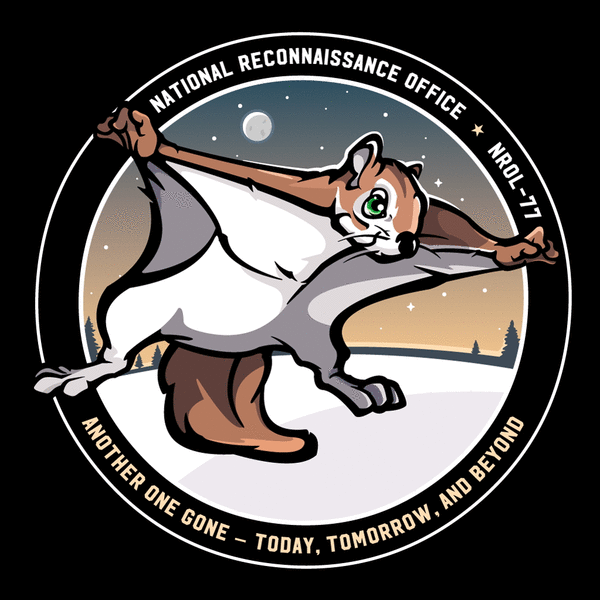
This was the third national security launch for SpaceX in 2025. The mission patch is a flying squirrel, “a symbol of hard work and endurance — always active gathering foundational knowledge from the space domain for the nation and its allies.”
NROL-77 was awarded to SpaceX during the NSSL Phase 2 contract task orders in fiscal 2024, the final year of task orders from the Phase 2’s 2000-2024 order years.
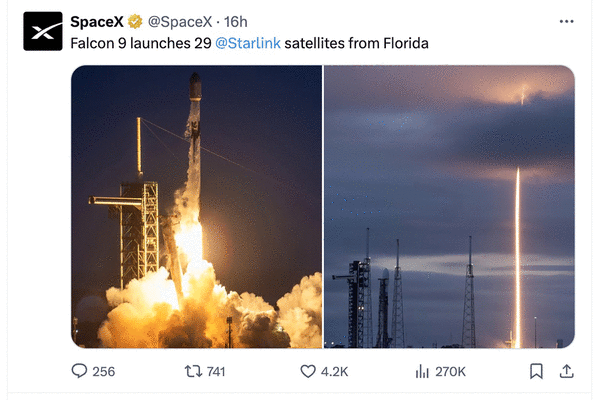
The mission came one day after SpaceX sent up its latest Starlink mission from Kennedy Space Center using its fleet-leading first-stage booster, making its 32nd trip to space.
That Falcon 9 on the Starlink 6-92 mission lifted off from KSC’s Launch Pad 39-A at 5:26 p.m.
The booster made a recovery landing downrange on the droneship Just Read the Instructions stationed in the Atlantic.
It also included another 29 of the company’s internet satellites, among them the 3,000th sent up in 2025 alone from all launch sites by SpaceX.
The company has sent up more than 10,000 of the satellites since the first operational mission in 2019, and more than 9,000 remain in orbit.
The two missions brings the Space Coast orbital launch total for the year to 105, with SpaceX responsible for all but seven of them.
---------
©2025 Orlando Sentinel. Visit at orlandosentinel.com. Distributed by Tribune Content Agency, LLC.






Comments