New food pyramid is a recipe for health disasters
Published in Variety Menu
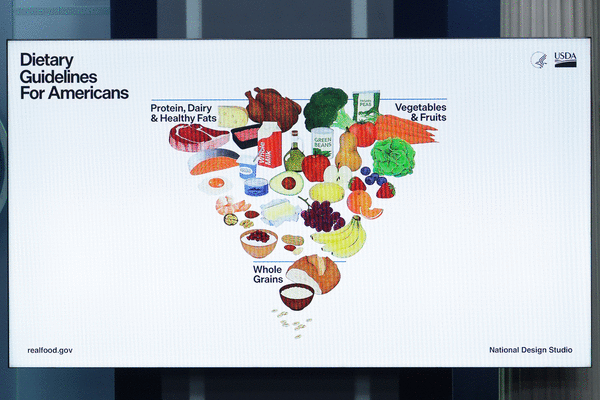
The meat industry’s celebration of the Trump administration’s Dietary Guidelines for Americans should be a clear sign that these new guidelines aren’t for the people.
It’s true that “the United States is amid a health emergency,” as Secretaries Robert F. Kennedy Jr. and Brooke Rollins state. However, in claiming to be an answer to the diet-related diseases plaguing our nation, their guidelines are an alarming dismissal of actual science. They not only flip the food pyramid on its head, encouraging us to consume more full-fat dairy products, but they even promote red meat. The truth hasn’t changed: Consuming more red meat and dairy leads to more chronic disease, not less.
Eating red meat — even unprocessed varieties — has been found by Oxford researchers to increase the risk of heart disease. And according to the World Health Organization, some studies show processed red meat to be a carcinogen, potentially leading to colorectal cancer.
Protein consumption “at every meal” is emphasized in the latest guidelines, and although protein intake is indeed a crucial part of any diet, experts widely believe that it’s been overemphasized in this country. Most Americans already consume far more protein than they need. Furthermore, plant foods such as edamame, lentils, peas, nuts, seeds and legumes offer a healthy source of protein that’s free from the cholesterol found only in animal products.
Whole-food plant proteins are also typically very low in saturated fats, which have long been linked to an increased risk of heart disease and high cholesterol. Although previous USDA Dietary Guidelines recommended limiting saturated fat to just 10% or less of one’s daily calories, Kennedy continues to promote its consumption. The new guidelines go so far as to label beef tallow a “healthy fat,” despite its risks. Full-fat cow’s milk, too, is high in saturated fat, and dairy has been tied to a higher risk of certain types of cancer, including breast and prostate cancer.
Meanwhile, plant-based diets have been associated with a lower risk of cardiovascular disease and death, and those high in fiber have been shown to reduce cancer risk. The American Cancer Society actually links low consumption of fruits and vegetables to nearly one-third of mouth, throat, esophageal and laryngeal cancers.
The government’s guidelines should not ignore years of nutrition science to prop up the meat and dairy industry. Thankfully, other institutions provide more evidence-based and responsible recommendations. For example, the New American Plate from the American Institute for Cancer Research recommends that two-thirds or more of one’s plate be filled with vegetables, fruits, beans and whole grains, and that animal-based proteins take up one-third or less. The American Heart Association “encourages adults to get most of their protein from plants.” The World Health Organization suggests shifting away from saturated fats, which should be “less than 10% of total energy intake,” and notes that consuming at least five portions of fruits and vegetables each day lowers one’s risk of heart disease, diabetes, stroke and cancer.
Meanwhile, according to the Food & Drug Administration, sales of antibiotics for use in farm animals increased by 16% in 2024 compared with the previous year. More and more of these drugs are being funneled into factory farms, where 99% of U.S. farmed animals are raised. When used in excess, these drugs — along with hormones used to promote animal growth — eventually end up in the meat consumed by the public, resulting in the development of antibiotic-resistant bacteria that kill about 35,000 Americans annually, according to the Centers for Disease Control and Prevention.
“For decades, federal incentives have promoted low-quality, highly processed foods and pharmaceutical intervention instead of prevention,” write Kennedy and Rollins. But make no mistake: These guidelines demonstrate that the federal government continues to promote unhealthy food, benefiting agribusiness and putting public health at risk.
Mentions of vegetarian and vegan diets are saved for a small section at the end that focuses primarily on “nutrient gaps” rather than suggesting the ways a healthy plant-based diet can meet one’s nutritional needs and even promote better health.
The new guidelines feature several positive recommendations, including “eat real food” (whole, unprocessed) and limiting one’s consumption of highly processed foods, sugar and alcohol. Instead of stoking fear over plant-based meat alternatives or repeating buzz phrases like “ultra-processed foods,” which should be limited in any diet, our government should be recommending a diet backed by science.
“Together, we can shift our food system away from chronic disease and toward nutrient density, nourishment, resilience, and long-term health,” write Kennedy and Rollins. Yes, we can — if the federal government shifts its funding and promotion away from unhealthy, animal-based products to whole, plant-based foods.
____
Gene Baur is president and co-founder of Farm Sanctuary.
©2026 Los Angeles Times. Visit at latimes.com. Distributed by Tribune Content Agency, LLC.








Comments