
The Greener View: Waxed Amaryllis Care
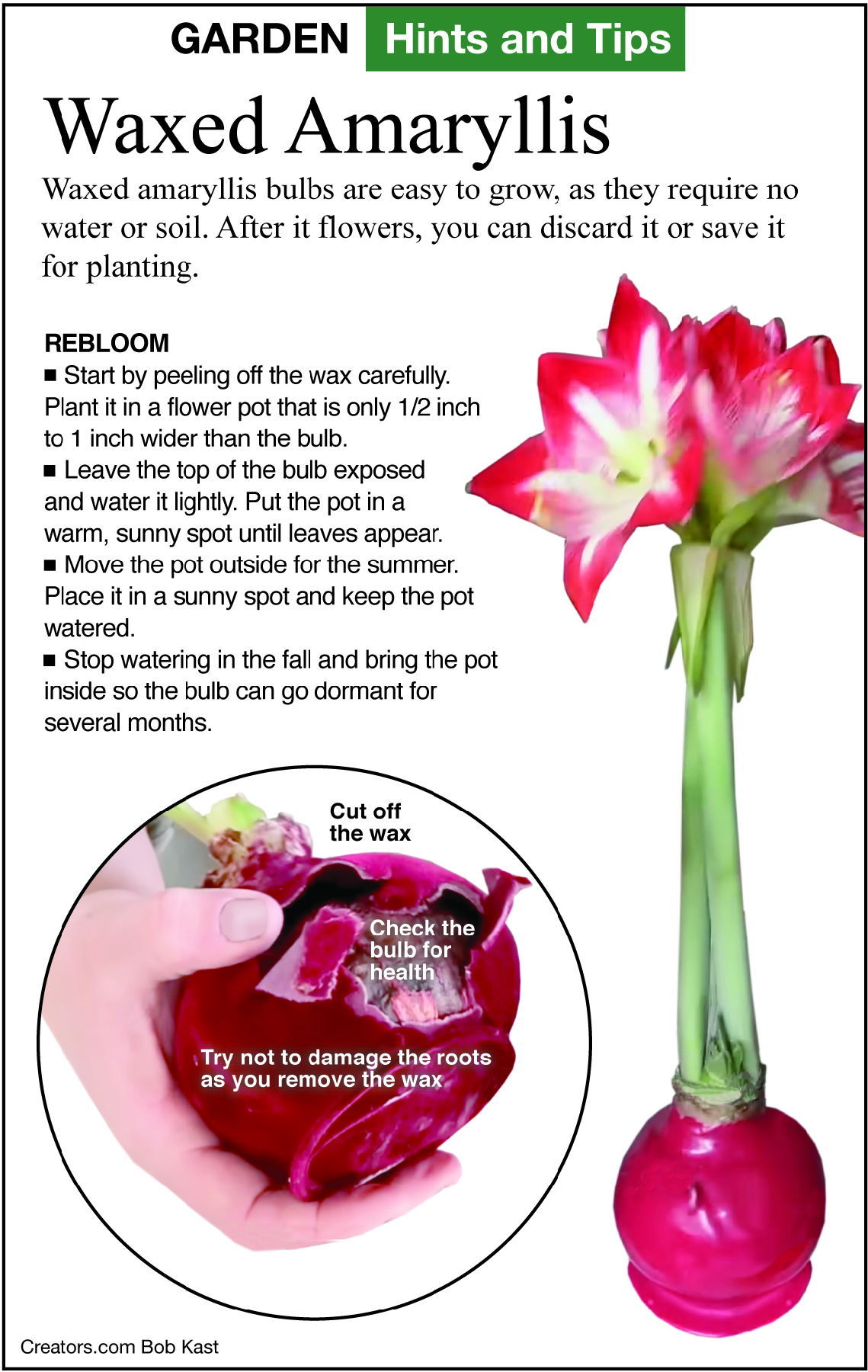
What do you do with a waxed amaryllis after it is done flowering? Waxed bulbs are intended to be thrown away when they are done blooming, just like a cut flower in a vase. There is no mess of potting soil, no watering or any other care; just enjoy the flowers and then toss it out. You are reading this article because you could never do that. You want to know how to get it to bloom again next year.
In nature, these bulbs go dormant during the dry season. They then start growing some roots before sending up one or more flower stalks. The flowers may produce seeds as the photosynthetic leaves start growing and the wet season takes over.
So, during dormancy, someone has dipped the dormant bulb in wax. There may be a plastic bag on the bulb first, and there may be a wire base to keep the bulb upright. I have seen some bulbs that look waxed but are actually in plastic pots.
The dormant waxed bulb is shipped to stores. The bulb can't send out very many roots due to the wax coating. At some point, the bulb will begin to send up flower stalks anyway. The growth of the flower stalks is powered by carbohydrates stored in the bulb. The flowers are not likely to produce seeds, and we don't want them to anyway, so cut off the flowers as they die and cut off the whole stalk after the last flower dies, being careful not to damage any leaves that may have started to grow.
Here is the problem. The bulb couldn't grow any roots, didn't get watered and consumed a lot of carbohydrates. The bulb is now at its weakest point, and you will have to take really good care of it for the next year. It may be so weak that it might not recover enough to bloom the first year, so you may not see flowers for two years.
You don't have to wait until it is done blooming if you don't want to. First, cut off the wax. You will find the bulb is smaller than the wax due to the bulb using so much energy sending up the flower stalks. If any parts of the bulb are rotting, it is probably better to toss the whole thing. Cutting any rotting parts off will leave a partial bulb that will take a long time to grow back into a flowering-sized bulb. Try not to damage the roots as you remove the wax. Some roots may be embedded in the wax. If you break off some roots, it may be a good idea to wait a day before planting the bulb so that the broken roots can scab over. This will help prevent disease organisms from entering the wounds.
Next, find a flowerpot that is only 1/2 inch to 1 inch wider than the bulb. Use any houseplant potting soil. Plant the bulb so that about a third of the bulb is above the soil. Then, water the soil and put the pot in a warm, sunny spot until leaves appear. Don't worry if the leaves don't appear for a few weeks. The leaves may need to be staked up because they tend to flop over under their own weight if there is no wind to make them strong as they grow. Take the pot outside for the summer. Place it in a sunny spot and keep the pot watered. In the fall, stop watering and bring the pot inside so the bulb can go for a several months long dormancy period.
If everything works well, the bulb may produce flowers when it comes out of dormancy; if it does not, do the whole process again for another year.
========
Email questions to Jeff Rugg at info@greenerview.com. To find out more about Jeff Rugg and read features by other Creators Syndicate writers and cartoonists, visit the Creators Syndicate website at www.creators.com.
Copyright 2025 Jeff Rugg. Distributed By Creators.






Comments