Ex-etiquette: 'You don't care'
Published in Lifestyles
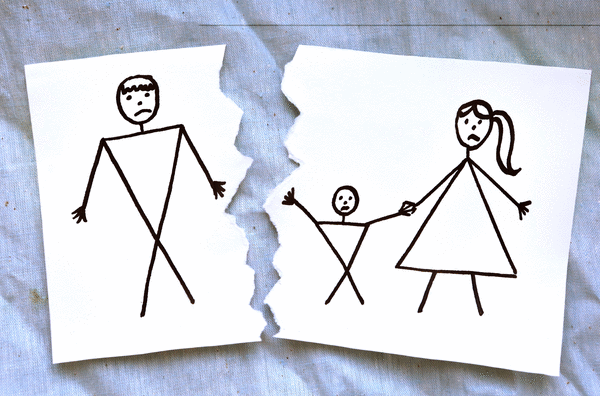
Q. My ex often says, "You never cared about me, and now you don't care about our daughter." We're divorced, but this comes up repeatedly. When she says it, I find myself defending how much I care — about her, about our child — and the truth is, I don't care about my ex anymore. That sounds harsh, but I have very clear boundaries. I do care deeply about our daughter. The conversation feels strange, unproductive and just goes around in circles — and it keeps happening. What's good ex-etiquette?
A. This is a very common post-divorce trap, and it's not really a conversation at all. It's a collision between the past relationship and the current parenting relationship, and the two are no longer the same thing.
You and your ex are obviously in two different places, emotionally. When she says, “You never cared about me,” she is speaking from unresolved hurt. When she adds, “and now you don't care about our daughter,” she's collapsing two very different emotional realities into one accusation. If you respond by defending how much you care, you unknowingly step back into the role of former partner instead of staying grounded as a co-parent. That's why the exchange feels so uncomfortable. You're arguing in a relationship that no longer exists.
Good ex-etiquette begins with this distinction: You are no longer required to prove emotional devotion to your ex in order to demonstrate care for your child. Those are separate lanes. Trying to merge them only keeps the conflict alive.
It's also important to understand why these statements keep coming. Accusations like this are rarely requests for information. They are expressions of fear, resentment or loss. Responding with explanations, reassurances or emotional defenses may feel logical, but it often escalates things because it invites debate about feelings that cannot be resolved between you.
So what is good ex-etiquette in the moment?
First, stop defending your feelings. Defensiveness prolongs the exchange and keeps you tethered to the old dynamic. You don't need to convince your ex of your internal emotional state.
Second, acknowledge the concern without accepting the premise. This is where acknowledgment, not apology or argument, does the work.
For example: "I hear that you're worried about whether our daughter is supported."
That sentence does three things at once. It recognizes her concern, redirects the focus to your child and avoids engaging with the accusation about your past relationship.
Third, anchor your response in behavior, not emotion. Care is best demonstrated through consistency, not declarations of devotion.
You might say: “I'm committed to being a steady, involved parent. My actions with our daughter reflect that.”
Notice what this does not do. It does not argue about whether you ever cared about your ex. It does not invite a debate about your feelings. It keeps the conversation where it belongs: in the present and centered on parenting.
If the accusation continues, repetition is your ally. Calmly restate your boundary: "I'm not going to debate feelings from the past. I'm focused on our daughter and her needs now."
Good ex-etiquette doesn't require emotional intimacy with your ex. It requires emotional clarity. When you stop trying to resolve old wounds through present-day parenting conversations, you reduce conflict, model stability and protect your child from being pulled into adult emotional business.
That's not indifference. That's appropriate distance.
And that's good ex-etiquette.
©2026 Tribune Content Agency, LLC






















Comments