Review: Brad Pitt is too cool for the movie's own good in 'The Further Mis-Adventures of Cliff Booth'
Published in Entertainment News
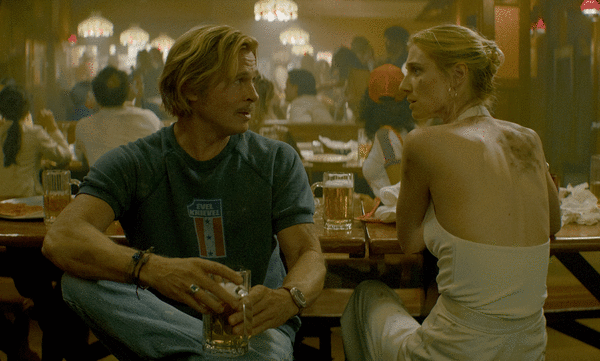
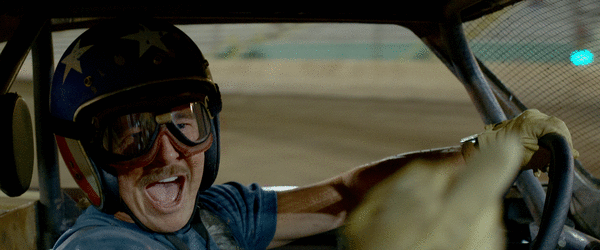


"To Know Him Is to Love Him," the 1958 pop ballad by Phil Spector, pipes through the speakers as Brad Pitt cruises around Los Angeles in "The Further Mis-Adventures of Cliff Booth."
Eh, not really. The enigmatic sidekick of Quentin Tarantino's 2019 "Once Upon a Time … in Hollywood" was more enjoyable as a casual acquaintance. Regardless, Pitt's Oscar-winning Cliff Booth has been promoted from supporting character to star of this ambling hangout movie directed by David Fincher from Tarantino's script.
In the first film, Cliff was a polarizing contradiction: a trusty chauffeur, handyman and best friend to Leonardo DiCaprio's actor Rick Dalton and a wife-murdering, cop-brawling outlaw who made a Manson girl swoon: "Charlie's gonna dig you!"
Squint at that first movie and it's possible to make the two sides of Cliff's personality come into focus like a blurry Magic Eye poster. His battle with a young Bruce Lee, for example, can be seen as an offensive fantasy of some yahoo besting a martial arts legend. But that Bruce hadn't yet made "Enter the Dragon" — and Cliff's aggression gets him thrown off a set, tanking his career and losing the more important fight to stay relevant in a changing industry. Plus, their skirmish was technically a draw.
"I'm not that deep," the sequel's Cliff says with a grin, exculpating the character from further analysis as he crashes cars, squares debts, flirts with girls and always gives better than he gets. Having bested several members of the Manson clan, Cliff now tangles with a pair of thieves (Karren Karagulian and Corey Fogelmanis), two deadly brothers (Matt Groove and JB Tadena), a volatile TV star (Scott Caan) and a haughty film critic-turned-agent (Elizabeth Debicki) who suspects that romancing him is a rotten idea, but succumbs anyway.
The sequel flattens the complicated but likable scumbag into a simple charmer who doesn't make any sense. Cliff is simultaneously a 50-something failure who lives with his dad (Peter Weller) and the coolest dude in town. Becoming a badass makes Cliff way less interesting. The movies already have plenty of those. Plus, his Teflon-slickness seems too easy for the writer who made John Travolta's iconic Vincent Vega die on a toilet.
It's the summer of 1977, and Hollywood looks like a ghost town, so we pointedly spend less time in the neighborhood than we do watching mud wrestling in Marina del Rey, playing tennis in Beverly Hills, strolling the beach in Malibu and smashing vehicles at a demolition derby in Carson. As soon as that time stamp flashed onscreen, I lit up with anticipation that this sequel might be another transitional fairy tale like how "Once Upon a Time" softened the collision of Classic and New Hollywood in 1969. Eight years later, "Star Wars" has just opened and will hyperspeed this listless city into making lucrative family fare; soon it'll be New Hollywood's turn to get trampled by PG blockbusters. But when I caught myself wondering whether the nightclub set of a fictional network drama called "Disco Kingpin" was supposed to look like the Millennium Falcon, I realized I was tugging too hard on each detail, hoping it would mean something.
The entertainment business frames the plot. The film starts with Cliff doing a bloody favor for one celebrity, then builds back up to him doing a second one. In between, the slender story is fundamentally about the pleasures of being Cliff Booth and while there's not much to it, Pitt's charisma holds your interest whenever he's onscreen, which is most of the time. DiCaprio's Rick has ditched him to work in Australia, and Cliff hasn't been hired for a stunt gig in God knows how long. Instead, Cliff subsists on odd jobs, a different hustle every night, from bartender to janitor, starting with a projectionist shift at a near-empty theater that feigns to be Tarantino's New Beverly. (It's actually a hybrid of the Highland Theatre and the Gardena Cinema.)
Cliff acts blasé about his former profession, yet the movies still matter to him — they prove to inspire both his tough talk and his sexual turn-ons. But audiences haven't turned up at Cliff's worn-out single-screen palace for a fictional blaxploitation flick called "Soul Brothers Die Hard!," whose lead actor, Hot Rod Harrison, (Yahya Abdul-Mateen II) delivers a repetitive monologue about pimping while strippers listlessly gyrate in thong underwear. This dreck with its deliberately tinny audio mix feels like a criticism of mid-to-late '70s moviemaking: New releases are lame while quality old films are reduced to the small screen at home.
Still, it's hard to tell if the screenplay agrees. Tarantino tends to profess more respect for tawdry schlock than "Star Wars," which, Debicki's snooty Karen Crosby groans, is merely a "technically superior 'Flash Gordon.'" But Fincher got his foot in the door working for Industrial Light & Magic on "Return of the Jedi." He's no nostalgist — he's a futurist, a technophile — and this muddled opening sequence sums up the mismatch of smushing these two auteurs together.
Tarantino adores this town, especially when he can hail performers and craftspeople giving A-worthy effort to B- and C-list material. His vigilance for talent is energizing and here includes an ode to the character actor Ralph Meeker, a touchstone for DiCaprio's Rick. A cameo from Margot Robbie's Sharon Tate in a cigarette commercial might seem like an insult, but it's lovely to see her get to experience a starlet's complete life cycle from ingenue to has-been. And when Tarantino himself narrates the career trajectory of Caan's Charlie Peters from TV guest star to primetime leading man, his voice soars with the same enthusiasm that once motivated him to write five unfilmed episodes of Rick's cowboy show "Bounty Law" just because.
But Fincher doesn't seem to have much affection for this era's humble entertainment. He does take the opportunity to nod at Diane Keaton's "Looking for Mr. Goodbar," an influence for an early '90s Madonna music video he directed as he was transitioning to his own film career, and he empowers the composers Trent Reznor and Atticus Ross to do their own meaty, marvelous riffs on cliched saxophone seduction jams and just-this-side-of-corny climatic violins. It's his first enjoyable movie in a decade and most cheerful one ever; he benefits far more from his alliance with Tarantino than vice-versa. Perhaps the script's thesis about '70s Hollywood was in the 60 pages Fincher claims he cut out of it. I'd be curious to know whether it's on purpose that when Caan's Charlie gets all hopped up talking about erotic thrillers, his manic cadence sounds an awful lot like, well, Tarantino.
But the best way this movie embodies the Tarantino ethos is letting its own bit players shine in middling material. Weller and Caan are fantastic in their return to feature filmmaking, and while Abdul-Mateen and Debicki have weaker lines — he's stuck in trite roles-within-his-role; she's trapped as an aloof object of desire — the actors have presence. Most delightfully, every one of the heavies zings, as do the even smaller roles of a pawn shop junkie (John Lee Ames), a nervous TV Nazi (Holt McCallany) and a normie housewife who reveals she's one of Cliff's most unexpected fans.
Likewise, one thing that unites Tarantino and Fincher is their own love of Brad Pitt. Both adore the star, and and Erik Messerschmidt's sunny, breezy camerawork does too. While the overall film is flimsy, individual scenes are a joy. Pitt's wordless gestures almost always get a smile: sniffing his dirty T-shirts, whiffing a tennis ball, waving at Debicki's Karen flirtatiously from a balcony. The two times I've seen "The Further Mis-Adventures," the audience laughed simply watching Pitt dial a rotary phone.
I'd happily trade Cliff's forced pursuit of Karen, whose character seems humiliated by their affair, for two straight hours of watching him tend bar with his encyclopedic recall of tiki drinks. Maybe Tarantino, Fincher and Pitt simply should have clinked margaritas and started rolling on an improvised home movie. Who needs a satisfying plot, theme and tone when Pitt handles cocktail shakers with such panache?
———
'THE FURTHER MIS-ADVENTURES OF CLIFF BOOTH'
MPA rating: R (for some strong/disturbing violence, bloody images, pervasive language, sexual content, nudity and drug use)
Running time: 2:20
How to watch: In Imax theaters Nov. 25, on Netflix Dec. 23
———
©2026 Los Angeles Times. Visit latimes.com. Distributed by Tribune Content Agency, LLC.










Comments