Gearoid Reidy: How 'Pokemon' and 'Resident Evil' rewrote gaming history
Published in Entertainment News
In the space of just 23 days three decades ago, two initially unassuming releases changed video games forever.
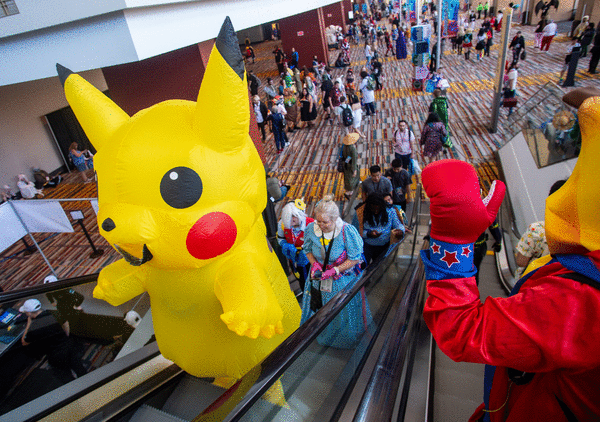
On Feb. 27, 1996, "Pokémon Red and Green" first hit Japanese shelves. The role-playing titles were the original entries in a series that would grow to become what is now considered the top-grossing media franchise in the world, worth more than Mickey Mouse or "Star Wars."
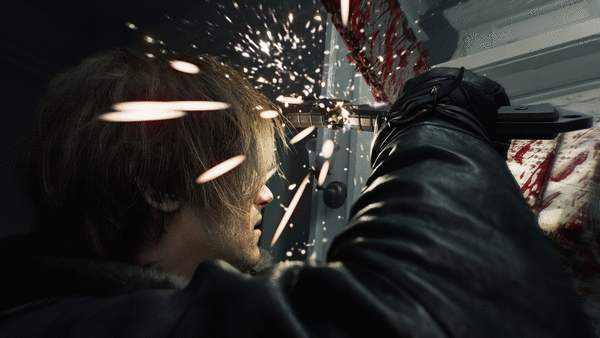
Just three weeks later, Capcom Co. released "Biohazard," better known outside Japan as "Resident Evil." There was no cuddly Pikachu here, with the title a bloody experience that sought to make players feel the tension of being hunted by zombies. Almost 30 years on, gamers still can’t get enough. The critically acclaimed latest entry, "Resident Evil Requiem," sold 5 million copies in five days after its release last month, the fastest ever pace. The series has shipped more than 180 million units in total.
1996 was a seminal year for gaming, an era of rapid iteration and change that stands in contrast to the tedious yearslong development schedule of today. Yet other franchises that emerged at the same time to dominate the decade, from "Crash Bandicoot" to "Quake" to "Tomb Raider," have fallen into obscurity. It’s a testament to their patient stewardship — and a lesson to publishers everywhere.
As games, they have little in common. Having been in production for six years, an eternity in an era when games were often assembled in months, the kid-focused "Pokemon" was the last gasp of Nintendo Co.’s Game Boy platform. "Resident Evil," meanwhile, was developed by an inexperienced team experimenting on the then-new PlayStation platform, a horror plot that drew inspiration from the movies of Alfred Hitchcock. Both, however, were thought of as long shots.
The influence of both titles extends well beyond games. "Pokemon," which wasn’t released outside Japan until 1998, has been described as a “Rosetta Stone” that led directly to today’s anime boom. Initially, it was viewed a curiosity that obsessed kids and baffled adults, as memorably captured in a "South Park" episode that mocked the late '90s obsession. But unlike other fads, it endured — and would prove a harbinger of how Japanese pop culture would come to be the lingua franca of Western youth.
"Resident Evil" drew inspiration from Western movies, particularly the zombie films of George A. Romero, such as "Dawn of the Dead." But by the 1990s, zombies had become the stuff of camp and parody, with horror moving toward meta trends like "Scream," released later that year. The Japanese game’s success would reestablish the zombie as a horror mainstay, paving the way for everything from "28 Days Later" to "The Walking Dead." And despite its poorly translated script and legendarily hammy voice acting, it was nonetheless a landmark as games moved from cartoon action to the cinematic experiences targeted at adults.
What is the secret that makes these two so relevant three decades on?
First is a careful shepherding that gives fans what they want, while also updating the template. "Resident Evil" has fully reinvented itself at least twice, moving toward a more action-based formula, then later leaning further into its horror roots. "Pokemon" has stuck closer to a tried-and-true formula, and while the most recent major release, "Scarlet and Violet," may have received mixed reviews, they became the second-bestselling of the series. But it experiments, too: The latest spinoff, the "Animal Crossing"-like "Pokemon Pokopia," is attracting rave reviews since its release on the Switch 2 last week, reigniting the franchise ahead of the launch next year of the newest mainline entries, "Winds and Waves."
They also show the importance of a multimedia strategy. Comics, anime and trading cards were crucial to "Pokemon’s" early success, making the series unavoidable and creating familiarity with the characters. And while the schlocky "Resident Evil" movies might have borne little resemblance to the games, they were still profitable and increased awareness of the brand. A new take helmed by acclaimed horror director Zach Cregger will hit movie theaters later this year.
And for all their success, both have left money on the table. In their quest to constantly juice the next quarter’s earnings, many publishers give gamers too much of a good thing. But both "Pokemon" and "Resident Evil" have staggered their mainline releases — the major chapters of the franchise — with just nine entries in three decades, while using spinoffs, remakes and side adventures to keep players (and investors) engaged.
Pikachu and flesh-eating zombies might seem to have little in common. But they show that great ideas, if handled with care, don’t get old.
———
This column reflects the personal views of the author and does not necessarily reflect the opinion of the editorial board or Bloomberg LP and its owners.
Gearoid Reidy is a Bloomberg Opinion columnist covering Japan and the Koreas. He previously led the breaking news team in North Asia, and was the Tokyo deputy bureau chief.
©2026 Bloomberg L.P. Visit bloomberg.com/opinion. Distributed by Tribune Content Agency, LLC.











Comments