The 20 best fiction and nonfiction books
Published in Books News
Publishers will release as many as 1 million books this year, so good luck summarizing that. But if what I read and loved in 2025 is any indication, writers have pulled their focus in from the big picture to the world writ small: how families are adapting to the climate we live in, how a person overwhelmed by the screwed-up justice system can make things right for one individual, how simple acts of kindness can change lives.
You’ll find those themes in my top 10 fiction and nonfiction books, between the covers of which there is escape, hope, tragedy and joy.
The best of fiction
Buckeye
By Patrick Ryan
The canvas is small (a handful of key characters in an Ohio town) but the scope of “Buckeye” is huge. Ryan covers several decades in the lives of two couples, one seemingly happy and one not so much, which are intertwined by a secret most of them don’t know. When the secret emerges, it upends everyone’s lives. There’s a bit of Anne Tyler in Ryan’s writing, which is focused on the tiny details of existence, but it’s a bigger book than Tyler writes and it’s more interested in the inexplicable. One character, for instance, is a medium who is particularly helpful during World War II, when folks are looking for information about loved ones overseas.
Culpability
By Bruce Holsinger
Like Ryan’s book,“Culpability” is a family drama, but this one spins ever further out of control. A car accident in the opening pages leaves two people dead in one car and, in the other car, all five members of the Cassidy-Shaw clan shaken to their cores. As this riveting novel unfolds, we begin to see why every member of the family believes they are responsible for the crash. We also learn how deviously artificial intelligence has wound its way into their lives, from one child’s virtual friend to the mother’s career in technology ethics to a wealthy, Bill Gates-ish neighbor with a startling connection to the family.
Clown Town
By Mick Herron
It’s rare for a book series to keep getting better and better but that’s what is happening with Herron’s comic spy novels, which provide the inspiration for the “Slow Horses” streaming series (if they keep doing one season per book, this would be the ninth season of the show, which just concluded its fifth). Spoiler ahead if you’re caught up on the show but not the books: At the center of “Clown” is River Cartwright, who’s played by Jack Lowden on the show (earlier books may have convinced you he was dead). He’s investigating a mystery created by his grandfather, also a spy, but don’t worry: There’s plenty of that smelly, rude spymaster Jackson Lamb in “Clown,” as well as a new set of hapless spooks.
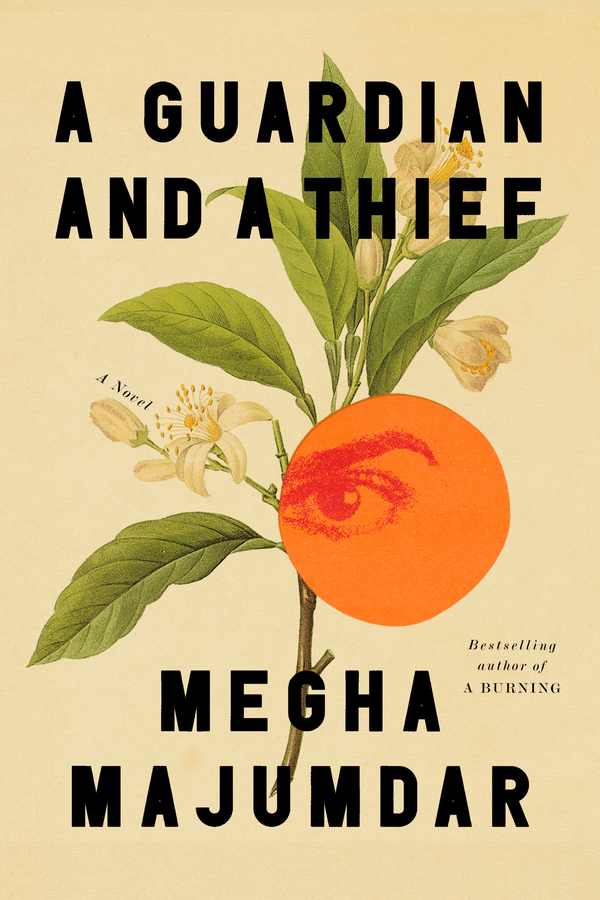
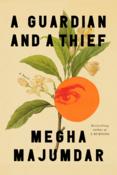
A Guardian and a Thief
By Megha Majumdar
When Claude Peck reviewed this for the Minnesota Star Tribune, he called it an “instant classic.” Those are strong, but apt words for the new book from the author of the equally terrific “A Burning.” There are two main characters, a Kolkata matriarch who is getting her family ready to relocate to the U.S. and a wily thief, who unknowingly steals the family’s passports. The propulsive novel shifts between their points of view, revealing that both of them are guardians and thieves. Tragic and insightful, it’s a book we’ll be reading for years to come.
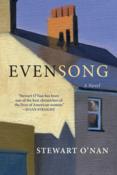
Evensong
By Stewart O’Nan
I’m only just now realizing how many of my favorite novels this year are about families that are grappling with rapidly changing circumstances in their lives and in the world. In this one, Emily Maxwell (from previous O’Nan novels, including “Emily, Alone”) is a member of the Humpty Dumpty Club, a community of seventyish women who take care of each other in the retirement community where most of them live. O’Nan’s book closely observes the everyday joys and sorrows of their life, paying particular attention to the ways in which the women have created a new kind of family.
The Names
By Florence Knapp
There’s a “Sliding Doors” quality to Knapp’s novel, which begins with a woman and her young daughter, making their way to the registrar’s office to register the name of her infant son. On the walk, she muses about the name her abusive husband has instructed her to choose, the name she’d like to choose and the name her daughter suggests. Then, “Names” spins off into three versions of how these characters’ lives could play out over the next several decades. Subtle and beautiful, “The Names” is less about how what we’re called determines our fates than how small events create ripples over the course of lifetimes.
The Impossible Thing
By Belinda Bauer
Welsh writer Bauer should be much better known in this country. All 10 of her books are witty, page-turning gems. Many of them recall the work of the late Ruth Rendell in the way Bauer sets us up to follow two characters whose fates are destined to intertwine in disastrous ways.“The Impossible Thing” is a sunnier book, inspired by true events: the century-ago obsession over decorative guillemot eggs. When it’s discovered that a small child is the only person who can reach a cache of the valuable eggs, it changes the lives of her family and sets into place a mystery that stretches out over more than 100 years.
The Evening Shades
By Lee Martin
A sequel to Martin’s “The Bright Forever,”“Evening Shades” can easily stand on its own. Martin creates the illusion that we know everything about a dozen characters, who take turns narrating the story of a stranger from Indiana who settles in an Illinois town (I read “Bright Forever” after “Evening Shades” and still loved it). The stranger begins a lovely, halting romance with one of the townspeople but he affects many more lives, some in ways they don’t appreciate. Which is why there’s swift backlash against the stranger, who’s trying to make a fresh start but who learns that, to paraphrase William Faulkner, the past isn’t past.
The Satisfaction Cafe
By Kathy Wang
Joan has spent most of her life being seen as an adjunct to other people: two husbands, two children, a few employers. But, at an age when many people are considering retirement, she finally follows her dream of opening a place, the Satisfaction Cafe that serves food but where the main dish is the knowledge that you can go there and find someone who will listen, really listen, to what you have to say. Her therapy baristas work miracles with her customers, as does Joan herself (same for the nimble Wang, who also wrote “Family Trust”). And, as her dreams become reality, flinty, funny, bossy Joan becomes a vividly original creation, my favorite
People Like Us
By Jason Mott
There’s a playful, Kurt Vonnegut quality to Mott’s novel, which revisits characters and themes from his National Book Award-winning “Hell of a Book” (and, again, it’s not imperative to read the earlier book but it will enrich your experience of “People”). Both (or, possibly, all three) main characters in “People Like Us” are Black writers, one of whom has been asked to give an inspirational speech at a Minnesota school and one of whom is on a wild tour of Europe. Those two men’s lives often seem to blend together, and both borrow biographical details from Mott. All three are grappling with big issues of the day, including America’s gun problem, and all three are incredibly entertaining guides.
The best of nonfiction
A Marriage at Sea
By Sophie Elmhirst
The book I’ve recommended to more people than any other in 2025 is this riveting tale of adventure — and the true story isn’t even the best part of it. Subtitled “A True Story of Love, Obsession and Shipwreck,” it’s about a British couple who, in the ‘70s, decided to sell their house and sail to the Galapagos Islands, even though they weren’t really sailors and she couldn’t even swim. Their survival story is incredible, to be sure. But what makes“A Marriage at Sea” (note the double meaning in that title) special is Elmhirst’s writing, which is nimble, sensible and uncanny in its ability to help us see how marriages, and this one in particular, work.
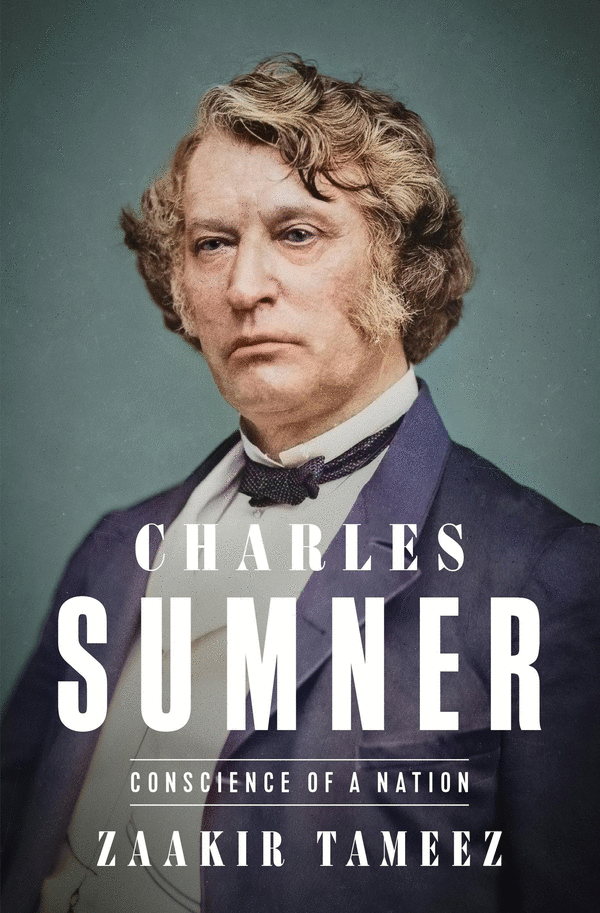
Charles Sumner: Conscience of a Nation
By Zaakir Tameez
The 19th century abolitionist, orator and senator is known, if at all, as the guy who was almost beaten to death by a colleague on floor of the U.S. Senate or perhaps as the man who was holding friend Abraham Lincoln’s hand on the president’s deathbed. But there’s a lot more to his story, which includes an unusual degree of compassion for Black Americans — possibly because, as a closeted gay man, he identified with their outsider status (a “romantic friend” of Sumner’s wrote, “Hardly a day passes but I think of you & long to have you by my side” — while on his honeymoon!).“Charles Sumner” is a monumental book and sharply insightful Tameez, who is only in his 20s, is a writer to watch.
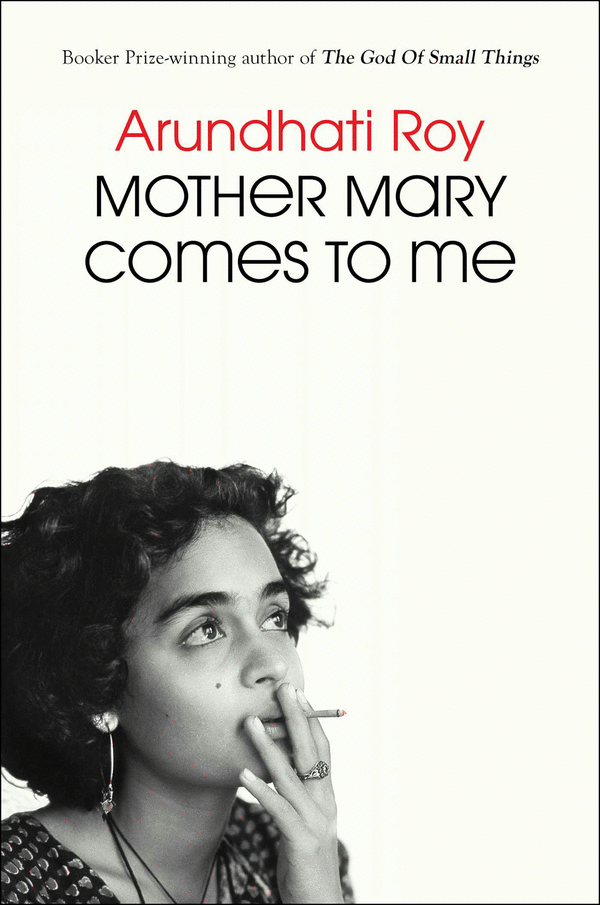
Mother Mary Comes to Me
By Arundhati Roy
The Indian novelist (she won a Booker Prize for “The God of Small Things”) could have written a sort of “Mommy Dearest” book — there’s plenty of horrible behavior from her mother, whom she refers to throughout“Mother Mary Comes to Me” as “Mrs. Roy.” Instead, the memoir feels like a generous, compassionate attempt to understand the impulses that drove her difficult, driven mother and that Roy has attempted not to become snared in. Despite the title, most of the book is about Roy’s own stellar career, which was shaped by her troubled childhood and which she has devoted to helping those who lack the privileges with which she grew up.
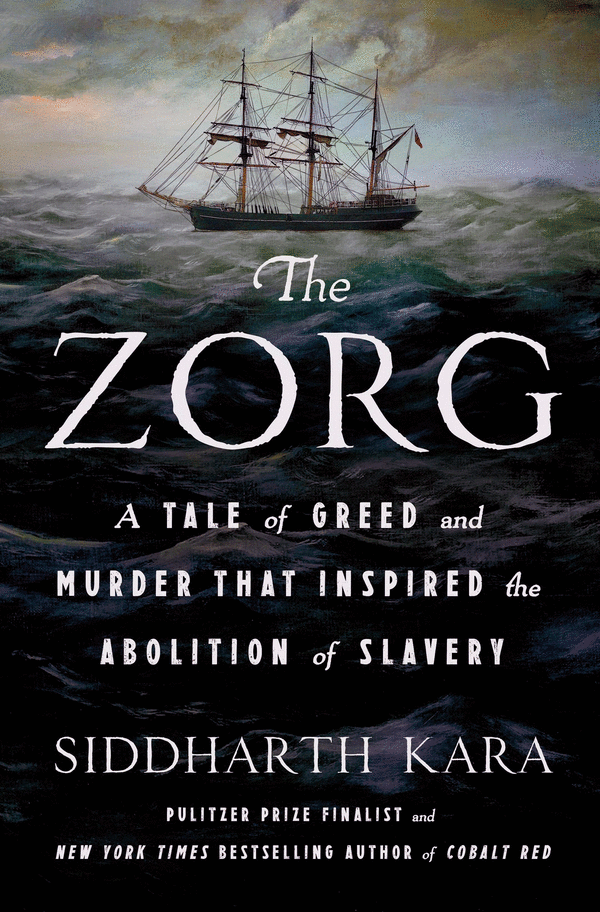
The Zorg
By Siddharth Kara
No one is going to claim that“The Zorg,” subtitled “A Tale of Greed and Murder That Inspired the Abolition of Slavery,” is fun to read. But Kara’s elegantly reasoned and economical book (it’s just 288 pages) goes beyond showing us the abominable behavior among the crew on a British/Dutch ship: Ultimately, they threw overboard 130 enslaved Africans they were supposed to transport to the “New World,” simply because they feared the drinking water supply was too low. It’s also a compelling courtroom drama (crew members were tried, eventually) and a thoughtful analysis of how the events inspired Frederick Douglass and others.
Bone Valley
By Gilbert King
The year’s finest true crime book (King also told the story on the popular podcast with the same title) is about attempts to free a man who almost everybody in Florida seems to agree was wrongly convicted of murdering his girlfriend. But, as Pulitzer Prize-winning King learns, it’s not as simple as that. Prosecutors suppress new information and ignore other evidence, including a full confession from another man. The book is both a gripping melodrama and a shocking, even maddening, look at how our justice system can go disastrously wrong when the people in charge of it aren’t taking care of it.
Is a River Alive?
By Robert Macfarlane
The short answer to the titular question is “Yes.” British science writer Macfarlane explains why in his poetic book, which finds him navigating three rivers in an attempt to put into words why he is so sure we need to be looking at rivers differently. He’s a gifted writer (once you read him referring to reservoirs as “the graves of rivers,” you’ll never be able to think of them as anything else) and he has a true gift for translating what is unique and endangered about our natural world into simple, vivid words. There’s also an element of memoir in “River,” which is informed by knowledge of a secret spring Macfarlane has always cherished and is now teaching his children about.
I Am Nobody’s Slave
By Lee Hawkins
In his eye-opening and provocative memoir, the Maplewood native describes the physical abuse he received from his parents. He also traces it back to slavery and Jim Crow, which he argues have made abuse common among Black parents, for reasons he credibly explains. Incredibly, the writer and podcaster found a path to forgiveness, and to a relationship with both parents. That spirit of generosity colors the memoir, which saves space to cite Black Americans who have shaped Minnesota and the world. When Hawkins spoke to the Star Tribune, he said he wanted “to name a lot of people who served as guiding lights when I was a kid at the darkest times of my life, when I hated myself.”
Tigers Between Empires
By Jonathan C. Slaght
Minneapolis writer and naturalist Slaght’s “Owls of the Eastern Ice” was hugely acclaimed in 2020 and“Tigers,” which was inspired by adventures while researching “Owls,” may be even better. It’s about the Siberian Tiger Project’s efforts to save the endangered big cats as the tigers battle poachers and climate change. The ambitious book is about nature, for sure, but also politics (the tigers’ home happens to be on the fraught Russia/China border) and it’s enlivened by the insights of Slaght, whose compassion and curiosity make his book suspenseful and urgent.
A Truce That Is Not Peace
By Miriam Toews
These essays are just the latest evidence that the witty, wise Canadian writer deserves a much bigger audience than she currently has. Toews’ best-known work is“Women Talking‚” which became an Oscar-winning film, but all eight of her novels are extraordinary. So is this book, a quasi-memoir that digs deep into her novels, all of which are directly inspired by her family, and tries to figure out why she writes and whether the act of writing has been the key to her survival (the author’s father and sister both died by suicide). Despite her abundant gifts (on a lark, Toews starred in the movie “Silent Light” and she’s predictably fantastic in it), “Truce” shares with all of her books a grace and lightness that takes your breath away.
Baldwin: A Love Story
By Nicholas Boggs
It’s not the first biography of the legendary writer and activist but Boggs’ probing work carves out a niche for itself by concentrating on four people Baldwin loved, as friends or romantic partners or both. Boggs selects four mentors and lovers and the portrait that emerges is a bit like a cubist painting, with each of them offering a significantly different portrait of the man they knew. It’s a fascinating way to depict a complicated man and it does the thing a good biography of any author should do: makes you long to dive into its subject’s peerless writing.
©2025 The Minnesota Star Tribune. Visit at startribune.com. Distributed by Tribune Content Agency, LLC.






Comments