California Senate Republican leader sees room for collaboration with Becerra
Published in News & Features
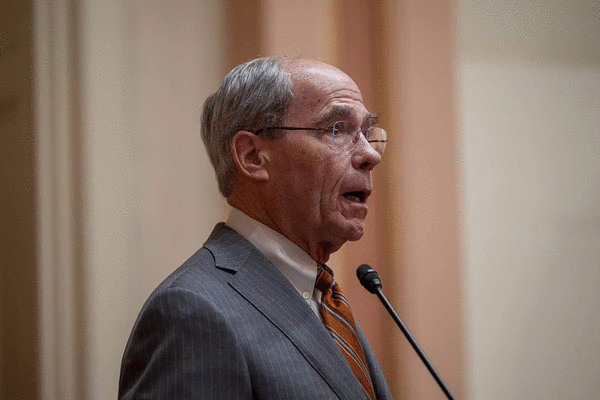
SACRAMENTO, Calif. — State Sen. Roger Niello, R-Fair Oaks, has known for months that he would take over as the top Republican in the California Senate after the November election. But then he almost lost his seat in an upset bid by Democrat Sean Frame. His Senate district covers both Placer and Sacramento counties and includes Lincoln, Roseville and Rancho Cordova.
Niello will now oversee a group of Republican senators that is smaller than when he was unanimously selected to take the role, leaving the party with even less sway to stand up to the Democratic supermajority in the Legislature.
Still, he told The Sacramento Bee he sees opportunity following the “disaster” of an election for Republicans. Niello views Gov.-elect Xavier Becerra as more open than Gov. Gavin Newsom and said he and his colleagues will introduce bills and push out messages to try and win back independent voters and some Democrats.
The interview was edited for clarity and length.
Question: What’s your assessment after the election? Obviously, Republicans lost some seats. How are you viewing your role now as the Senate minority leader?
Answer: Given the results nationwide, and other areas of California, for our caucus it wasn’t that bad, we went from 10 to eight (senators) and that’s where we were when I started back in 2022. I don’t want to say that that’s not a problem. It certainly is a challenge. We were hoping we’d pick up a seat, but this election cycle was obviously a disaster for Republicans.
Q: What do you think was the reason for that at least in California?
A: Looking at California, it’s kind of a tale of two areas. There’s the national area where, in areas where Republicans were dominant they are not so dominant anymore and in some cases they’re not even Republican anymore, which is absolutely remarkable. And the cause for that is certainly a sitting president almost always loses in the midterms and then heightened in this case by particular dissatisfaction with regard to the perceived shape of the economy, personal affordability, the war in Iran, I think some dissatisfaction with the way immigration policies have been carried out. And that was felt far and wide. The difference in California is, California is dominated by Democrats to begin with and you would wonder why the reaction would be just against Republicans, which it pretty much was.
As I have said frequently since that election, an old political adage — and this is absolutely true — if you look back at history: things cycle. Every victory actually contains the seeds of subsequent defeats and every defeat contains the seeds of future victories. And I believe that’s going to happen again and we need to work, our caucus, on addressing what we think are real solutions to the reason why California is headed in the wrong direction.
The Democrats frequently message saying that things are the fault of Donald Trump and perhaps that has swayed people. But the fact of the matter is, the issues that we’re facing are the same issues that we were facing two years ago and five years ago. And we’ve been under Democratic rule for a couple of decades. So, we intend to be what I call the loyal opposition, number one. Number two, we are California Republicans, which I think is a little bit different than the rest of the country. And we will propose common sense solutions that we think will address the challenges facing California. We will introduce legislation and we will message to convince people why we think these are better solutions and hopefully persuade independent voters and some persuadable Democrats.
Q: Talk about your own district race for a moment, do you think there were specific things in the Legislature that voters were pushing back against that you and your colleagues have done? Or do you also think that that was something that was related to the national politics?
A: I think it was related to the national politics because if you look at the results in just June of this year, five months ago, I won in that Sacramento portion of my district and now I have lost Sacramento County and I’m going to end up with less than 51% of the vote. I’m not a different person than I was five months ago, so clearly there are other influences and I think a significant part of that is dissatisfaction with national politics and the Trump administration specifically.
Q: Where do you see opportunities for Republicans to be able to find common ground with Democrats? I know you constantly raise the concern that Republicans are being shut out of large conversations around the budget and other things.
A: We are, but we can come up with our own proposals. The governor and the two legislative leaders last week, or the week before, sort of had a press availability in the second floor of the (Capitol) rotunda and they said that the three priorities are “cost of living, cost of living, cost of living.” We have ideas relative to cost of living that we hope they might agree to. And a lot of it has to do with the regulatory burden in the state of California, which that has a bigger influence on the cost of gasoline than even the gas tax — although we have the highest gas tax in the country and we could perhaps do something about that. The price of gas and diesel, bleeds throughout the entire economy and influences the cost of living for everyday citizens.
As an example, I proposed a bill last year that would have required the (California Air Resources Board) to calculate, in developing their regulations, not just the total cost of the regulation, but the cost on individual products that everyday Californians have to pay, how much the regulations would influence those costs. It did not pass. But that, I think, is a reasonable message for us to talk about, that if we’re really concerned about cost of living, why don’t we take a look at that? There are other examples too, that as we, our caucus, gets together soon and we talk about our strategic approach to this coming year and moving into the 2028 elections, we’ll come up with more.
Q: What is your perspective on Gov.-elect Xavier Becerra? Do you feel like there is more room for collaboration and compromise than with Gov. Gavin Newsom?
A: I would say, from my perspective, there’s more room for communication and collaboration with just about anybody as compared to Gavin Newsom, because there was none. But Governor-elect Becerra has already reached out and indicated that he wants to meet with each caucus in both houses, Republican and Democrat — and I’m encouraged by that.
Q: Is there any specific message that you’d want to pass along to him?
A: Probably something similar to what I just said, relative to affordability. The only issues that affect affordability, by virtue of the policies of the state of California, are taxes and regulations. Of course, in the budget that we’re operating under now, there were, overall, billions of dollars of additional taxes passed that affect healthcare coverage — not just of wealthy people — but of people in all income groups, as well as the costs of software that people buy. Again, not necessarily aimed at higher income earners. We need to hopefully persuade our friends that that can’t be a solution to the budget challenges that we have because it will directly affect the cost of living. Also, talk with them about the impact of regulations on the cost of everyday Californians and those are the sorts of messages that we’d be talking about.
Q: What do you think is the significance of the Senate minority leader role? What do you see as an important part of your job?
A: It is a position that has a lot of responsibility and absolutely no authority. So, it is a situation where we have to be of common ground within our caucus and consistently articulate messages that we think will effectively communicate with independent voters and persuadable Democrats. And that’s what we’ll be working to develop over the next couple of months.
____
©2026 The Sacramento Bee. Visit at sacbee.com. Distributed by Tribune Content Agency, LLC.





Comments