US removes sanctions on Delcy Rodríguez amid Venezuela reset
Published in News & Features
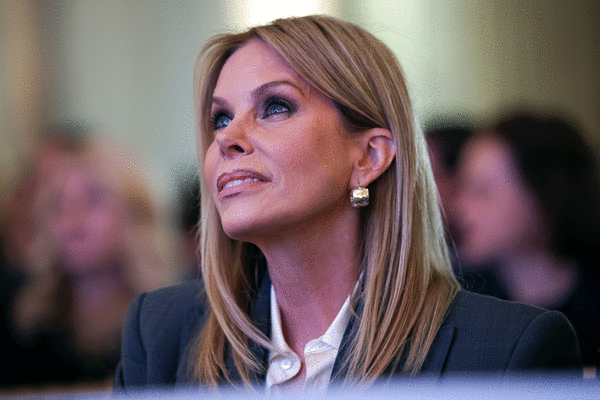
The U.S. Treasury Department on Wednesday removed Venezuelan interim President Delcy Rodríguez from its sanctions blacklist, the latest step in Washington’s evolving approach toward one of the most powerful figures in Caracas’ ruling socialist establishment.
The Treasury’s Office of Foreign Assets Control said Rodríguez had been deleted from the Specially Designated Nationals list, lifting restrictions that had barred U.S. individuals and companies from doing business with her.
The move reverses a designation first imposed in 2018, when the Trump administration targeted Rodríguez as part of a broader crackdown on Venezuelan strongman Nicolás Maduro’s inner circle. At the time, U.S. officials accused senior leaders of corruption, human rights abuses and helping sustain an authoritarian system.
A longtime loyalist of the ruling movement, Rodríguez served as Maduro’s vice president and previously as foreign minister, becoming one of the regime’s most visible and combative international voices. U.S. authorities had described her as a key figure in maintaining Maduro’s grip on power.
Following Maduro’s capture alongside his wife, Cilia Flores, in a U.S. pre-dawn raid in Caracas on Jan. 3, Rodríguez was sworn in as interim president and began repositioning herself as a pragmatic negotiator willing to engage with Washington.
As talks with the Trump administration progressed, she emerged as a central enforcer of a phased transition plan, balancing internal control with external concessions. Her evolution reflects a broader recalibration within Venezuela’s ruling movement — from ideological confrontation to conditional cooperation aimed at securing political survival and economic relief.
Treasury did not immediately provide a detailed explanation for the decision. However, U.S. sanctions policy has historically tied relief to what officials describe as “concrete and meaningful actions” to restore democratic order, combat corruption or distance from abuses.
A Treasury sanctions designation places individuals or entities on the Treasury’s blocked list, effectively cutting them off from the U.S. financial system. Any assets under U.S. jurisdiction are frozen, and U.S. persons are generally prohibited from conducting transactions with them. In practice, the restrictions often extend globally, as international banks and companies avoid dealings with sanctioned individuals to limit exposure to U.S. penalties.
©2026 Miami Herald. Visit at miamiherald.com. Distributed by Tribune Content Agency, LLC.




Comments