Trump administration exempts Gulf oil and gas drilling from endangered species protections
Published in News & Features





Convening a rarely used committee for the first time in more than three decades, top Trump administration officials voted Tuesday to exempt oil drilling in the Gulf of Mexico from requirements that protect endangered species.
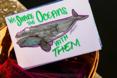
It’s a striking move that advocacy groups say could further imperil gulf wildlife like the Rice’s whale, one of the rarest whale species on earth with an estimated fewer than 100 remaining. It also drew rare opposition from Florida politicians of both parties.
The federal Endangered Species Committee, dubbed the “God Squad” by environmental groups who say it has the power to determine a species’ fate, unanimously voted to roll back protections after U.S. Secretary of War Pete Hegseth said litigation from environmental advocacy groups stands in the way of the nation’s energy supply and national security. The entire meeting lasted less than 15 minutes.
“It is essential to our national security to exempt all Gulf oil and gas activities from the Endangered Species Act requirements,” Hegseth said Tuesday.
“These legal battles waste critical government resources and make it impossible for energy companies to plan and invest in new projects,” he added. “When development in the Gulf is chilled, we are prevented from producing the energy we need as a country and as a department.”
Lee Zeldin, the administrator of the Environmental Protection Agency who sits on the committee, agreed, saying that the threat of lawsuits has forced companies to “pursue costly multimillion dollar projects” to insulate themselves.
“Application of the (Endangered Species Act) to oil and gas activities in this critically important location threatens energy independence and resilience,” he said. “In my judgment, it is critical to our national security to remove that threat without delay.”
Environmental groups immediately decried the action, calling it a vast and shocking overreach by the Trump administration.
Beth Lowell, vice president of ocean conservation group Oceana, said the officials “exploited a never-before-used power” for this vote.
“The ruling puts endangered species on an unnecessary fast track to extinction,” she said in a statement.
The administration is “exploiting its self-made gas crisis to get rid of protections for endangered whales and other imperiled species in the Gulf of Mexico,” said Steve Mashuda, a managing attorney at nonprofit law firm Earthjustice, in a statement.
“Hegseth and his Extinction Committee claim this will eventually cut costs for cash-strapped Americans, but Gulf communities know what unrestrained drilling will really bring: devastating oil spills and the destruction of ecosystems and coastal economies,” Mashuda said.
He pledged that the law firm will sue the Trump administration over the decision.
Opposition to offshore drilling near Florida has long been a point of bipartisan agreement because of the state’s reliance on pollution-free beaches to power its tourism economy.
That was made plain once again last year when the federal government released a proposal to open a swath of the eastern Gulf, an area about the size of South Carolina, to more offshore oil drilling. Gov. Ron DeSantis urged the president to stick to his 2020 moratorium barring the eastern Gulf from new oil leases through 2032. A coalition of coastal Florida mayors, business owners, anglers and environmental groups gathered on Clearwater Beach to declare their opposition.
Clearwater Mayor Bruce Rector, a Republican, said Tuesday that he’s against anything that risks the environment that is so crucial to his community, for both tourism and fishing.
“This is about people’s jobs and livelihoods and how they feed their families,” he said.
In December, Florida’s entire congressional delegation — all 28 members — joined a bipartisan letter opposing the plan.
U.S. Rep. Vern Buchanan, a Republican who represents Manatee County and part of Hillsborough, reiterated his opposition Tuesday.
“Florida’s coastlines are critical to our economy, environment and national security, and I’ve been clear that those protections must remain in place,” he said in a statement. “That includes safeguarding endangered species that depend on the Gulf’s ecosystem.”
U.S. Rep. Kathy Castor, a Democrat from Tampa, said in a statement that the Trump administration is “bending over backward for polluters” at the expense of Florida’s families, ocean wildlife and the coastal economy.
“The Gulf is central to life in Tampa Bay—supporting tourism, national security, and the livelihoods of families across our region and down Florida’s coast,“ Castor said.
“Weakening these protections is a direct threat to our pocketbooks at a time when people are already being squeezed by Trump’s policies,” she said.
Even the oil and gas industry had a lukewarm response to Tuesday’s vote. The American Petroleum Institute, an industry lobbying group, said companies would continue to keep animal welfare in mind.
“Our industry has a long track record of protecting wildlife while developing offshore energy responsibly,” spokesperson Andrea Woods said in a statement. “Over the long term, American energy leadership depends on getting that balance right through reasonable, science-based protections while meeting growing energy demand.”
There are at least 20 threatened and endangered species living in the Gulf, including green sea turtles, oceanic whitetip sharks, giant manta rays and elkhorn corals.
The Rice’s whale population, which lives in a sliver of the Gulf of Mexico including off Tampa Bay, was deeply harmed by the Deepwater Horizon oil spill in 2010.
A study after the disaster estimated that nearly half of the whale’s habitat in the eastern Gulf was exposed to oil, with the population declining by as much as 22% compared to before the spill, according to federal ocean scientists. Previously thought to have been the same as Bryde’s whales, experts in 2021 determined the Rice’s whale was a unique species.
In February 2025, the Rice’s whale lost a layer of its protections when the Trump administration rescinded guidance for oil and gas industry ships to slow down in their habitat to avoid hitting them.
-------
—Times political editor Michael Van Sickler contributed to this report.
©2026 Tampa Bay Times. Visit at tampabay.com. Distributed by Tribune Content Agency, LLC.






Comments