What to know about the AIDS Drug Assistance Program bill Florida Gov. Ron DeSantis signed
Published in News & Features
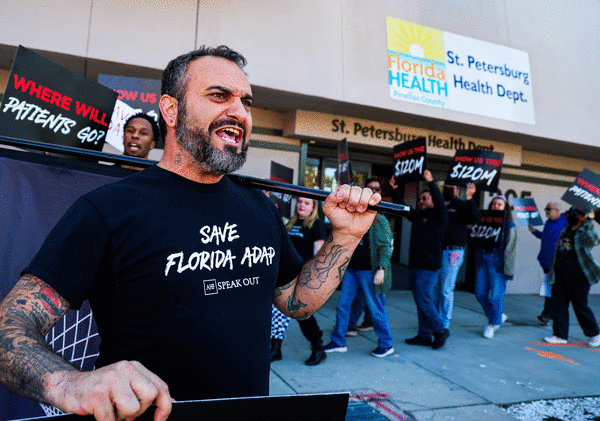
TALLAHASSEE, Fla. — Florida’s HIV-positive patients will continue to be able to rely on the state for help getting medication for the next few months, thanks to a last-minute scramble from the Florida Legislature that Gov. Ron DeSantis approved Tuesday.
Around 12,000 Floridians faced removal from the state’s AIDS Drug Assistance Program after the Department of Health announced plans earlier this year to make dramatic cuts to eligibility.
The health department said the move, which blindsided lawmakers, was needed due to the rising cost of health care and a possible $120 million budget deficit.
The legislative compromise brings the program income eligibility back to its previous cap of 400% of the federal poverty level — up from the Department of Health’s lower threshold of 130% — and provides around $31 million for the program to run through June 30.
Sen. Alexis Calatayud, R-Miami, who worked on the stopgap funding measure, confirmed the governor signed the legislation on Tuesday.
But Floridians who get AIDS medication through the state could still see changes, including needing to alter their medication regimen and losing access to broader health coverage.
Whether the AIDS Drug Assistance Program gets funded beyond the summer is uncertain. Here’s what to know.
What is the AIDS Drug Assistance Program?
The AIDS Drug Assistance Program, commonly known as ADAP, has existed in Florida since the 1990s.
Its goal is to provide life-saving medication to low-income Floridians with HIV/AIDS. Out of pocket, AIDS medication can cost thousands per month.
Funding comes from federal grants, state dollars and rebates from pharmaceutical companies.
The AIDS Drug Assistance Program uses two main avenues to help people get medicine: by directly providing the drugs or by covering the cost of a patient’s health insurance.
Around 30,000 people in Florida are enrolled in the drug assistance program. Some have no insurance, while others have their own insurance or coverage through federal insurers like Medicare.
What are the state’s changes?
The Department of Health’s changes to the AIDS Drug Assistance Program are three-pronged.
Under the state’s cuts, income eligibility would be dramatically lowered from 400% of the federal poverty level to 130% of the federal poverty level, or about $20,000 a year for one person.
The state also plans to discontinue the part of the program that pays for patients’ health insurance premiums.
And Florida plans to remove Biktarvy from the list of available drugs. Biktarvy is a once-a-day pill and is the most popular form of medication for people with HIV/AIDS.
Descovy, another once-a-day pill produced by the same pharmaceutical company, will be restricted to patients with renal issues.
The National Alliance of State and Territorial AIDS Directors estimates that the state changes would impact around 12,000 people in Florida.
Though other states are also changing their AIDS assistance programs to deal with rising costs, no other state has made cuts as deep as Florida’s proposal. And no other state has moved to entirely do away with premium assistance.
Surgeon General Joseph Ladapo in January acknowledged that the cuts could lead to a “crisis,” calling it a “really, really serious issue.” But the department did not formally ask lawmakers for money to fill the gap.
What is the Legislature’s fix?
Lawmakers took it upon themselves to devise a stopgap measure to protect access in the short term.
The state is allocating around $31 million to fund the program at 400% of the federal poverty level through June 30, the end of this fiscal year.
Both the House and Senate have proposed funding the AIDS drug program for the 2026-2027 fiscal year. But budget negotiations in the Legislature are dragging on past the end of the regularly scheduled session for the second year in a row, leaving uncertainty about what will happen come July.
Lawmakers’ short-term measure does not bring back the insurance premium program and does not restore Biktarvy to the list of available medications.
“We know that it’s not ideal,” said Sen. Carlos Guillermo Smith, D-Orlando. “But we’re doing what we can to try to ensure that they still have access to these medications.”
Are the state changes paused?
When the Florida Department of Health first announced the changes, it did so without going through the required rulemaking process. The AIDS Healthcare Foundation sued.
After that lawsuit, Florida initiated rulemaking, which can take several months to complete and includes opportunity for public input.
But ahead of that process, the department used emergency rules to enact the program cuts immediately.
Ahead of DeSantis signing the bill, the Florida Department of Health updated its emergency rules to reflect legislators’ changes.
Why cover patients’ health insurance?
Nearly two-thirds of the $300 million budget for the AIDS Drug Assistance Program comes from drug rebate money.
Drug companies incentivize states to pay for patients’ health insurance, giving the state rebate money that covers the insurance costs.
Experts say when optimized, those dollars can bring in more money than is needed to pay for the insurance.
With that money, the state’s AIDS Drug Assistance Program has been growing over the last decade, even as federal grants plateaued.
While the state has pointed to the rising cost of health insurance as the impetus for its program changes, the Times/Herald found that Department of Health leadership forced out key program employees months earlier.
Former Department of Health employees, health experts and AIDS advocates say that by cutting off the premium assistance program, Florida is kneecapping the AIDS Drug Assistance Program more than necessary.
What happens when people with HIV don’t take medication?
Modern HIV medication can reduce the virus to an undetectable point, allowing people to live healthy lives and preventing the spread of HIV to others.
But medication doesn’t eradicate the virus. If people take medicine intermittently, it can result in them developing drug resistance.
And when people stop taking the medication, the virus can come roaring back.
©2026 Tampa Bay Times. Visit at tampabay.com. Distributed by Tribune Content Agency, LLC.





Comments