Editorial: Getting serious … sort of … on the national debt
Published in News & Features
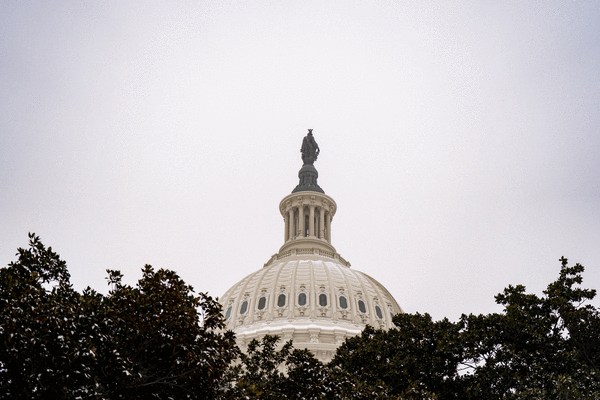
Is reality finally settling in on Capitol Hill? The nation can only hope.
As the national debt rushes toward $39 trillion, and Social Security and Medicare get nearer to insolvency with each tick of the clock, pressure mounts on the White House and Congress to craft a more sustainable path forward. After decades of apathy — which has pushed the nation to a fiscal precipice — some officials are now reaching across the aisle to propose solutions.
Last month, a bipartisan group of four House members introduced a resolution to keep deficits at 3 percent of gross domestic product or less by 2030. Deficits currently run about 6 percent of GDP.
“Years of reckless budgeting have brought the national debt to an unsustainable level,” Rep. Mike Quigley, D-Illinois, noted in a January news release. “If left unchecked, interest on the debt will crowd out spending on defense, health care and every other government service. “We must establish aggressive, realistic goals like a 3 percent deficit-to-GDP ratio to reign in our nation’s debt and ensure future generations are not handed a fiscal crisis.”
Rep. Quigley is one of the original sponsors of the initiative, along with Reps. Lloyd Smucker, R-Pennsylvania; Scott Peters, D-California; and Bill Huizenga, R-Michigan. Treasury Secretary Scott Bessent has previously expressed support for a similar goal.
The Committee for a Responsible Federal Budget notes that it would require roughly $10 trillion in budget adjustments over the next decade to reach the 3 percent target. That wouldn’t necessitate actual “cuts,” however, as many aspects of federal spending are on an upward autopilot and would continue to increase, albeit at a more modest rate. Higher economic growth rates achieved through policies that boost prosperity by encouraging entrepreneurship and job creation would also move the needle.
The resolution would urge the White House to submit spending plans that push the nation toward the 3 percent goal. It also demands that Congress do the same. The House Budget Committee and the House Rules Committee would consider reforms to enforce such provisions.
Budget hawks may prefer more aggressive measures — for instance, a balanced budget amendment fell just one vote shy in the Senate in 1995, and Sen. Rand Paul has introduced his “Penny Plan” to stem the red ink in five years — but even modest progress represents a marked improvement over the status quo. Nevada’s four House members should get onboard, and the Trump administration should work to push the resolution through Congress.
©2026 Las Vegas Review-Journal. Visit reviewjournal.com.. Distributed by Tribune Content Agency, LLC.






Comments