Michigan Gov. Gretchen Whitmer to call for medical debt protections in final State of the State
Published in News & Features
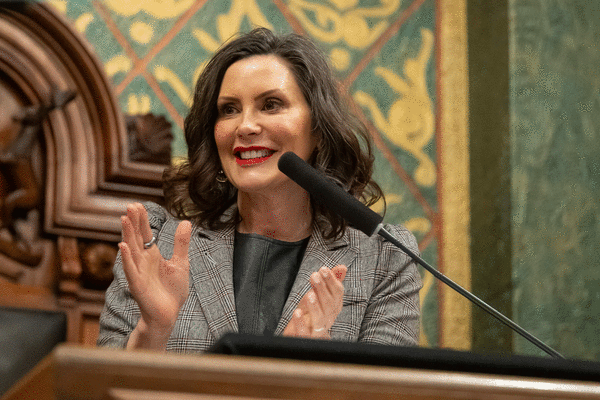
LANSING, Mich. — Gov. Gretchen Whitmer is expected to advocate in her final State of the State address Wednesday night for protections against medical debt as the state braces for expected cuts to the Medicaid health insurance program for the poor.
During her final address to the Legislature as governor, the Democrat is expected to voice support for policy initiatives that would cap medical debt interest, prohibit medical debt from showing up on credit reports, ban medical debt from leading to home liens or foreclosures, and require hospitals to establish financial assistance programs for patients.
All of the policies have been introduced in bipartisan packages in the Senate and House, but have yet to receive full floor votes.
“Historic federal cuts to health care are destabilizing hospitals, raising premiums, and kicking Michiganders off their insurance," Whitmer's office said in a statement. "We’re taking action to protect core Medicaid services, ease the burden of medical debt, and ensure every Michigander can see a doctor. We believe that getting sick or hurt shouldn’t also mean going broke.”
The state's Medicaid program, which serves about 2.6 million low-income adults and children, is expected to take a significant hit under federal changes implemented through President Donald Trump's landmark tax and spending bill, the One Big Beautiful Bill Act, signed in July. About 76% of the state's Medicaid funding came from the federal government in fiscal year 2023.
As recently as July, experts estimated that limitations on provider tax rates and state-directed payments, which help fund the state's Medicaid programs, would result in immediate cuts of about $2.5 billion from Michigan health care providers. The reduction increases to $15 billion over the next decade, according to estimates from the Michigan Department of Health and Human Services.
In her $88.1 billion executive budget recommendation earlier this month, Whitmer proposed a host of new taxes to help address the expected Medicaid shortfall, including new taxes on vape products, tobacco, sports betting, internet gaming and digital advertising.
The proposals essentially are dead on arrival in the Republican-led House, where Speaker Matt Hall, R-Richland Township, has said he will not agree to any new taxes to support the state's budget. Instead, the speaker has argued the state can find more savings within state agencies to meet the shortfall created by both Medicaid and a shifting of funds to increase spending on roads.
There are currently several bills in the House and Senate that seek to meet some of the policy objectives Whitmer plans to outline in Wednesday's address.
In the Senate, state Sen. Sarah Anthony, D-Lansing, and state Sen. Jonathan Lindsey, R-Coldwater, have introduced a series of bills that would establish the Hospital Financial Assistance Act, the Medical Debt Act and the Medical Debt Prevention Act. In the House, companion legislation has been introduced by state Reps. Angela Rigas, R-Caledonia, and Laurie Pohutsky, D-Livonia.
"For too many Michigan families, one trip to the emergency room can lead to months or even years of financial hardship — even for those who are fortunate enough to have health insurance," Anthony said in a statement announcing the legislation. "This reality is unacceptable. Plain and simple."
The Senate legislation, which has passed through committee, would require hospitals to develop and implement a financial assistance program for patients by Jan. 1, 2027 and report on its operations to the Department of Health and Human Services.
The legislation is meant to codify and expand current federal mandates that require non-profit hospitals to provide some form of charitable assistance. The legislation, according to a release from Anthony and Lindsey, would also "standardize the charity care provided, and establish clear, consistent metrics for eligibility to ensure support is available to those who need it most."
"This is a measured, balanced approach that sets standards without creating overbearing mandates," Lindsey said in the press release.
The Medical Debt Act would prohibit a consumer reporting agency from containing adverse information on medical debt.
The Medical Debt Prevention Act would prohibit a healthcare facility or medical debt buyer from charging a person interest or a late fee until 90 days after a final due date; the legislation would then cap a late fee or interest going forward at less than 3% of the amount due from the prior year.
The legislation also would prohibit "extraordinary collection action" on an individual with medical debt, including arrest, foreclosure, liens or wage garnishment.
It would allow some of those more aggressive actions in certain circumstances, such as 120 days after the final due date and with 30 days notice.
Medical creditors could only sell debt if they entered agreements with buyers that bind them to the same caps and restrictions. The legislation also would require money be refunded to patients within 60 days in the event of overpayment.
In a November committee hearing on the Senate legislation, some medical groups and poverty solutions organizations testified in support of the bills. The Michigan Health and Hospital Association submitted a card indicating it was neutral on the legislation.
Senators received written opposition from the consumer reporting industry's trade organization, Consumer Data Industry Association, which objected specifically to the prohibition on consumer reporting agencies mentioning medical debt in a consumer report.
The group argued the bill would conflict with the federal Fair Credit Report Act, which the Trump administration last fall ruled preempts state laws on credit reporting. Similar laws in Texas and Maine are currently subject to litigation, the group said.
"While concerns regarding medical debt and the impact of unpaid debts on consumer’s credit histories are understandable, proposals like SB 451 that attempt to exclude some debts from the consumer reporting system do not address the underlying concerns about the costs of medical care," wrote Zachary Taylor, director of government relations for the Consumer Data Industry Association.
---------
©2026 www.detroitnews.com. Visit at detroitnews.com. Distributed by Tribune Content Agency, LLC.





Comments