It's not just property taxes. Twin Cities residents balk at higher water bills
Published in News & Features
MINNEAPOLIS — The cost of city tap water is increasingly becoming an issue across the Twin Cities area, where residents say they are being soaked by rising rates.
Water rates are rising by as much as 25% in some suburbs, and city leaders say the increases are necessary as many issues — from maintenance of aging systems to expensive projects to treat water for contaminants — are hitting as costs rise with inflation.
Meanwhile, some cities are struggling to agree on how to share water with neighboring suburbs, sparking lawsuits. And water conservation is a major point of debate in cities exploding with population growth and planning for sprawling developments.
At a time when many homeowners in the Twin Cities suburbs already face rising property tax bills, along with increasing household expenses and utility costs overall, the higher water rates are adding to the pain.
Robbinsdale resident Kelly Goski said she’s making changes, including filling her garden with plants that don’t need to be watered as much, as her city raises rates by 5% next year — following several years of increases.
“They need to consider the impact on the taxpaying residents of the city,” Goski said, adding that she loves living in Robbinsdale but worries about residents being priced out.
Water rates vary widely across the region depending on several factors, including whether cities draw from groundwater or surface water, such as from the Mississippi River. Water quality and availability, treatment methods, the number of buildings connected to a system and the way a city bills for water can all play a role as well.
Rates can be hard to compare because cities may calculate them differently. Many cities, including Robbinsdale, charge a fixed rate, but also have a tiered system where customers pay more per gallon as they use more water.
Robbinsdale in 2020 had a fixed service charge of $6.14 per month, which will increase to $16.85 next year, for example, while usage-based rates also go up. The average homeowner can expect to pay nearly $15 more per month in 2026 compared to the previous year.
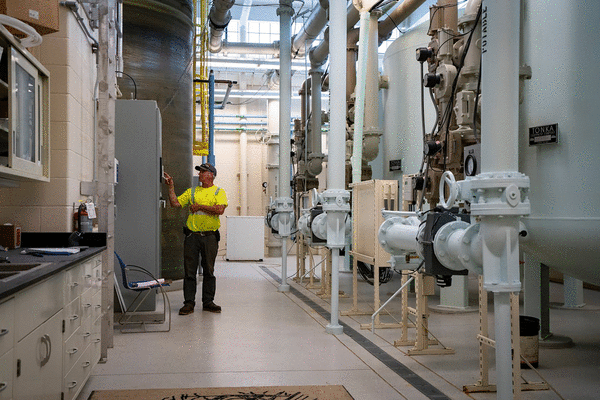
The northern suburb has been raising water rates to fund big-ticket projects, including a $32 million water treatment plant and $5.5 million water tower, said Public Works Director Richard McCoy. Another water tower is planned, and McCoy said the city also needs to replace aging pipes over the next several years.
“I think you’re going to see as the years go on here, the second-ring suburbs and outer suburbs go down this same path because their systems aren’t as old as what we have,” McCoy said. “We’re just on that first wave.”
Some Minnesotans have already seen staggering water rate increases, as cities race to rid “forever chemicals” from their systems — and ask residents to foot some of the bill for costly treatment projects.
In Hastings, water bills will have risen roughly 43% over the past four years come January, and more bumps could be on the way. The city is scrambling to raise funds for three treatment plants to flush PFAS from several city wells.
And although officials secured some money from 3M — the Maplewood-based chemical company that for years manufactured PFAS — it won’t be enough to cover the whole project without raising water rates.
City Administrator Dan Wietecha said the higher expenses “are just really tough on our residents and our businesses.”
Apple Valley faces a similar predicament. The city hasn’t yet identified the source of its PFAS problem, and officials hope the state will help pay for a $100 million treatment project.
But even if the state chips in, Public Works Director Matt Saam said, the city will likely have to hike quarterly water rates from $75 to $161 per household to defray the cost.
“I guess it’s a sad reality,” Apple Valley resident Sue Wehrenberg said. “We’re just going to have to pay for it.”
McCoy, the Robbinsdale public works director, said that despite rising rates, homeowners will see some cost savings because they no longer need water softeners, since the new plant uses a lime softening treatment method.
“The water we provide residents, I think, is vastly better than what we used to,” he said, adding that he aims for homeowners to see lower rate increases in the coming years.
St. Francis officials also are considering options for softening municipal water as the city nears the limit for chloride, a pollutant generated from home water softeners. St. Francis is also taking on major maintenance projects, such as replacing the roof on its water treatment plant, that will contribute to a 25% rate hike.
A city raising water rates does not mean a homeowner will see that same increase on their bill. In St. Francis, the average homeowner using the lowest amount of water would pay about $6.75 more per month for a total of $58.72.
In Orono, city officials raised water rates by 10%, partly to help fund maintenance projects and pay for replacing old water meters. The average homeowner would pay $5.24 more per month for a total of $57.59.
Roseville is increasing residential water bills by $20 a year for the lowest water users. Some residents said the higher bills are especially difficult combined with rising property taxes and other utility costs.
City Manager Pat Trudgeon said Roseville only increases water fees in accordance with the cost from St. Paul Water, which provides the city with the utility. He said the rates are going up like everything else is, but the increase is mainly to maintain infrastructure.
But for some residents, any increase is too much.
“Little things keep eating away,” resident Greg Ryan said. “It just keeps adding up and adding up.”
--------
—Jeff Hargarten of the Minnesota Star Tribune contributed to this report.
©2025 The Minnesota Star Tribune. Visit at startribune.com. Distributed by Tribune Content Agency, LLC.






Comments