Gov. JB Pritzker signs Illinois immigration law that curbs courthouse arrests and expands right to sue agents
Published in News & Features
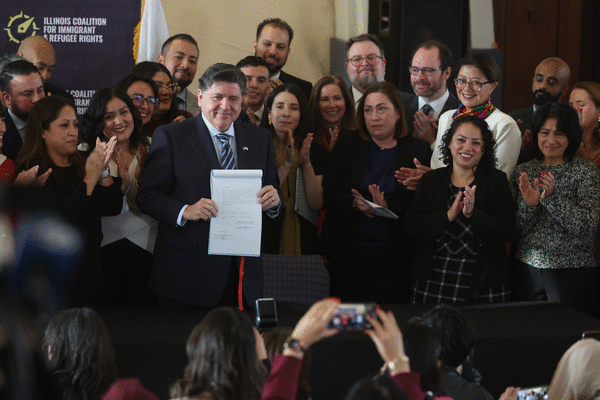
CHICAGO — Gov. JB Pritzker on Tuesday signed into law a ban on federal agents making certain arrests near courthouses and easing a path for individuals to sue if they think their rights were violated during civil immigration arrests, capping off months of resistance to the Trump administration’s sometimes-violent enforcement crackdown in Chicago and the suburbs.
“We know that this new set of laws can’t mitigate all of the harm,” Pritzker said at a bill signing ceremony in La Villita Community Church in Little Village, “but it gives us new protective tools and is a symbol of our shared action against those terrorizing our communities and our state.”
Lawmakers passed the package of immigration tweaks in October, shortly after President Donald Trump administration’s immigration enforcement hit a fever pitch in the Chicago area.
Under the new law, individuals will be better able to sue federal officers for knowingly violating the Illinois or U.S. constitutions during civil immigration enforcement actions. It also codifies a zone around courthouses where people involved in court proceedings are exempt from civil arrest.
The legislation came together in collaboration with House lawmakers, the state attorney general’s office and the governor’s office, Senate President Don Harmon of Oak Park, who was a key sponsor of the bill, said in October.
While Pritzker and lawmakers have used their bully pulpits to push back against the Trump administration’s deportation efforts — and some legislators at times took an activist role themselves this fall — the statehouse has little formal role in setting immigration policy.
As a sign of lawmakers’ frustration with federal agents’ tactics, damages under the lawsuit provision could increase for several reasons. They include whether the defendant wore a mask, used crowd control equipment like tear gas, failed to identify themselves as a law enforcement officer, used a vehicle without an Illinois license plate, or did not turn on a necessary body camera — all behaviors advocates and Democratic lawmakers have accused immigration agents of doing since the start of Operation Midway Blitz under the Trump administration.
“This law sends the message that if you abuse the law, there are consequences,” Harmon said Tuesday.
When lawmakers discussed the legislation at General Assembly hearings, representatives from local law enforcement pushed back on the provision for a private right of action for constitutional violations, citing concerns that local officers could be swept up.
In October, Harmon said the bill was imperfect and acknowledged it could be challenged in court, but he said state and local lawmakers felt compelled to act.
In addition to the provisions on courts and private actions, the bill also asks hospitals, day care centers and higher education institutions to put policies on the books about how they would respond to the presence of federal immigration agents, following incidents of ICE activity at or near some of those locations across the Chicago area.
The package signed this week doesn’t include a ban on masks for federal officers, as California enacted, or any expansion of Illinois’ existing law, the TRUST Act, that generally bans local law enforcement from cooperating on civil immigration actions.
The governor, who is considered a potential Democratic candidate for president in 2028, still has not yet signed several high-profile bills that the General Assembly passed during its short fall session, including legislation that would permit doctors to help terminally ill people end their lives.
Pritzker last week told reporters that he still hadn’t made a decision on the so-called “right-to-die” legislation, though he said it had come up briefly in his recent meeting with Pope Leo XIV.
“It’s actually something that I brought up, and we didn’t have a conversation about it,” Pritzker said. The issue arose as Pritzker and the Chicago-born pope were “acknowledging that there may be things that we disagree about,” the governor added.
____
©2025 Chicago Tribune. Visit at chicagotribune.com. Distributed by Tribune Content Agency, LLC.





Comments